Most agency owners I talk to aren’t struggling because they lack tools. They’re struggling because they have too many, and half of them overlap.
If you’re running a marketing agency and trying to figure out which agency SaaS tools actually deserve a spot in your stack, this post is for you. Not a list of 40 apps you’ll never use. A real breakdown of what a lean, profitable agency actually needs in 2026, and what to cut.
Here’s the stat that should hit you: 42% of companies report tool overlap in their software stack (Zylo, 2025). And 34% of software goes completely unused in any given week. The average SaaS spend per employee is sitting at $4,830 per year. Agencies are spending 7-10% of revenue on software alone.
That’s not a stack. That’s a leak.
The Problem With How Agencies Build Their Stack
The standard advice is additive. You need a CRM. And a funnel builder. And an email tool. And a reporting dashboard. And a social scheduler. And a project management tool. And proposals software. And…
You end up with 12 subscriptions, three tools doing the same thing, and half your team using workarounds because nothing talks to anything else.
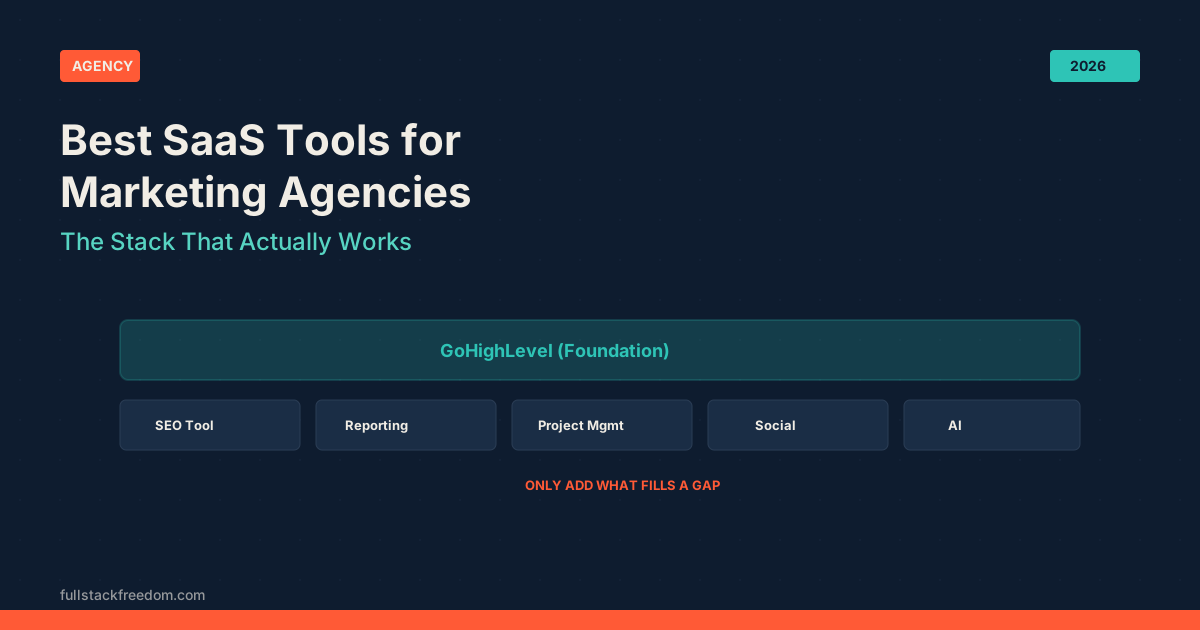
The agencies winning right now are doing the opposite. They start with one consolidated foundation, then add only what fills a real gap. No vanity tools. No overlap.
That’s the framework I’m building this list around.
The Foundation: Start Here Before Anything Else
GoHighLevel ($97 to $497/month)
If you’re running a marketing agency and you’re not on GoHighLevel, you’re paying for five separate tools that one platform replaces.
GHL consolidates your CRM, email marketing, SMS, funnel builder, automation workflows, appointment booking, reputation management, and website builder into a single platform. The agency plan also lets you white-label the entire thing and resell access to clients, which means it can pay for itself multiple times over.
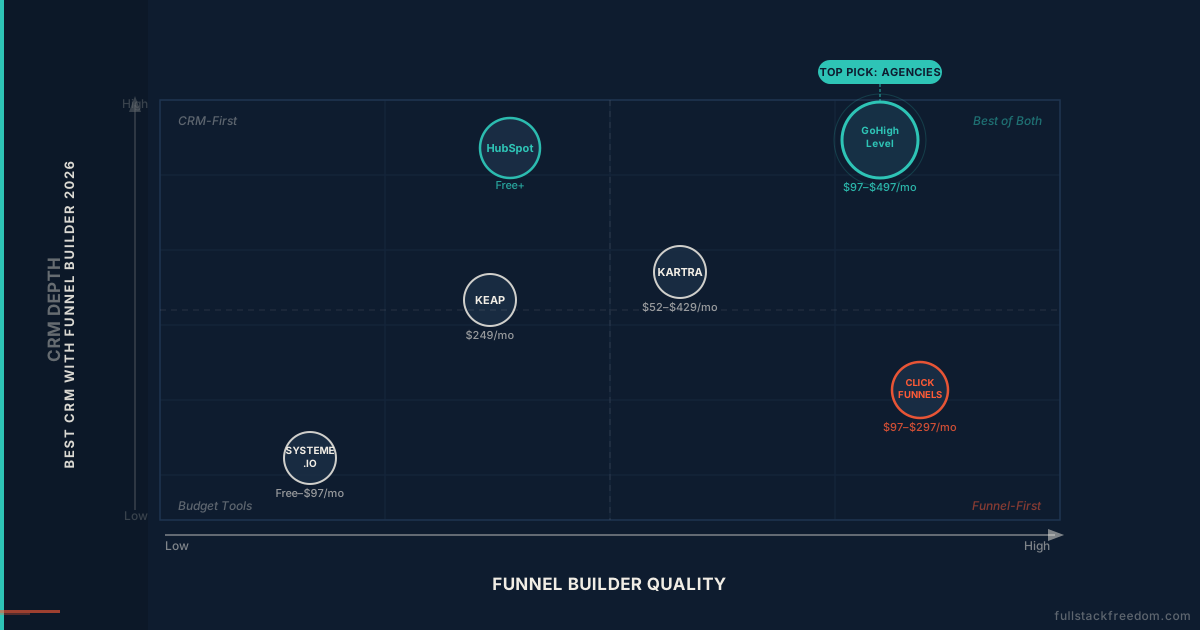
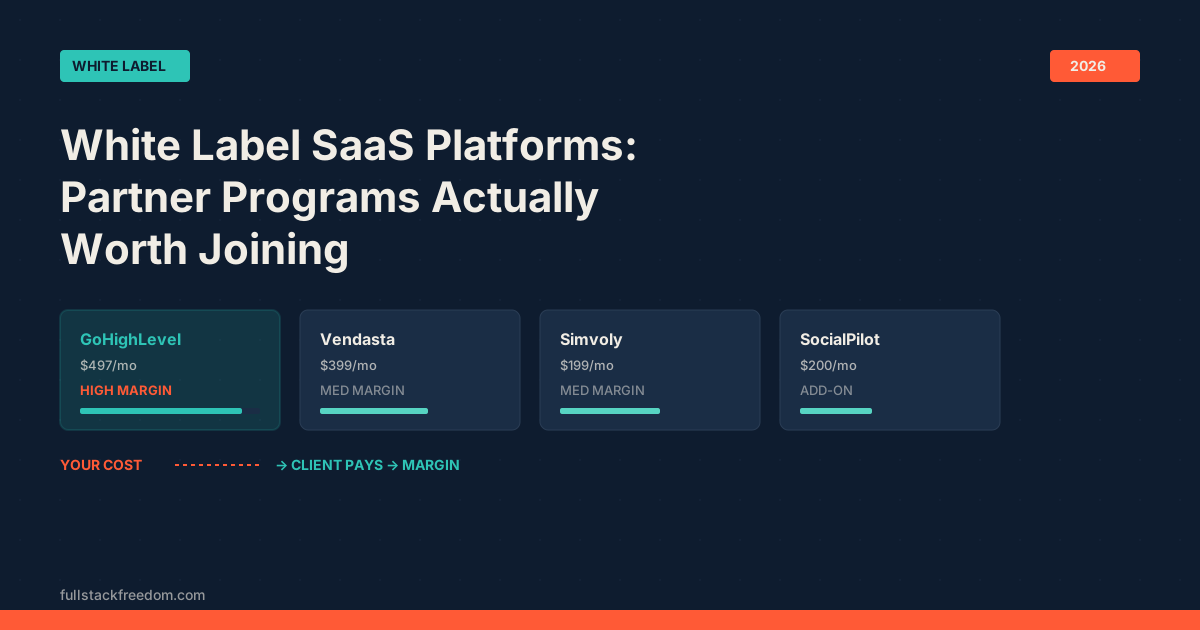
I’ve covered the funnel builder side of this in depth over in Best CRM with Built-In Funnel Builder, and the white-label opportunity is worth looking at separately in White Label SaaS Platforms: Partner Programs Actually Worth Joining.
The bottom line: GHL is the foundation. Everything else on this list is additive. If you’re not starting here, you’re probably overspending on SaaS by a wide margin.
The Agency SaaS Tools Worth Adding to the Stack
Once GHL is running, there are specific categories where you’ll need a specialist tool. Here’s what actually works.
SEO: Semrush vs Ahrefs
$29 to $499/month depending on plan and tool
These two are the clear leaders, and which one you pick mostly comes down to what you actually use it for.
Semrush is the better all-in-one option for agencies doing full-service SEO. The advertising research, competitor analysis, and position tracking features are more robust. If you’re building reports for clients across multiple campaigns, Semrush scales better.
Ahrefs is leaner and arguably has the best backlink database in the business. If link building and content gap analysis are your primary use cases, Ahrefs is excellent, and the starter plan at $29/month makes it accessible if you’re just getting going.
My take: most agencies end up picking one and sticking with it. Don’t pay for both. They overlap more than they complement each other.
Client Reporting: AgencyAnalytics
$79 to $179/month
Client reporting is one of those things that eats hours if you’re doing it manually. AgencyAnalytics solves this with white-labeled, automated reporting dashboards that pull data from 80+ integrations (Google Analytics, Meta, Google Ads, SEMrush, and more).
You set up the dashboard once, connect the data sources, and the client gets a branded report on whatever schedule you set. It looks professional. It saves time. And it gives clients visibility without requiring a call to explain what happened last month.
For agencies with more than five clients, this one pays for itself fast.
Project Management: ClickUp vs Monday.com
Free to ~$20/user/month
Both tools are solid. The real question is which one fits your team’s working style.
ClickUp is more flexible and has more features, almost overwhelmingly so. If you want to customize everything and build workflows exactly how you want them, ClickUp wins. The free plan is also genuinely usable for small teams.
Monday.com is more opinionated but easier to get a team to actually adopt. The visual boards are clean, the automations are straightforward, and onboarding new team members takes less time. If your team resists new software, Monday’s more approachable UX can make the difference between a tool that gets used and one that doesn’t.
Pick one. Most agencies don’t need both. And if you’re a solo operator or just starting out, ClickUp’s free tier will get you surprisingly far.
Social Media: SocialPilot or Buffer
$5/channel to $89/month
Social media scheduling shouldn’t be complicated, and the tools that make it complicated aren’t worth the price.
SocialPilot is built for agencies. You can manage multiple client accounts, collaborate with team members, and white-label client reports. At $89/month for the agency plan, it’s a reasonable investment once you’re managing social for several clients.
Buffer is simpler and cheaper, at $5 per channel per month. If you’re early stage or managing fewer accounts, Buffer’s leaner interface might actually be a better fit. Less overhead, less distraction.
The key point: unless GHL’s social scheduling feature covers what you need (and for some agencies it does), you’ll want a dedicated tool here. Just don’t overpay for one.
Proposals: Proposify, HoneyBook, or Dubsado
Sending proposals in a Google Doc is leaving money on the table. A clean, professional proposal tool closes deals faster and gives you a trackable workflow from lead to signed contract.
Proposify is purpose-built for agencies and larger teams. Strong templates, e-signatures, and analytics on how long prospects are spending on each section of your proposal.
HoneyBook leans toward freelancers and smaller operations. It bundles proposals, contracts, invoicing, and client communication into one place, which can be useful if you want less software overall.
Dubsado sits in the middle. Good automation, solid CRM features, and reasonable pricing. Worth looking at if you want your proposals workflow to connect to your client onboarding process.
Pick based on your workflow complexity. A solo consultant might be happiest in HoneyBook. A five-person agency probably wants Proposify.
AI and Content: Claude and Descript
These two have become part of the default workflow for most of the content-producing agencies I know.
Claude handles research, writing, strategy drafts, and anything that needs nuanced language generation. For writing client deliverables, brainstorming campaign angles, or drafting SOPs, it’s become the go-to. Claude is also one of the best AI agents available right now, especially for agentic workflows that go beyond simple chat.
Descript is built for video and audio content. Record, transcribe, edit the transcript, and the video edits itself. For agencies producing video content or repurposing long-form audio, this cuts production time significantly. We use it for all video editing on the Full Stack Freedom channel, and I’ve shown how it works in several tutorials, including Building a Website with AI: No CMS Needed as part of showing the broader AI content workflow.
What This Means for Your Agency
Here’s the full lean stack, ranked by what to add first:
| Priority | Tool | Why It’s Here |
|---|---|---|
| 1 | GoHighLevel | Foundation, replaces 5+ tools |
| 2 | ClickUp or Monday.com | Team and project coordination |
| 3 | Semrush or Ahrefs | SEO (pick one) |
| 4 | AgencyAnalytics | Client reporting at scale |
| 5 | SocialPilot or Buffer | Social scheduling |
| 6 | Proposify / HoneyBook / Dubsado | Proposals and contracts |
| 7 | Claude + Descript | AI-powered content production |
The agencies I see struggling are the ones paying for tools they don’t use and building their stack based on what’s popular instead of what solves their actual problem. If you’re rethinking your stack, the best AI automation tools breakdown covers what’s worth adding on the automation side.
The agencies that are profitable and lean have one thing in common: they chose a foundation, stopped adding redundant tools, and focused on execution instead of optimization.
Next Steps
If you’re starting from scratch or rebuilding your stack, start with GoHighLevel. Get it set up and running before you add anything else. Most agencies discover they need fewer additional tools than they thought once GHL is actually configured correctly.
If you’re already running GHL and want to compare notes on what’s actually working, or get the templates and workflows we use to set up client accounts, those live in the Skool community. Come join us.