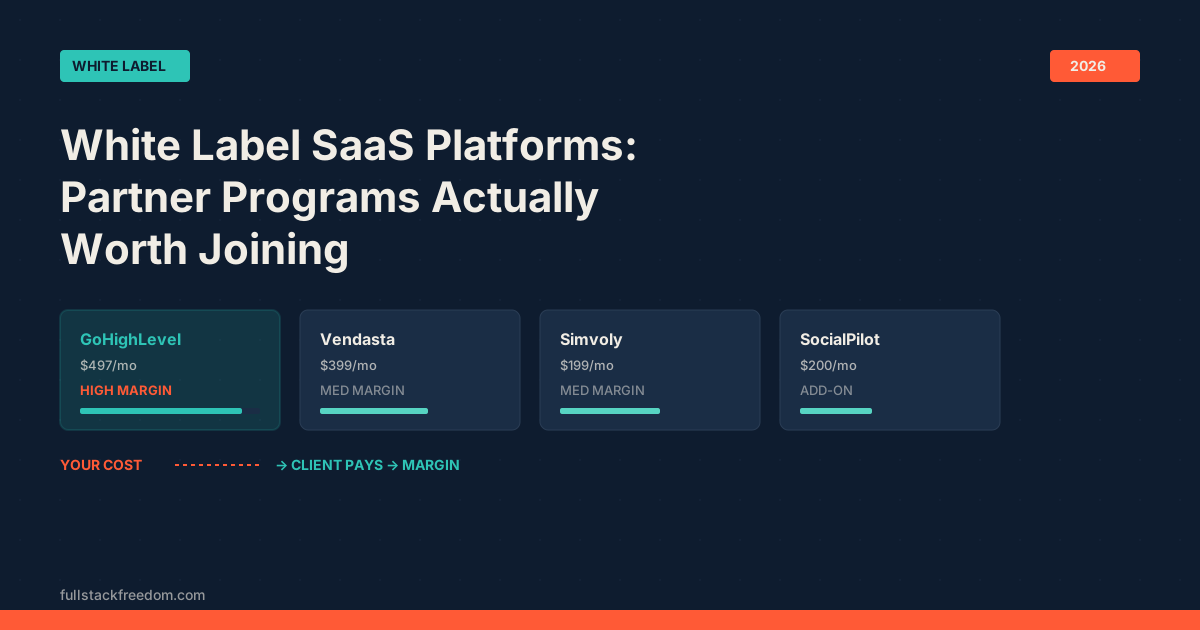
If you’re researching white label SaaS platforms, you’re probably trying to figure out one thing: which of these programs can actually generate recurring revenue, and which ones just look good in a pitch deck? I’ve been through enough of them to have opinions. This post breaks down the real economics: margin math, platform costs, what you can realistically resell at, so you can make an actual decision.
Let’s talk numbers first.
The Revenue Model Behind White Label SaaS
The basic idea is straightforward. You license a platform, rebrand it under your agency or product name, and resell access to your clients. The gap between what you pay and what you charge is your margin. Simple on paper. The variance is in the details.
Most agency resellers operate at 40–60% margins when bundling services, and 60–80%+ when they own a niche. The platforms themselves vary wildly. Some charge flat monthly fees, some charge per client, some take a revenue cut. Your job is to find the model that fits how you work.
A few context numbers worth knowing:
- The white label SaaS market is growing at 18.7% CAGR and projected to exceed $209B by 2028
- 5–20 clients generating $297–$997/month each can produce $2,000–$10,000/mo MRR from a single platform
- Most platforms have a break-even point somewhere between 2–5 clients
That last one matters. If you can’t sign 2–5 clients to cover your platform cost, the model doesn’t work. Keep that threshold in mind as you read through these.
The Best White Label SaaS Platforms for Agencies in 2026
1. GoHighLevel: The One Most Agency Owners End Up At
GoHighLevel is hard to ignore. The SaaS Pro plan runs $497/month, and it gives you the ability to white label the entire platform: your logo, your domain, your pricing. You set what clients pay.
Here’s the math that gets people’s attention: 20 clients at $297/month = $5,940/month against a $497 platform cost. That’s over $5,400/mo in margin at a pretty conservative price point. Charge $497 or $997 and the numbers get more interesting.
What’s actually included:
- CRM, pipelines, calendars
- Email and SMS marketing
- Website and funnel builder
- Reputation management
- Memberships and courses
- AI features (conversation AI, content AI)
The affiliate program is also worth mentioning separately. 40% recurring commissions that stack with your reseller revenue. So if you refer other agencies to GHL while also running your own SaaS tier, you’re building two income streams from the same tool. That’s unusual.
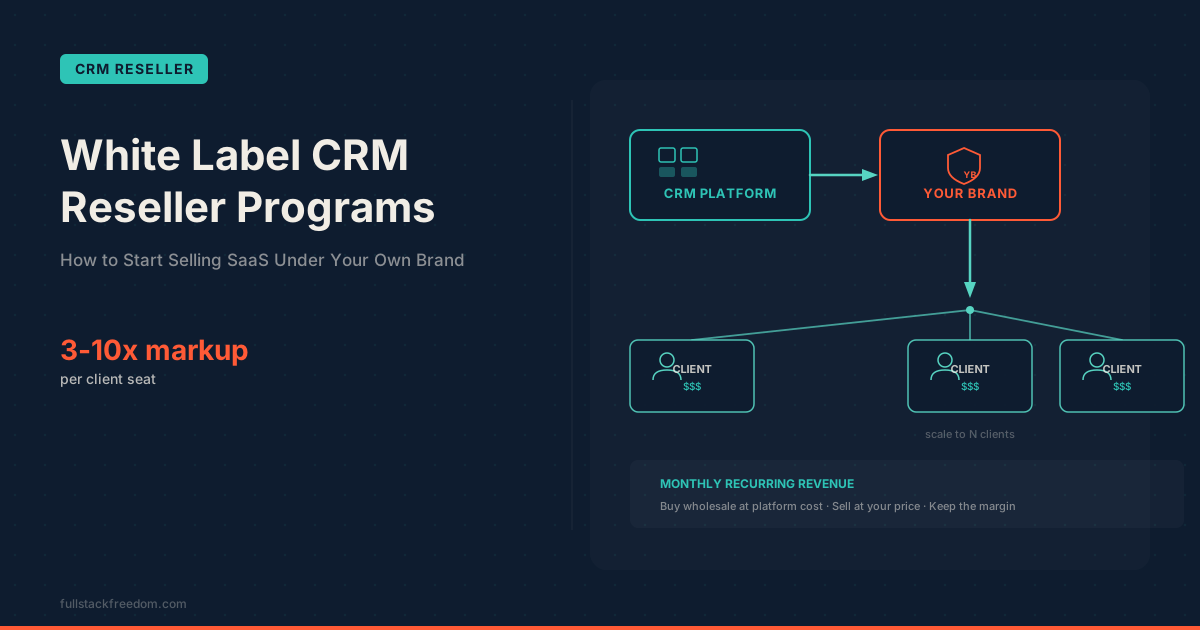
GHL fits best if you’re serving local businesses, marketing agencies, or anyone who needs an all-in-one stack. If you want to go deeper on the CRM reseller angle specifically, I wrote about that in White Label CRM Reseller Programs: How to Start Selling SaaS.
Bottom line: Highest revenue ceiling of anything on this list. Steeper learning curve, but the economics justify the investment.
2. Vendasta: Best for Agencies That Want a Full Product Catalog
Vendasta takes a different approach. Instead of one deep platform, they give you 250+ rebrandable products (reputation management, SEO, social, ads, websites), and you assemble packages for clients.
White label access starts around $399/month. There’s also a $500–$1,500 onboarding fee depending on the plan tier. That’s a real cost to factor in upfront.
Where Vendasta shines: if your clients need a variety of services and you want to fulfill through a marketplace rather than build everything yourself, this is a strong model. You act as the agency layer; Vendasta handles the product infrastructure and some fulfillment.
The tradeoff is margin compression. More products means more complexity, and Vendasta takes their cut. You’re running a reseller operation, not building a tight SaaS product. Some agencies love that; others find the margins too thin once you stack platform costs and fulfillment.
Best fit: Established agencies with diverse client needs and existing sales volume to absorb the onboarding costs.
3. Simvoly: Lean Option for Website and Funnel Builders
Simvoly is a narrower tool (website builder, funnel builder, e-commerce, memberships) with a white label tier that comes in around $199/month for the White Label Pro plan.
The appeal here is the entry cost. Under $200/month is a low bar to clear, and if your clients primarily need websites and funnels, you’re not paying for features they’ll never use.
The ceiling is also lower, though. Simvoly doesn’t compete with GHL on breadth. You can’t build an all-in-one agency stack around it. But if you’re niche (say, you build funnels for e-commerce brands or info product creators), it’s a clean, focused solution.
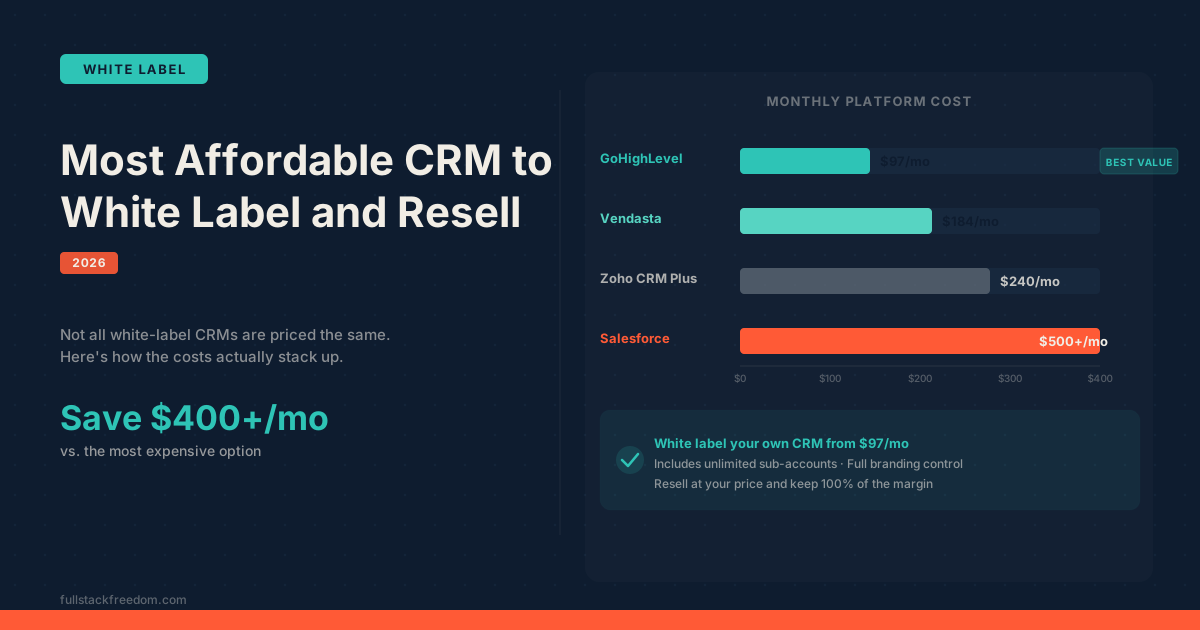
Worth considering if you want to start lean and prove the model before committing to a higher-cost platform. For more context on entry-level options, this post on Most Affordable CRM to White Label and Resell covers similar territory.
4. SocialPilot: White Label Social Media Management
SocialPilot is purpose-built for social media scheduling and management. The Agency+ plan runs around $200/month and includes white label client dashboards.
This one works best as a bolt-on to an existing service offering rather than a standalone SaaS product. If you’re already doing social media management for clients, white labeling SocialPilot means you’re delivering through a branded tool instead of a generic one.
The margin math is tighter because social media management tools are a competitive category. Clients have seen them before and know what they look like. Differentiating on the white label angle alone is harder. What actually sells is your strategy and execution; the tool is infrastructure.
Still, at $200/month with solid scheduling features and white label reporting, it’s a reasonable choice for social-focused agencies.
5. AgencyAnalytics: Reporting Dashboards at Per-Client Pricing
AgencyAnalytics does one thing well: white-labeled reporting dashboards that pull from 80+ integrations (Google Analytics, Meta Ads, SEO tools, etc.). Pricing runs around $12/client/month on the scaling plan.
This is a different model than the others. You’re not reselling a full platform. You’re adding branded reporting on top of the work you’re already doing. The value prop to clients is visibility: they see results in a clean, professional dashboard with your logo on it.
The upside is the per-client pricing scales down when you’re small and up when you grow. No big upfront commitment. The downside is it’s an add-on, not a revenue center. You’re not charging clients $200/month for AgencyAnalytics. You’re bundling it into retainers to justify higher rates and reduce churn.
Best fit: Agencies with existing retainer clients who need better reporting infrastructure.
Comparison at a Glance
| Platform | Monthly Cost | Best For | Resell Potential |
|---|---|---|---|
| GoHighLevel | $497 | All-in-one agency SaaS | High ($297–$997+/client) |
| Vendasta | $399 + onboarding | Multi-product resellers | Medium (volume-dependent) |
| Simvoly | ~$199 | Website/funnel builders | Medium (niche play) |
| SocialPilot | ~$200 | Social media agencies | Lower (add-on model) |
| AgencyAnalytics | $12/client | Reporting layer | Low (retention tool) |
What This Actually Means for You
The right platform depends on what you’re building. A few honest filters:
If you want to build a productized SaaS business (where clients pay you a monthly fee for software access, and you’re not billing by the hour), GoHighLevel is where most operators land. The economics work, the platform is deep enough to serve most SMB clients, and the affiliate program gives you a second income layer.
If you’re an established agency with diverse client needs and existing revenue, Vendasta’s product catalog makes sense. You’re not building a SaaS; you’re running a managed service operation.
If you’re early-stage or testing the model, Simvoly keeps your risk low while you prove you can sign and retain clients. Start small, validate, then upgrade.
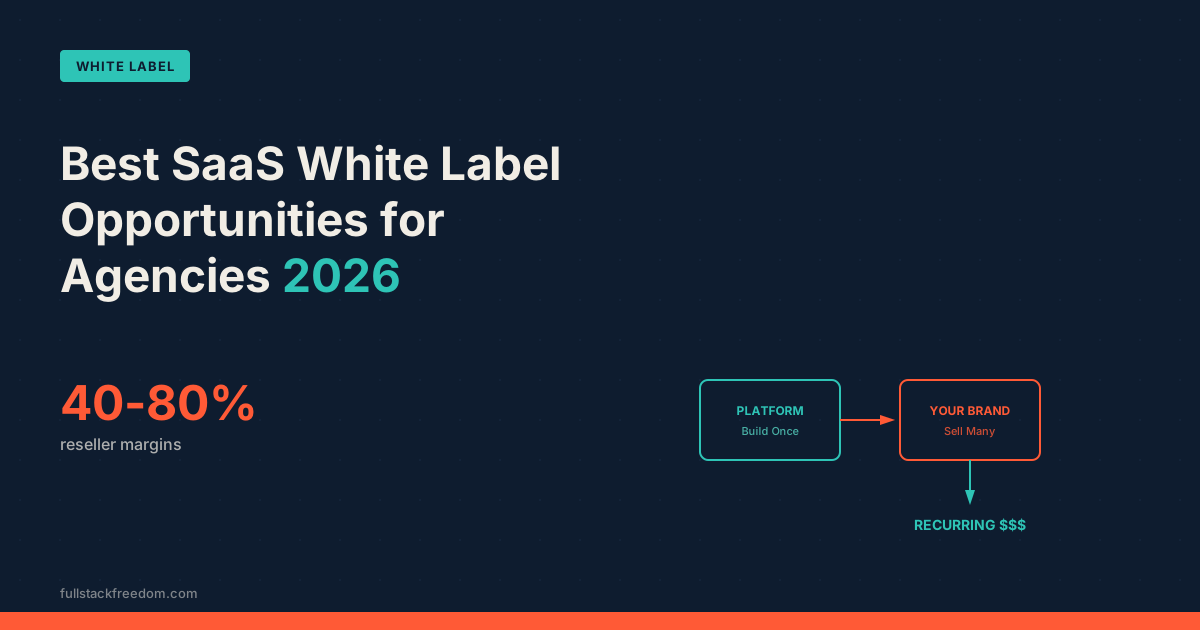
For the bigger picture on where white label opportunities actually make sense in 2026, this post covers it well: Best SaaS White Label Opportunities for Agencies in 2026.
Next Steps
Pick one platform and run the break-even math for your situation. What do you need to charge? How many clients to cover platform costs? What’s your realistic sales timeline?
If the numbers hold up, the model works. Most people overthink platform selection and underthink client acquisition. The platform is the easy part.
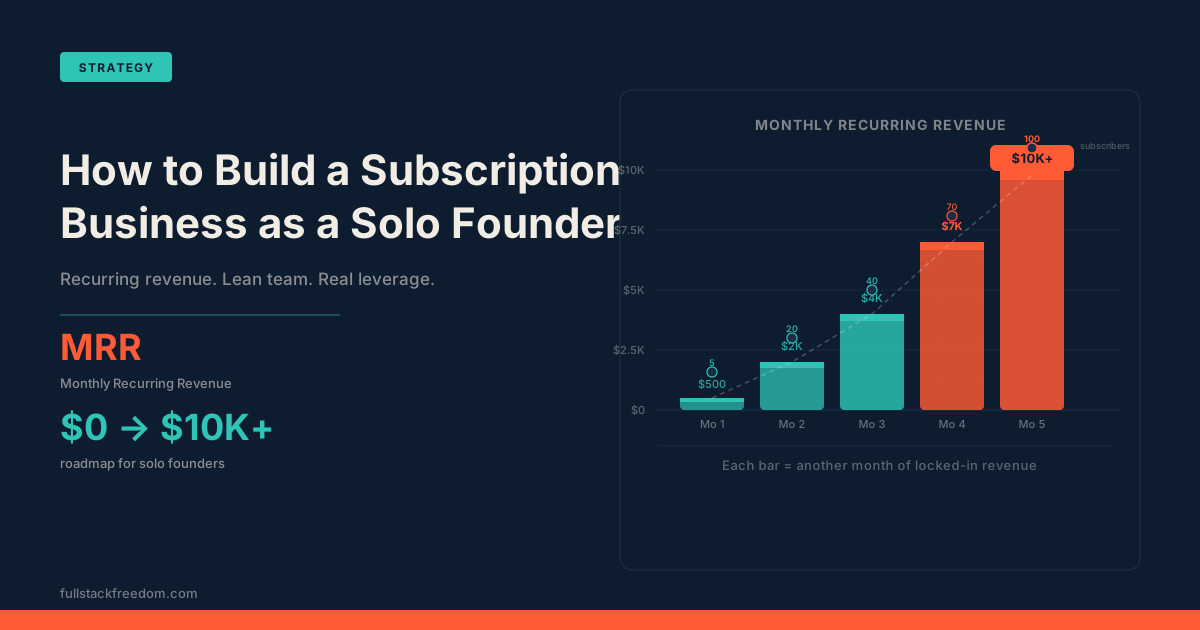
If you’re building a subscription-based business from scratch, not just adding white label SaaS to an existing agency, there’s a broader strategy conversation worth having. I covered that in How to Build a Subscription Business as a Solo Founder.
And if you want to see the templates, prompts, and workflows I’m actually using to run and sell these kinds of setups, that’s what the Skool community is for. Everything practical lives there.