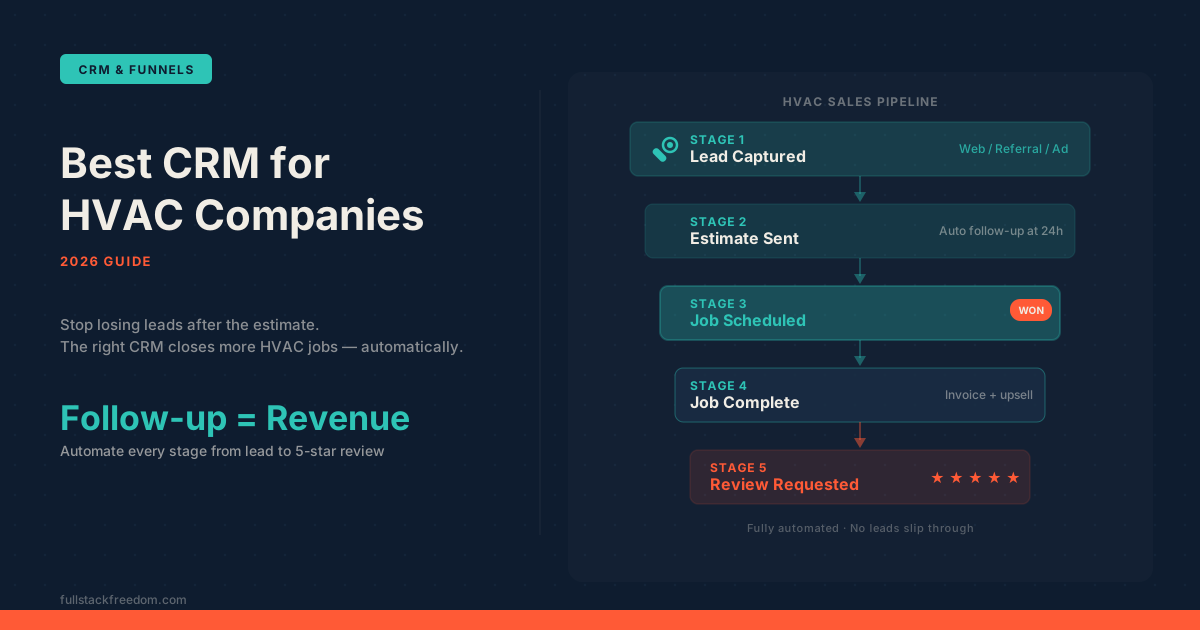
If you’ve searched “HVAC CRM” and walked away more confused than when you started, you’re not alone. The term gets thrown around to describe tools that do completely different things, and buying the wrong one is an expensive mistake. HVAC companies without a CRM lose 20–30% of potential revenue to missed follow-ups, forgotten estimates, and customers who slip through the cracks. In a $159B industry with over 117,000 contractor businesses competing for the same calls, that’s not a margin problem you can ignore.
Here’s what the other comparison articles won’t tell you: “HVAC CRM software” is actually two different categories, and most companies need to understand the distinction before they buy anything.
Field Service vs. Marketing CRM for HVAC Companies
This is the split nobody explains clearly, so let me be direct.
Field Service Management (FSM) is your operations backbone. It handles dispatch, scheduling, job tracking, invoicing, GPS, and your pricebook. Think of it as the system your techs live in every day. ServiceTitan, Housecall Pro, and Jobber all sit in this category.
Marketing CRM is your growth engine. It captures leads, sends follow-up sequences, automates review requests, and runs email and SMS campaigns. GoHighLevel and HubSpot live here. These tools don’t care about your dispatch board. They care about converting leads and keeping customers coming back.
Most HVAC companies under $3M need a great FSM with solid built-in CRM features first. The FSM is table stakes. Once you’re running efficiently and want to drive serious growth, that’s when you layer a marketing CRM on top.
Growing companies run both. It sounds like overhead, but the math works: maintenance agreement customers are 3–5x more valuable than one-time callers, and that retention engine only runs if you have a system nurturing those relationships.
Platform Breakdown: Best HVAC CRM by Company Size
Let’s go tool by tool. I’ll give you the honest case for each one and where it breaks down.
Jobber — Best for Small HVAC Shops (1–10 Techs)
Price: $39–$199/month
Jobber is where most small HVAC operators should start. Clean interface, fast onboarding, and it doesn’t require a consultant to set up. You get quoting, scheduling, invoicing, and basic client management. Everything a 1–5 tech operation needs to stop running the business out of a whiteboard.
The gotcha: key features like two-way texting, automated follow-ups, and online booking are locked behind higher tiers. And payment processing fees stack on top of your subscription. Factor that into your real monthly cost.
Best fit if you’re a solo tech or a startup shop that just needs to get organized before worrying about growth.
Housecall Pro — Best for Growing Residential (2–15 Techs)
Price: $59–$299/month
Housecall Pro is a step up in polish and capability. Strong scheduling UI, GPS tracking, review request automation, and better customer-facing features than Jobber. If you’re doing residential HVAC and growing fast, this is a serious contender.
Watch the fine print: GPS tracking is only available on Essentials and above, and the integration ecosystem is more limited than ServiceTitan. If you’re already deep in QuickBooks or have specific tech stack requirements, map that out before committing.
Workiz — Best for Comms-Heavy Small to Mid-Size Shops
Price: ~$187/month for 3 users
Workiz is the one you want if communication is your bottleneck. Built-in phone system, AI call answering, and solid job management in one platform. For an HVAC company where the office is fielding calls all day, that matters.
The tradeoff: the mobile app has had reliability complaints from field techs, and pricing scales quickly as your team grows. Get a demo and stress-test the app before signing.
ServiceTitan — Best for Enterprise HVAC ($3M+ Revenue)
Price: $250–$500/tech/month (estimated)
ServiceTitan is the enterprise standard. Full dispatch, deep pricebook, maintenance agreement management, robust reporting. It’s genuinely powerful. If you’re running a 10+ tech operation with serious revenue, it earns its reputation.
But I need to be blunt about the cost. Real-world reported numbers put a 12-person operation at $4,000+ per month, over $63K annually. On top of that, plan for a 6–12 month onboarding process. That’s not a knock on the product; it’s just the reality of the platform. For a $1M shop, this is the wrong tool. For a $5M shop trying to scale systemically, it might be the right one.
GoHighLevel — Best for Agencies and the Marketing Layer
Price: $97–$497/month
GoHighLevel is different from everything else on this list, and it’s important to understand why. GHL is not a field service tool. It doesn’t do dispatch or GPS or invoicing. What it does, better than anything else at this price point, is lead capture, automated follow-up, review management, email and SMS campaigns, and pipeline tracking.
For a growing HVAC company, GHL is the marketing layer that sits on top of your FSM. Run Housecall Pro for operations, run GHL for growth. That two-system model is the winning stack for companies serious about retention and lead conversion.
GHL also has a pre-built HVAC snapshot, a ready-to-deploy automation package built specifically for the industry. That alone cuts weeks off setup time.
And for agencies: GoHighLevel is the only platform on this list where you can white-label the software and resell it as your own. More on that below.
Quick Comparison
| Platform | Price | FSM? | Marketing? | Best For |
|---|---|---|---|---|
| Jobber | $39–$199/mo | Yes | Basic | Solo / startup |
| Housecall Pro | $59–$299/mo | Yes | Moderate | Growing residential |
| Workiz | ~$187/mo | Yes | Moderate | Comms-heavy shops |
| ServiceTitan | $250–500/tech | Yes | Strong | Enterprise ($3M+) |
| GoHighLevel | $97–$497/mo | No | Excellent | Agencies / marketing layer |
The Agency Play: Building for HVAC Clients with GoHighLevel
If you’re an agency or a consultant building systems for HVAC companies, this section is specifically for you.
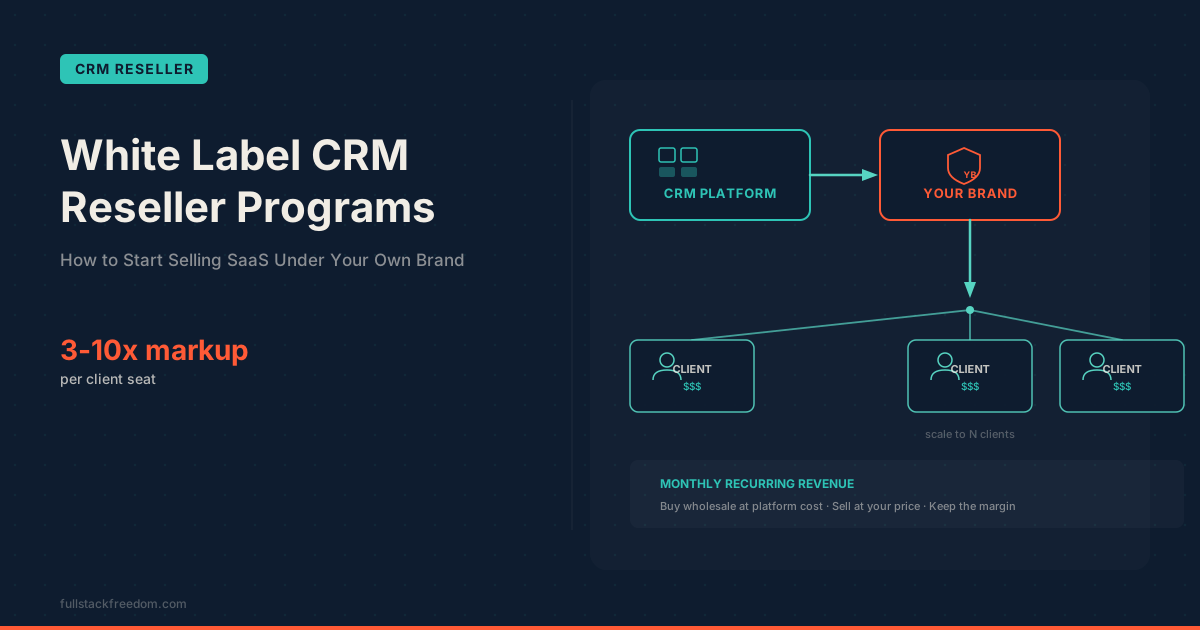
GoHighLevel is the only platform on this list with a white-label resell model built in. You can brand it as your own software, deploy the HVAC snapshot for each client, and charge $297–$497/month per location. Your client keeps whatever FSM they already use for field operations, and you layer GHL on top for lead gen, follow-up, and reputation management.
This is the two-system model in practice. One system runs the jobs. The other grows the business.
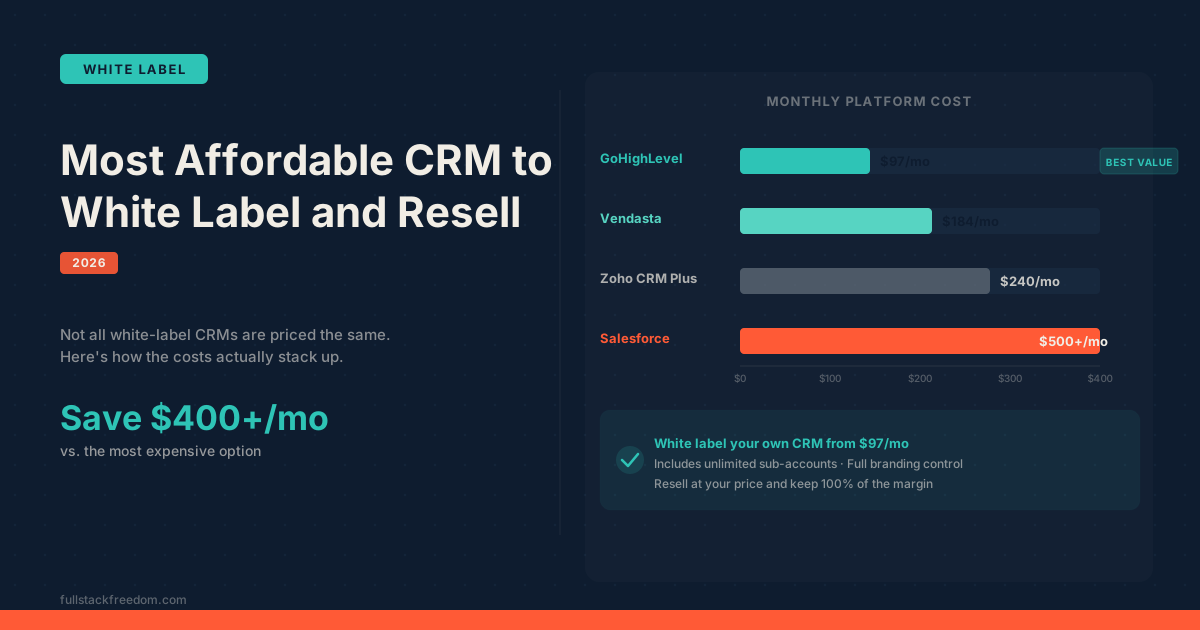
The economics work well. GHL’s agency plan starts at $497/month and lets you run unlimited sub-accounts. At $297/client, you break even at 2 clients and everything after that is margin. If you want to understand the broader market of white label CRM reseller programs or are looking at the most affordable CRM to white label and resell, GHL consistently comes out as one of the strongest options at this price point.
For agencies new to this model: start with the HVAC snapshot, customize it for your client’s market, and focus on delivering measurable results in the first 90 days. Reviews and booked appointments are your proof of value.
How to Choose: A Simple Decision Framework
Stop overthinking it. Here’s the decision:
- Solo tech or startup? → Start with Jobber. Get organized before optimizing.
- Growing residential shop, 2–15 techs? → Housecall Pro. Best balance of features and usability at this stage.
- Mid-market and you want AI call features? → Workiz. The built-in phone system is genuinely useful.
- $3M+ revenue, scaling hard? → ServiceTitan. Budget for it and plan the onboarding properly.
- Agency serving HVAC clients? → GoHighLevel. It’s the only platform built for resell, and the economics are hard to beat.
- Growing company wanting marketing automation? → GHL layered on top of your FSM. Don’t replace your FSM. Augment it.
What This Means for Your Revenue
Here’s the number that should matter most: a 5% increase in customer retention produces a 25–96% increase in profit. That range is wide because it depends on your margins, but even at the low end, that’s a meaningful return.
The mechanism is maintenance agreements. HVAC companies with strong preventive maintenance contract programs generate 39% of total revenue from those agreements: recurring, predictable revenue that runs year-round instead of spiking in summer and tanking in January. The CRM is what makes that engine run. Automated renewal reminders, seasonal tune-up campaigns, and follow-up sequences turn one-time emergency callers into long-term contract customers.
A $350–$600 service call is fine. A customer on a $200/year maintenance agreement who books that same call and two seasonal tune-ups is worth $600+ annually and refers their neighbors. The math on retention is better than the math on acquisition. Every time.
A good CRM (whether that’s your FSM’s built-in tools or a dedicated marketing layer) is what converts the first call into a multi-year relationship.
If you want to skip the setup work and start with proven templates, the Skool community has GoHighLevel HVAC snapshot templates and automation workflows you can deploy directly. Free to join, and that’s where the practical tools live, not just the concepts.
The right CRM doesn’t make your business. But the wrong one (or none at all) will absolutely slow it down. Pick the layer that matches where you are today, build the habit of using it, and layer on more capability as you grow.