If you’ve ever thought “I should just productize this” while onboarding your fifth agency client into a CRM, you’re not wrong. A white label CRM reseller program lets you put your brand on someone else’s infrastructure, set your own pricing, and collect recurring revenue, without building a single line of software. Here’s what the setup actually looks like, what the numbers can do, and where people trip up.
Why This Is Worth Your Attention
The CRM market hit $112 billion in 2025 and is projected to reach $163 billion by 2030. That’s not a trivia stat. It’s context for why platforms are bending over backwards to recruit resellers. They want distribution. You want a recurring revenue stream that doesn’t require you to trade hours for dollars.
The white-label software market broadly is projected to exceed $225 billion by 2027. There’s a real shift happening where agencies and operators are becoming software businesses, at least in part. That’s not hype. That’s margin math working in your favor.
For agencies, this is less about replacing service revenue and more about adding a stickiness layer. Your clients already trust you. Putting them on your branded CRM increases switching costs and creates a monthly check that shows up whether you’re actively working or not.
How White Label CRM Actually Works
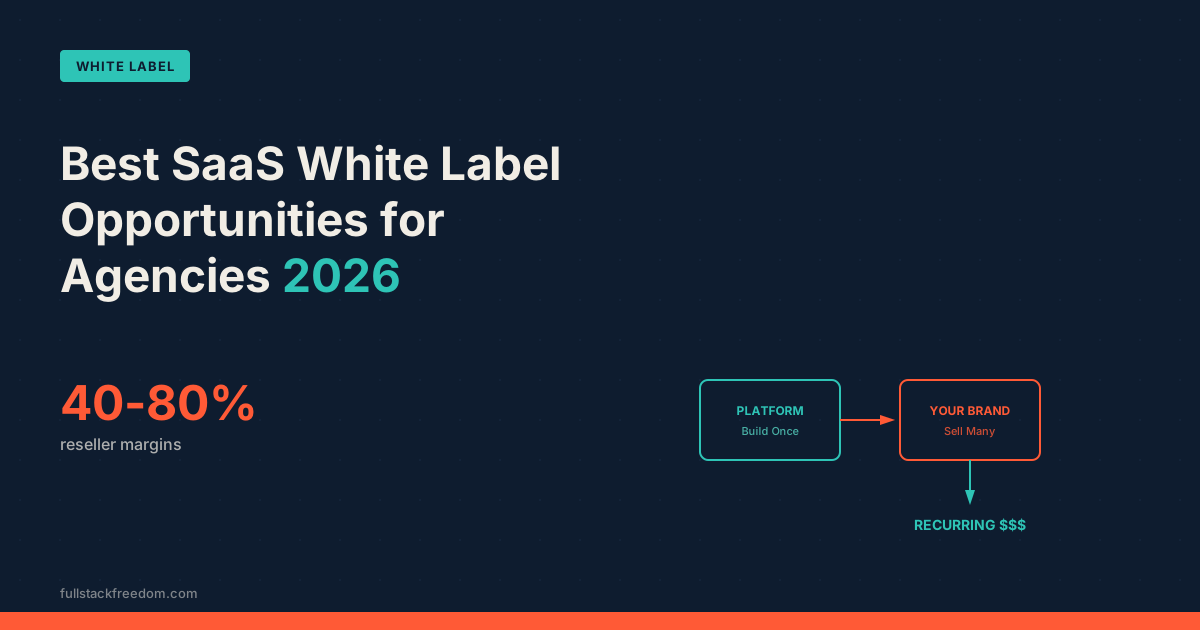
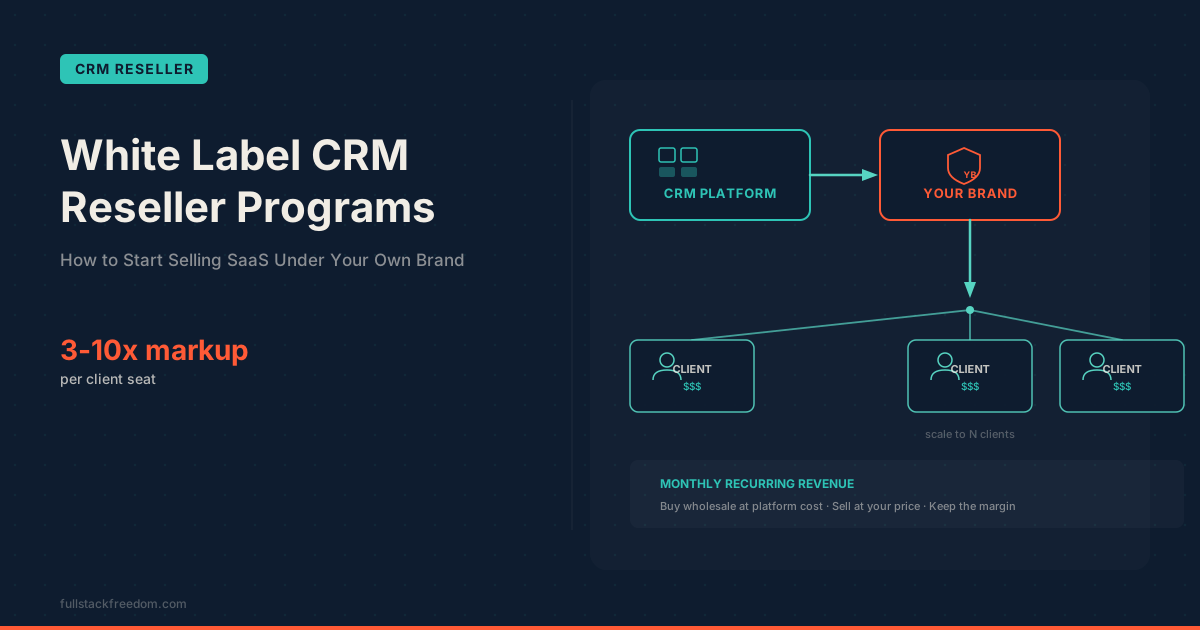
The basic model: a software company builds the product, you license it, slap your brand on it, set your own pricing, and resell it to clients who log in at your domain. They never see the underlying vendor.
Three moving parts make this work:
- Branding layer – your logo, colors, custom domain (e.g.,
app.youragency.com) - Billing layer – you charge clients directly; you pay the platform wholesale
- Support layer – your clients come to you, not the platform, for help
That last one matters. You become first-line support, which is either a feature or a bug depending on how you look at it. More on that shortly.
Platform Comparison: Which CRM Can You Actually White Label?
Not every “partner program” is a real white-label opportunity. Some are VAR deals (you resell, but the brand stays theirs). Others are legitimate: you own the client relationship entirely.
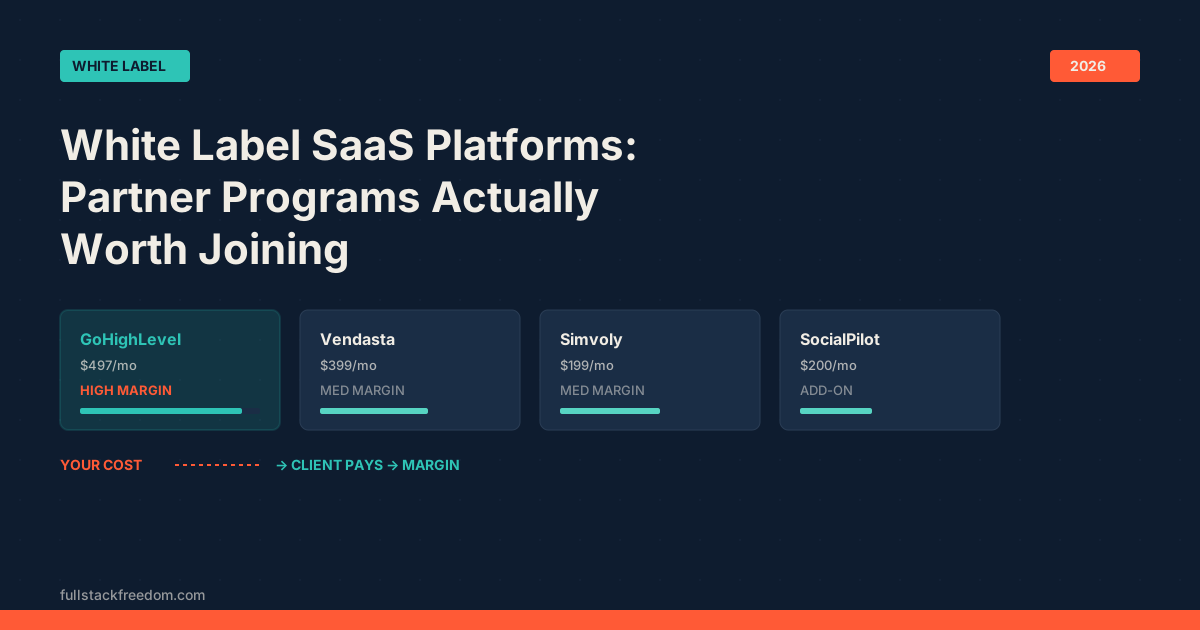
| Platform | Model | Cost | White Label? |
|---|---|---|---|
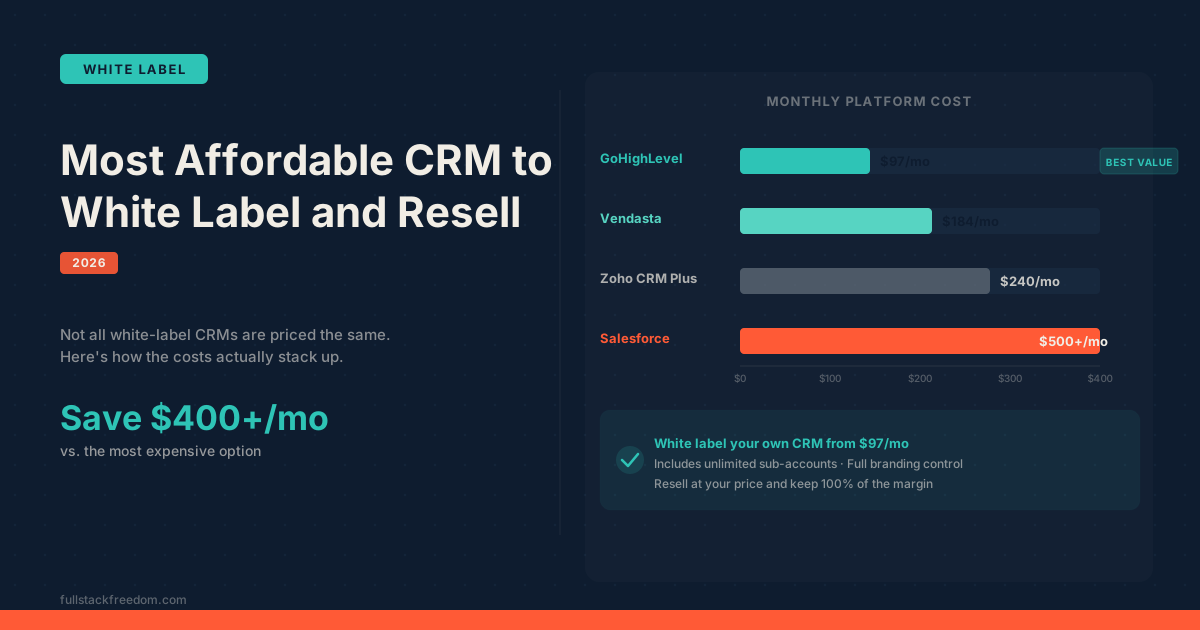
| GoHighLevel | SaaS reseller | $297–$497/mo | Full |
| SuiteDash | Reseller wholesale | ~$69/mo | Full |
| Vendasta | Marketplace | $79+/mo | Full |
| Zoho CRM | VAR/partner | Varies | Partial |
GoHighLevel is the most popular choice in agency circles for a reason: the SaaS infrastructure is genuinely built for resellers, not bolted on. SuiteDash is worth a look if your clients need CRM plus client portal plus project management in one. Vendasta runs a marketplace model with 250+ apps, which sounds great until you see the $500–$2,500 onboarding fee and pricing complexity. Zoho CRM’s partner program exists, but standard resellers don’t get true white-labeling on the CRM itself.
For most founders and operators reading this, GoHighLevel is the practical starting point. So that’s where I’ll spend most of the detail.
Setting Up a White Label CRM with GoHighLevel
Two tiers matter here:
Agency Unlimited ($297/month): Unlimited sub-accounts, custom desktop domain, white label branding. This is where you manage clients. You can’t do automated SaaS billing on this plan.
Agency Pro / SaaS Mode ($497/month): Adds the SaaS Configurator, automated Stripe billing, white label mobile app, and usage-based rebilling. This is where you actually run a CRM reseller business.
The setup flow in SaaS mode goes like this:
- Connect your Stripe account (Stripe is the only supported payment processor, no workarounds)
- Build your pricing plans inside the SaaS Configurator
- Create a sales funnel or checkout page
- Client subscribes through your funnel
- A sub-account auto-creates and provisions
- Client logs in at your custom domain
When it works, it’s genuinely elegant. A client puts in their card, a fully configured account spins up, and they’re in your branded CRM without you lifting a finger.
Plan for 2–6 weeks of setup before you can actually sell. Building your snapshot (the pre-configured account template you clone for every client), email integration, and sales funnel takes real time. Nobody gets this live in a weekend.
The Margin Math
This is the part that makes the model compelling. The part that should make you sit up.
| Line Item | Amount |
|---|---|
| GHL SaaS Pro | $497/mo |
| 10 clients × $297/mo | $2,970/mo |
| Usage (~$10/client) | $100/mo |
| Net | ~$2,373/mo |
| Break-even | ~2 clients |
Two clients covers your platform cost. Everything after that is margin. Ten clients nets you roughly $2,400/month on top of whatever service work you’re doing.
The usage costs are real and worth flagging. SMS credits, email sends, and A2P 10DLC campaign registration ($4/month per campaign) add up faster than you expect if clients are running active automations. Build usage costs into your pricing from day one, not as an afterthought.
For agencies with existing clients, this is a powerful upsell. You’re not convincing cold strangers to buy CRM software. You’re offering existing clients a better-organized version of something they already need.
Why Niche Positioning Is the Only Positioning That Works
Here’s the uncomfortable truth: there are hundreds of GoHighLevel resellers. Generic “all-in-one CRM for small businesses” positioning is a crowded, margin-compressing race to the bottom.
The operators winning this model aren’t selling CRM. They’re selling “the CRM for HVAC companies” or “the CRM for real estate brokerages”, with pre-built pipelines, automations, and reporting specific to that vertical.
This is called building a snapshot: a fully configured sub-account template that gets cloned for every new client. Your HVAC snapshot might include:
- A lead pipeline with stages like Estimate Sent, Job Scheduled, Invoice Sent
- Automated follow-up sequences for no-shows
- Review request workflows triggered on job completion
- A dashboard showing revenue by technician
That kind of specificity is hard to compete with. A generic CRM reseller can’t replicate it without doing exactly what you did, which takes months.
If you want to explore more ways to build recurring revenue around white-label software, I wrote about broader options in Best SaaS White Label Opportunities for Agencies in 2026, worth reading alongside this one.
The Honest Gotchas
I want to be straight with you here, because the “passive income from SaaS” framing leaves out some friction.
You become first-line support. Every “why isn’t my email sending” ticket from your clients lands on you. That’s manageable at 5 clients. At 30, you need a process or a hire.
Email deliverability takes work. GoHighLevel defaults to Mailgun, which is fine, but you need a dedicated sending domain with proper DKIM/SPF setup before you onboard paying clients. Skip this and your clients’ emails end up in spam.
Stripe dependency is real. SaaS mode only supports Stripe for automated billing. If you’re in a country where Stripe isn’t available or a client can’t use it, you’re managing billing manually.
Surprise usage costs happen. SMS charges, especially for clients running high-volume automations, can spike. Set up usage alerts and consider usage-based rebilling (GHL supports this) so you’re not absorbing overages.
Positioning matters more than the product. This is both a gotcha and an opportunity. The technology works. The differentiator is how you package and position it.
None of these are dealbreakers. They’re just the things to plan for rather than discover mid-launch.
What This Means for You
If you’re running an agency or consulting practice with a specific niche, this model is worth serious consideration. The setup investment is real, but the payoff is compounding. Every client you land adds to a revenue base that doesn’t require you to re-earn it each month.
If you’re starting from scratch without existing clients, the path is harder. You’ll need to build distribution before the economics make sense. That means content, outreach, or a specific community you already have access to.
Either way, the move is to pick a vertical before you pick your pricing. The niche snapshot is the product. The white label CRM platform is just the infrastructure underneath it.
GoHighLevel is where I’d start for most agencies. The SaaS Configurator genuinely works, and the economics are hard to beat at the current price point. The question is whether you’ll do the positioning and setup work to differentiate.
I share more builds and breakdowns like this in the Full Stack Freedom newsletter. The Skool community has snapshot templates and pricing calculators if you want a head start rather than building from scratch.