If you’re trying to figure out which of the best marketing automation platforms is actually worth your money as a small business owner, you’re in the right place. You’ve probably already discovered that the options are overwhelming.
Email tools. CRM platforms. All-in-one suites. Contact-based pricing that scales against you. It gets messy fast.
I’ve been in the weeds on this stuff: building funnels, running automations, and helping founders actually deploy these tools, not just evaluate them. This breakdown is built on real use and real research, not vendor marketing copy.
Let’s cut through it.
What Marketing Automation Actually Is (and Isn’t)
Marketing automation is the practice of using software to send the right message to the right person at the right time, without doing it manually every time. It’s triggered communication based on behavior, not just scheduled email blasts.
A few practical examples of what that looks like:
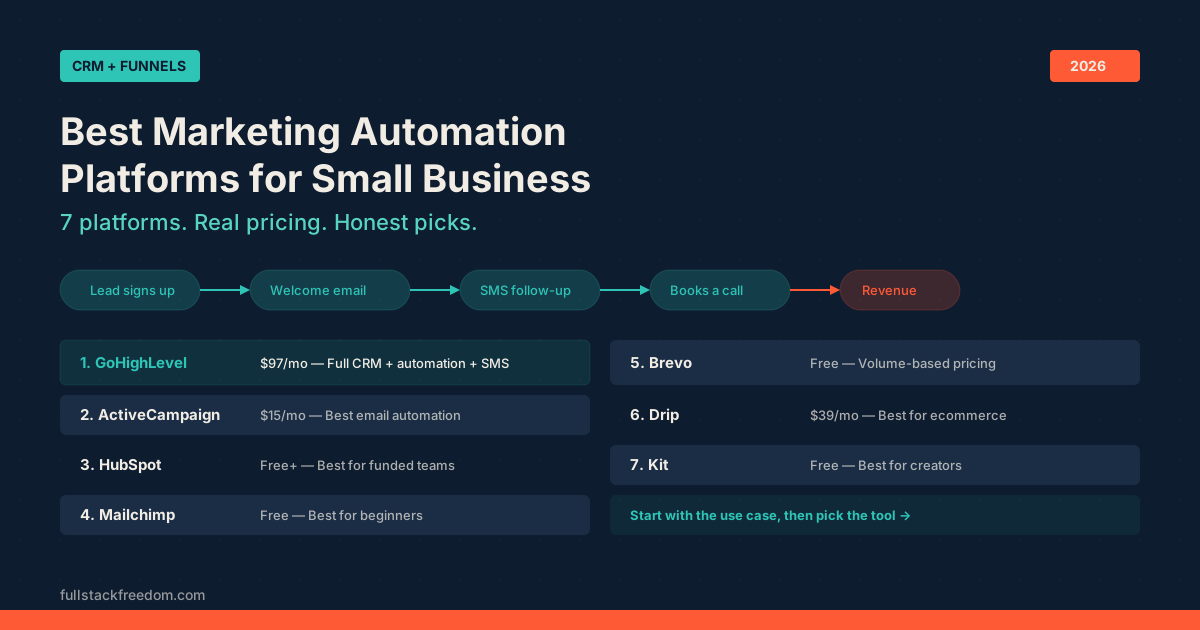
- A lead fills out a form → they automatically get a welcome sequence
- Someone books a call → they get reminders via email and SMS
- A contact goes cold → a re-engagement sequence kicks off after 30 days
- A customer buys → they get an upsell offer three days later
The mistake most small businesses make is treating marketing automation like email marketing. They’re related, but true automation connects your CRM, your messaging, and your contact behavior in one system. That distinction matters a lot when you’re picking a platform. For a deeper look at the AI-powered side of this, see the best AI automation tools for business. And if you want to understand how AI takes personalization beyond basic triggers, the guide on AI customer personalization covers email, web, chat, and predictive scoring in detail.
Platform Breakdown
1. GoHighLevel: Best All-in-One for Founders and Agencies
If you need a CRM, funnel builder, email, SMS, and automation in one platform, and you don’t want to pay for five separate tools, GoHighLevel is the one to look at first.
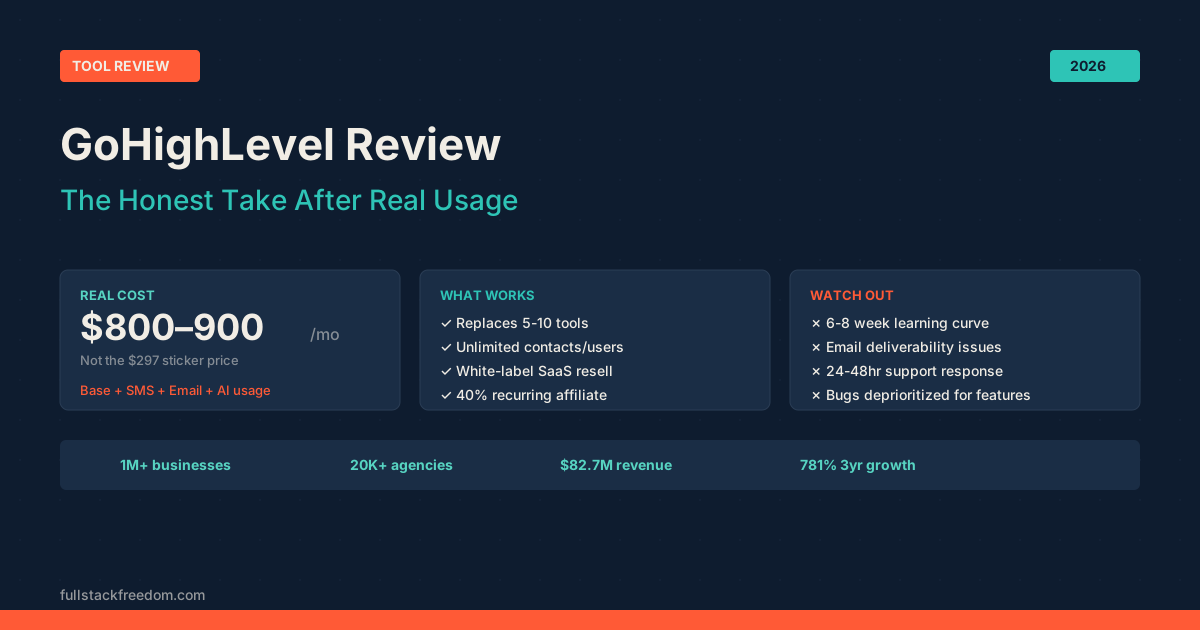
What sets it apart: GoHighLevel isn’t just an email tool. It’s a full business operating system: CRM, pipelines, two-way SMS, email campaigns, call tracking, appointment booking, landing pages, and automated follow-up sequences all built in. For a small business trying to stay lean, replacing four or five tools with one is a real operational advantage.
Pricing:
- Starter: $97/month – one sub-account, full CRM, pipelines, email/SMS automations, unlimited contacts and users
- Unlimited: $297/month – unlimited sub-accounts, white-label branding, API access (great for agencies)
- SaaS Pro: $497/month – resell GHL as your own software
Note: SMS and calls are usage-based on top of the plan price (roughly $0.008/SMS segment and $0.014/minute outbound). Not a dealbreaker, but worth knowing upfront.
Best for: Founders building a full-funnel operation, agencies managing clients, anyone who wants to consolidate tools. This is what I run on personally.
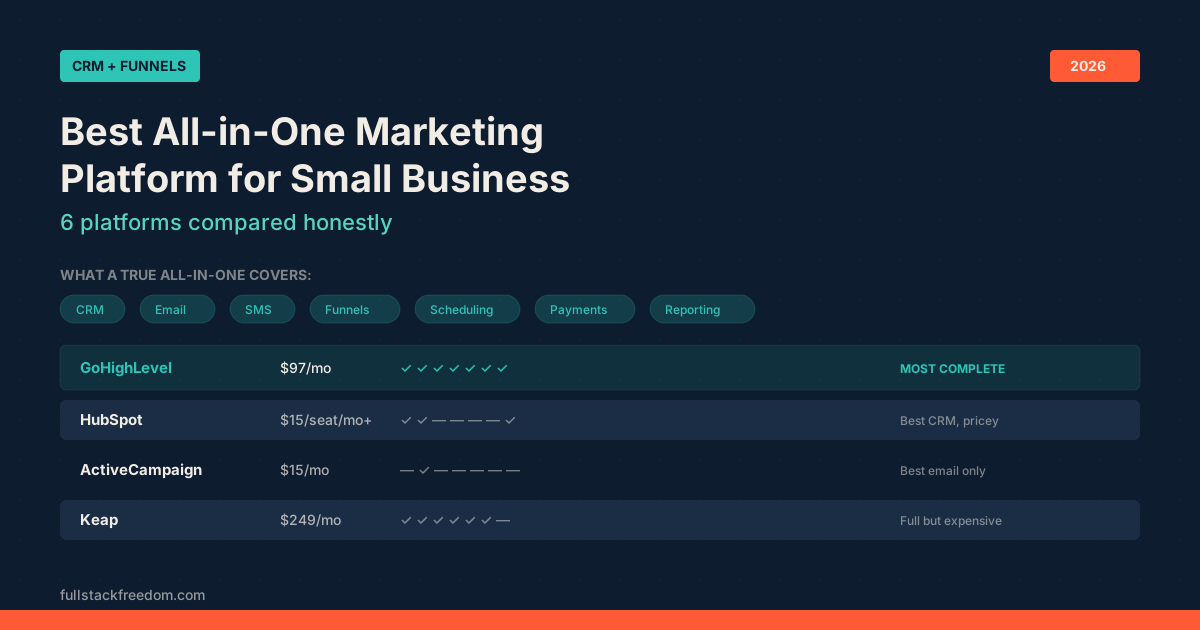
See also: GoHighLevel Review (2026) and Best All-in-One Marketing Platform for Small Business.
2. ActiveCampaign: Best for Advanced Email and CRM Automation
ActiveCampaign has been the go-to recommendation for email-forward businesses for years, and it still earns that reputation. The automation builder is genuinely powerful: conditional logic, branching sequences, lead scoring, deep segmentation.
Pricing:
- Starter: $15/month for 1,000 contacts (email + basic automation)
- Plus: $49/month – adds CRM and sales automation
- Scales with contacts from there
Best for: Small businesses that live in email marketing and need sophisticated automation without the all-in-one overhead. The CRM isn’t as robust as GoHighLevel’s, but the email side is best-in-class.
3. HubSpot: Best for Growing Teams That Can Afford It
HubSpot is genuinely excellent software. The CRM is free, the UI is polished, and the ecosystem is massive. The problem for small businesses is the pricing cliff once you need real automation.
Pricing:
- CRM: Free (limited automation)
- Starter: $20/month
- Professional (where real automation lives): $800/month
That jump from Starter to Professional is the issue. For a solo operator or early-stage business, $800/month for omnichannel automation is a lot to absorb. HubSpot shines more when you have a team, a budget, and existing processes to plug into it.
Best for: Businesses that are scaling and have budget, or teams that need deep reporting and CRM integrations across departments.
4. Mailchimp: Best Entry-Level Starting Point
Mailchimp is where a lot of people start, and for good reason. The interface is friendly, the learning curve is low, and the free tier gets you moving.
Pricing:
- Free: Up to 500 contacts, 1,000 sends/month
- Essentials: Starts around $13/month
- Standard: Starts around $20/month (adds automation journeys)
The honest limitation: Mailchimp’s automation is surface-level compared to the other tools on this list. It’s fine for a newsletter and a basic welcome sequence. Once you want behavioral triggers, CRM syncing, or multi-channel flows, you’ll hit walls.
Best for: Absolute beginners, businesses that just need email newsletters, or anyone testing the waters before committing to a more powerful platform.
5. Brevo: Best Free Tier for Email + SMS
Brevo (formerly Sendinblue) is often overlooked but it punches well above its price point. Unlike most platforms that charge by contacts, Brevo charges by email volume, which is a significant pricing advantage if you have a large list but don’t send frequently.
Pricing:
- Free: 300 emails/day, unlimited contacts
- Starter: $9/month for 5,000 emails/month
- Business: $18/month – adds automation, A/B testing, and multi-user access
The multichannel capability (email + SMS + WhatsApp) at these price points is genuinely impressive. The automation builder is solid for the price, though not as deep as ActiveCampaign.
Best for: Budget-conscious businesses with larger contact lists, or anyone who wants email + SMS in one place without paying a premium.
6. Drip: Best for Ecommerce Businesses
Drip was built specifically for ecommerce, and it shows. The integrations with Shopify, WooCommerce, and similar platforms are tight, and the automation templates are wired around purchase behavior: abandoned carts, post-purchase flows, win-back campaigns.
Pricing:
- 2,500 contacts: $39/month
- 5,000 contacts: $89/month
- 10,000 contacts: $154/month
Full feature access at every tier is a plus. You’re not getting nickel-and-dimed on features as you grow, only on contact volume.
Best for: Ecommerce brands running on Shopify or WooCommerce that need deep customer behavior automation.
7. Kit (formerly ConvertKit): Best for Content Creators and Newsletters
Kit is purpose-built for content creators: writers, podcasters, course creators, newsletters. If you’re monetizing an audience rather than running a traditional sales funnel, Kit’s model makes a lot of sense.
Pricing:
- Free: Up to 10,000 subscribers, unlimited emails and forms, one automation
- Creator: Starts at $39/month for 1,000 subscribers (scales with list size)
- Creator Pro: Adds advanced reporting, subscriber scoring, and Facebook Custom Audiences
The free tier is notably generous for the space. The tradeoff is that Kit isn’t designed for complex CRM-style automation or multi-channel campaigns. It’s a focused tool for a focused use case.
Best for: Newsletters, course creators, and content brands where the email list is the core business asset.
Quick Comparison Table
| Platform | Starting Price | Free Plan | CRM Included | SMS | Best For |
|---|---|---|---|---|---|
| GoHighLevel | $97/mo | No (14-day trial) | Yes (full) | Yes | All-in-one: funnels, CRM, automation |
| ActiveCampaign | $15/mo | No (trial) | Yes (Plus+) | Add-on | Advanced email automation |
| HubSpot | Free | Yes (limited) | Yes (free CRM) | Pro+ | Growing teams with budget |
| Mailchimp | Free | Yes | No | No | Email newsletters, beginners |
| Brevo | Free | Yes | Basic | Yes | Volume-based email + SMS |
| Drip | $39/mo | No (trial) | No | Yes | Ecommerce automation |
| Kit | Free | Yes (10K subs) | No | No | Content creators, newsletters |
Choosing Based on Your Use Case
The right platform depends almost entirely on what you’re actually trying to do. Here’s a fast framework:
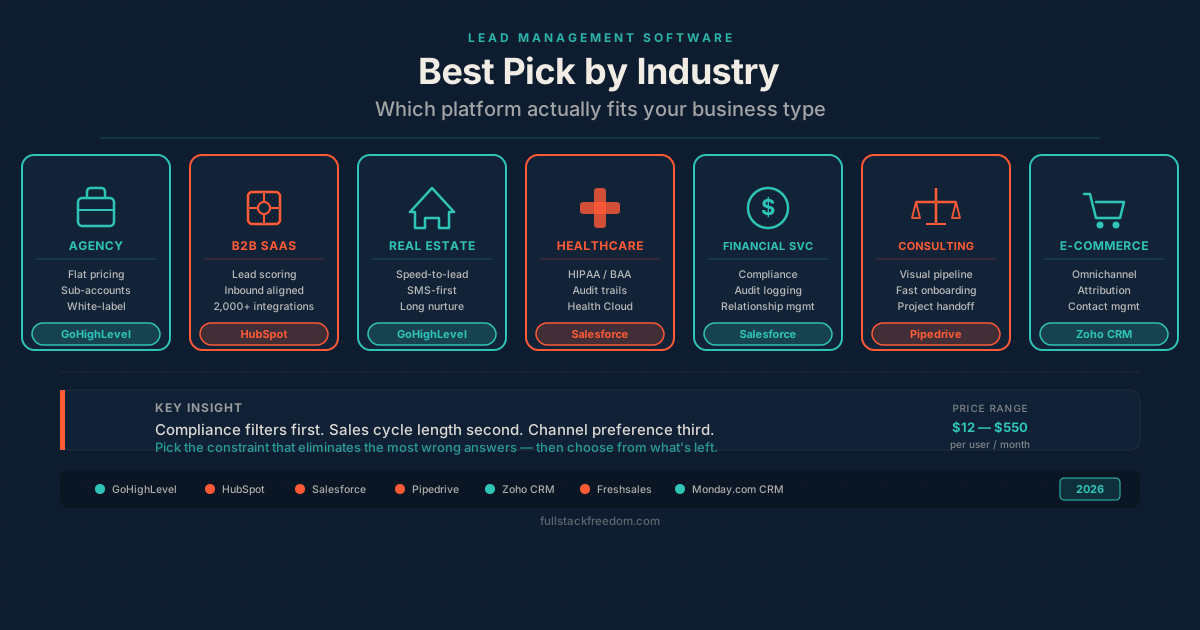
You’re a founder or agency running leads through a sales process → GoHighLevel. The CRM, pipeline management, two-way SMS, and automation all in one place is exactly what a lean operation needs. See also: Best Lead Management Software by Industry.
You want world-class email automation and already have a CRM → ActiveCampaign. The automation builder is genuinely best-in-class for email-centric workflows.
You’re an ecommerce brand → Drip. The Shopify and WooCommerce integrations are built for your specific use case, and the behavioral triggers around purchase data are exactly what you need.
You’re building a content brand or newsletter → Kit. The generous free tier and creator-focused tools are the right fit. No need to over-engineer it with a CRM you won’t use.
You’re just getting started and cost is the primary constraint → Brevo. The volume-based pricing model means you can grow your list without your software bill growing proportionally.
You have a team and a real budget → HubSpot at the Professional tier or above. It’s expensive but it’s genuinely a comprehensive platform when you can actually unlock it.
A Note on “All-in-One” vs. Best-of-Breed
One decision worth thinking through: do you want one platform that does most things well, or multiple tools that each do one thing excellently? Having a clear AI strategy for your business can help you answer that question.
For most small businesses, the answer should lean toward consolidation. Fewer tools means fewer integrations to break, fewer logins to manage, and a cleaner view of your contacts and pipeline. That’s the core argument for something like GoHighLevel. Not that it’s perfect at everything, but that it’s very good at everything a small business needs without requiring a stack of tools to stitch together.
As you scale and add team members with specialized roles, best-of-breed can make more sense. But when you’re lean, simplicity is a superpower.
Next Steps
The honest answer is: don’t overthink the platform until you’re clear on what automations you actually need. Start with the use case, then pick the tool.
If you’re still figuring out where to start, or you want to see what a real automation setup looks like inside GoHighLevel, come hang out in the Skool community. That’s where I share prompts, templates, workflows, and actual builds. The kind of stuff that doesn’t make it into a 10-minute YouTube video.
Pick a platform, build one automation that solves a real problem, and iterate from there. That’s it.