The lead management software market hit $8.76 billion and it’s packed with options. Open any “best of” list and you’ll find the same seven platforms ranked by review score, with zero mention of what industry they were reviewed by. A marketing agency managing 500 leads across 10 client accounts doesn’t need the same tool as a financial advisor nurturing 50 high-net-worth prospects. Those are different problems, different compliance requirements, different sales cycles, and they need different software.
This guide cuts that confusion. I’m going to walk through the platforms that actually matter and then tell you which one fits your specific industry. No padding, no affiliate-first rankings. If you want the framework for picking a CRM before you even get to lead management, the how to choose a CRM for your industry guide is the right starting point.
Why Industry Matters for Lead Management
Lead volume, deal complexity, compliance requirements, and sales cycle length vary enormously across industries, and the software that handles those variables has to be built for them.
An agency running paid ads for 10 clients might process 500+ inbound leads per month, across different pipelines, with sub-accounts for each client. A financial advisor’s version of “lead management” is a list of 50 referrals who need a quarterly check-in and documentation that meets SEC recordkeeping rules. Neither of those problems is harder. They’re just completely different. Using the wrong tool for your category means you’re either paying for features you’ll never touch or missing the ones you need every day.
Healthcare and financial services add another layer entirely: compliance. HIPAA requires Business Associate Agreements and audit logging. Financial services have SEC and FINRA requirements. Most popular lead management tools can’t meet those standards, which eliminates them from consideration regardless of their feature set.
The sales cycle length matters just as much. Real estate runs 6–12 months from first contact to close, so you need long nurture sequences and behavioral triggers. HVAC or local services close in hours to days, so you need instant lead response and SMS automation. A tool optimized for one of those patterns will actively underperform in the other.
The Platforms Worth Knowing
Here’s a clear-eyed look at the seven platforms that cover most of the market. Not exhaustive reviews, just enough context to understand what each one is built for before we get to the industry matchups.
-
GoHighLevel, $97–$497/month flat. All-in-one CRM, SMS, email, funnels, booking, and reputation management on flat pricing with no per-contact fees. Built with agencies in mind: sub-accounts, white-label capability, and client reporting baked in. The agency and local service business play.
-
HubSpot, Free to $100+/seat. Best-in-class inbound lead management with Breeze AI for scoring and enrichment, 2,000+ integrations, and deep marketing-to-sales alignment. The free tier is genuinely useful; the upper tiers get expensive fast. Best for B2B SaaS and inbound-driven companies.
-
Salesforce, $25–$550/user. The deepest customization on the market. Industry-specific clouds for healthcare (Health Cloud) and financial services (Financial Services Cloud) with compliance built in. Best for enterprise or heavily regulated industries where no other tool fits.
-
Pipedrive, $14–$79/user. Visual pipeline management, fast onboarding, and a clean UI that sales-focused teams actually use. Less robust on the marketing automation side, but that’s not what it’s trying to be. Best for sales-led SMBs and consulting or professional services firms.
-
Freshsales, Free to $59/user. Built-in phone and email with Freddy AI for lead scoring and deal insights out of the box. Solid integration with the broader Freshworks suite. Best for budget-conscious SMBs that want AI scoring without HubSpot pricing.
-
Zoho CRM, Free to $52/user. Omnichannel contact management, Canvas UI customization, and deep integration with the Zoho ecosystem. The free tier supports up to 3 users. Best for multi-industry SMBs, e-commerce, and teams already in the Zoho stack.
-
Monday.com CRM, $12–$28/user. Visual boards, no-code workflows, and project management built into the same tool as your pipeline. Less CRM depth than Pipedrive, but the project integration is genuinely useful for teams where deals turn into deliverables. Best for project-heavy teams and agencies that want one system for sales and delivery.
Best Lead Management Software by Industry
This is the part most comparison articles skip. Here’s where each platform actually fits.
Marketing and Digital Agencies
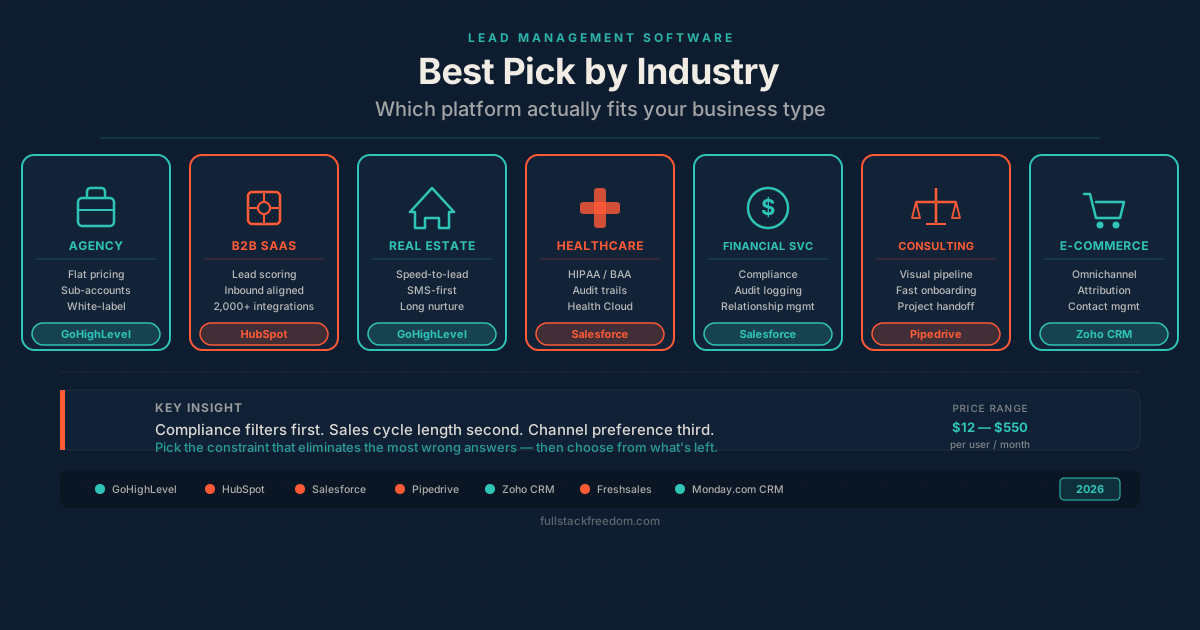
GoHighLevel is the default answer here, and not just because of the price. The flat $297–$497/month Agency plan gives you unlimited sub-accounts, which means you’re running a separate CRM and pipeline for each client without paying per seat. White-label capability lets you brand it as your own software and charge clients for access. No other platform at this price point offers that combination.
The practical play: run GHL for your own agency pipeline, then deploy client snapshots for the businesses you serve. One tool, one bill, compounding value as your client roster grows. If you’re exploring the economics of that resell model, the white-label CRM reseller programs breakdown covers the numbers in detail.
Monday.com CRM is worth considering if your agency is project-heavy and the line between “new client pipeline” and “active project management” is blurry. The visual board structure handles both.
B2B SaaS and Tech
HubSpot Sales Hub Professional is the strongest fit here. Inbound lead management is where HubSpot genuinely excels: lead scoring, contact enrichment, behavioral tracking, and tight marketing-to-sales handoff are the core of its value. The Breeze AI layer adds scoring and engagement insights that SaaS companies with higher lead volumes need.
The integration ecosystem (2,000+ native integrations) also matters for SaaS companies that have complex tech stacks. Freshsales is a credible alternative if the HubSpot pricing hits too hard in the early stages. Freddy AI scoring at a fraction of the cost.
Real Estate
Speed-to-lead and long-cycle nurture are both essential, which makes real estate more nuanced than most industries. GoHighLevel handles both: instant SMS sequences that fire the moment a lead comes in, plus long drip campaigns measured in months. Zoho CRM is a solid alternative with omnichannel contact management and competitive pricing.
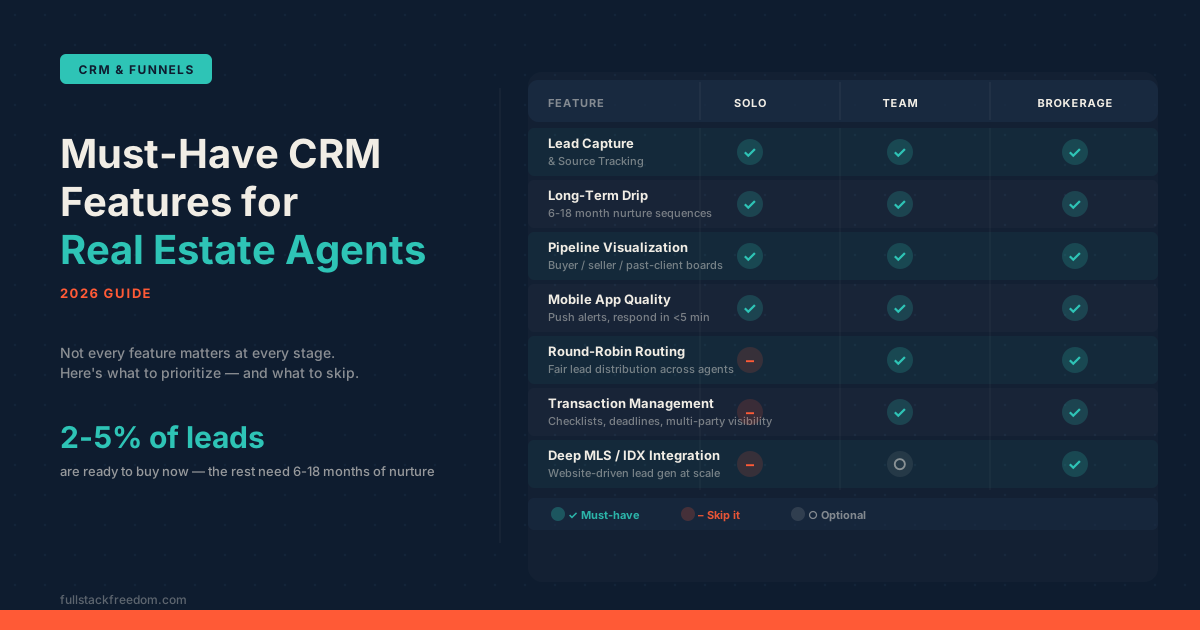
The real estate-specific features (MLS integration, showing scheduling, lead source attribution) are worth checking separately. I covered those in the real estate CRM features checklist if you’re evaluating tools on those dimensions specifically.
Financial Services
Salesforce Financial Services Cloud is the right answer for most financial advisors, wealth management firms, and insurance brokers. The compliance layer (audit trails, role-based access, relationship hierarchy for households and accounts) is built in rather than bolted on. Most other platforms either can’t meet SEC/FINRA documentation requirements or require significant customization to get there.
For firms under $5M that find Salesforce pricing prohibitive, Pipedrive is worth evaluating as a simpler pipeline tool, with the understanding that you’ll need to handle compliance documentation separately.
Healthcare
Compliance is the filter that makes this decision for you. HIPAA requires Business Associate Agreements, data encryption, audit logs, and access controls. Most platforms can’t sign a BAA, which removes them from consideration regardless of feature quality.
Salesforce Health Cloud is the enterprise option with the most complete compliance architecture. HubSpot’s HIPAA plan (available on Enterprise) supports BAA execution and is a more accessible price point for mid-size practices. Both require verification that the specific features you’re using fall within the BAA scope, so talk to your compliance officer before finalizing.
Professional Services (Consulting, Legal)
Pipedrive is the best fit for most consulting and legal practices. Visual pipeline, clean deal-stage tracking, fast onboarding, and it gets out of the way so your team actually uses it. The integration with tools like Calendly, Zoom, and DocuSign covers the typical professional services workflow.
Monday.com CRM is worth considering if your firm runs project-based engagements where a won deal immediately becomes a deliverable project. The visual boards handle both pipeline and project tracking in a way that Pipedrive doesn’t.
E-Commerce
Zoho CRM and HubSpot both handle e-commerce lead management well, with the distinction being scale. Zoho’s omnichannel approach (covering email, social, live chat, and phone in one contact record) fits e-commerce well because customers arrive through multiple channels and you need clean attribution across all of them. HubSpot’s marketing integration is stronger for e-commerce businesses running content-driven acquisition.
Pricing Comparison
| Platform | Entry | Mid-Tier | Enterprise |
|---|---|---|---|
| GoHighLevel | $97/mo (Starter) | $297/mo (Agency) | $497/mo (Agency Pro) |
| HubSpot | Free | ~$100/seat (Pro) | ~$150/seat (Enterprise) |
| Salesforce | $25/user (Starter) | $165/user (Pro) | $330–$550/user |
| Pipedrive | $14/user | $39/user (Professional) | $79/user (Enterprise) |
| Freshsales | Free (up to 3 users) | $35/user (Growth) | $59/user (Pro) |
| Zoho CRM | Free (up to 3 users) | $20/user (Standard) | $52/user (Ultimate) |
| Monday.com CRM | $12/user | $17/user (Standard) | $28/user (Pro) |
GoHighLevel’s flat pricing is a structural advantage for agencies. It doesn’t scale per contact or per user. HubSpot’s free tier is genuinely useful but the jump to paid tiers is steep. Salesforce’s entry pricing looks accessible, but real-world implementation cost is significantly higher than the per-seat number suggests.
How to Make the Call
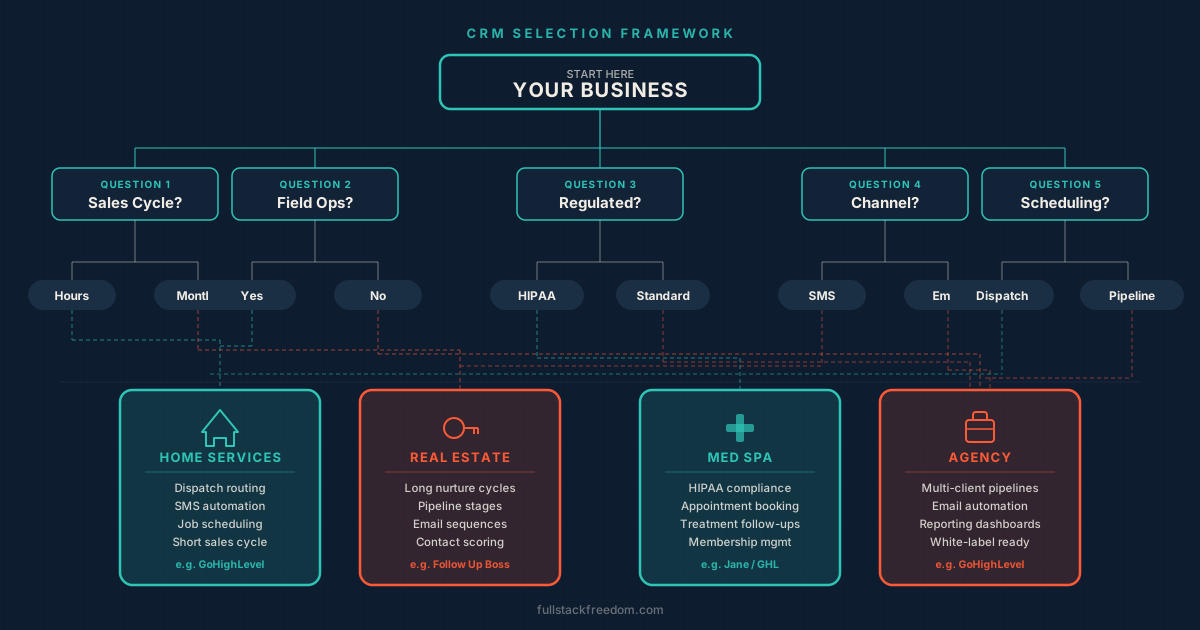
Start with the compliance question. If you’re in healthcare or financial services, that decision is largely made for you: Salesforce for enterprise, HubSpot’s HIPAA plan for mid-market healthcare. Everything else flows from there.
For everyone else: identify your primary constraint. If you’re an agency, flat pricing and sub-accounts are the constraint, and GoHighLevel wins. If you’re a B2B SaaS company with heavy inbound volume, marketing-to-sales alignment and lead scoring are the constraint, and HubSpot wins. If you’re a professional services firm where your team won’t use a complicated tool, ease of use is the constraint, and Pipedrive wins.
The worst move is picking the tool with the most features and assuming your team will figure out how to use them. A simpler tool that gets used every day will outperform a feature-rich platform that becomes shelfware inside 90 days. Match the tool to how your team actually works, not how you hope they’ll work.
If you’re still working through the decision and want a practical worksheet for mapping your business type to the right platform, I’ve got that in the Skool community. Free to join, and that’s where the templates and tools live alongside the concepts.