If you’ve spent any time shopping for a CRM and marketing platform, you’ve probably seen the headline prices for both tools and walked away confused. GoHighLevel looks cheap. HubSpot looks expensive. But is the gap really that dramatic, and does it hold up once you factor in what you actually need?
I’ve used both. I’ve helped agencies migrate between them. And I’ve watched founders make expensive mistakes picking the wrong one based on feature grids that don’t tell the full story.
This gohighlevel vs hubspot comparison cuts through the noise with real pricing math, an honest feature breakdown, and a clear answer for who should use which. No affiliate cheerleading, no corporate PR.
The Real Price Comparison
This is where most comparisons either mislead you or just throw up a table and call it a draw. Let me do the actual math.
GoHighLevel Pricing
GoHighLevel has three base tiers:
| Plan | Monthly Cost | Key Feature |
|---|---|---|
| Starter | $97/mo | 3 sub-accounts |
| Unlimited | $297/mo | Unlimited subaccounts |
| SaaS Pro | $497/mo | Resell as your own product |
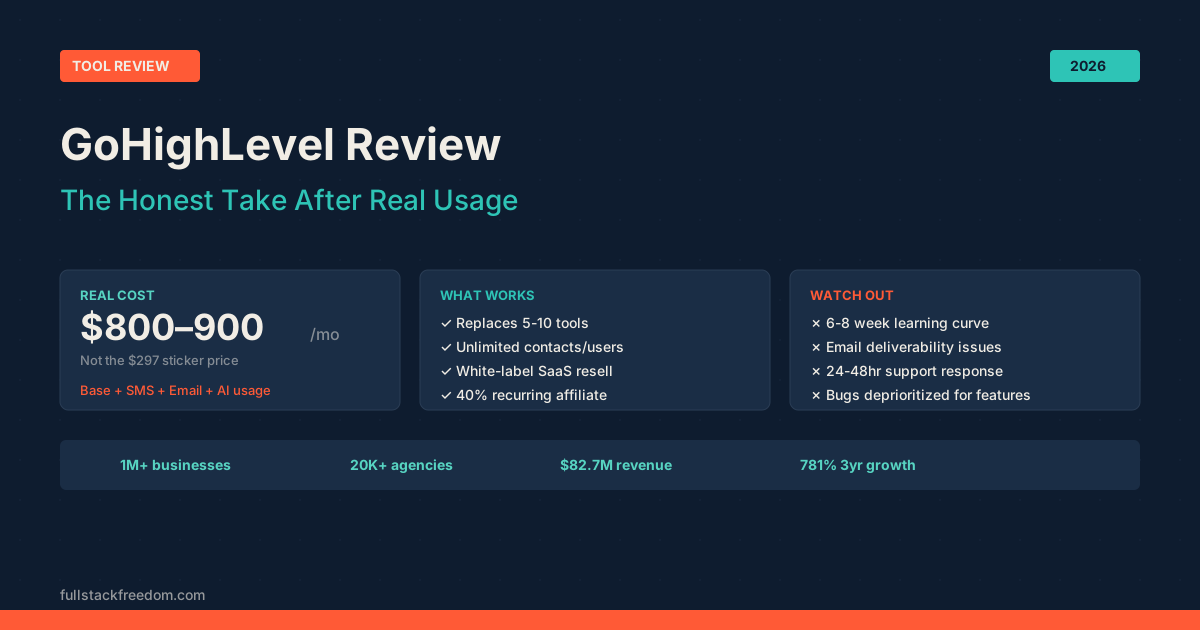
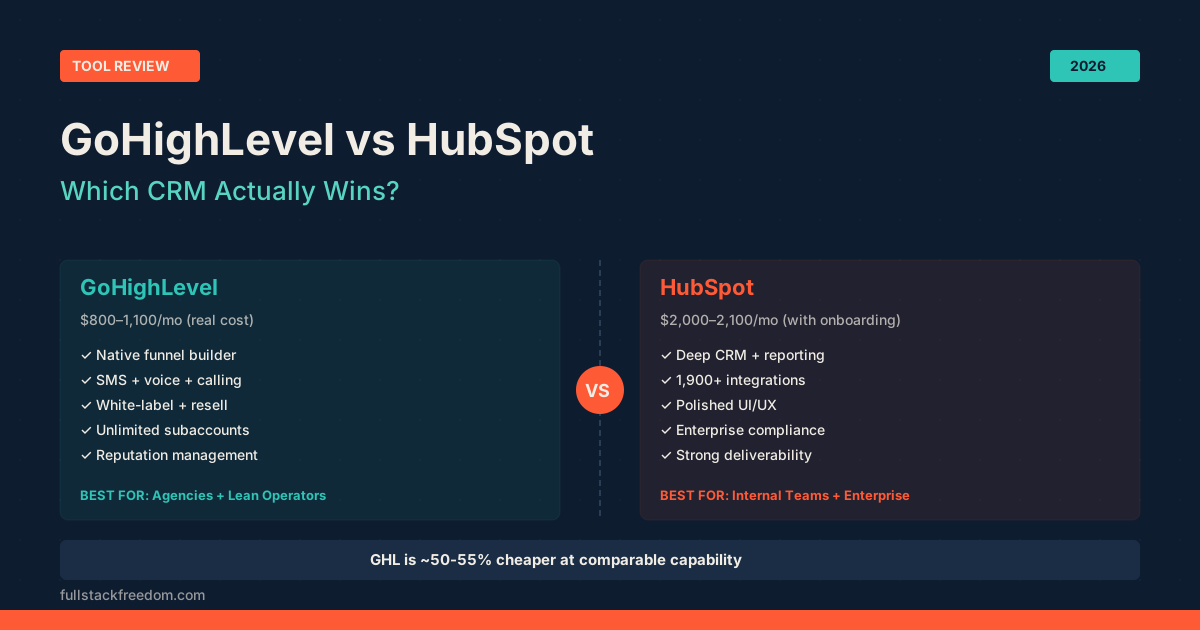
But that’s not the real number. GHL charges separately for usage: SMS, email, phone calls, and AI features all run through Twilio/Mailgun/LC infrastructure with per-message fees. A real agency running client campaigns should budget $800 to $1,100/month all-in at the Unlimited tier. That’s the honest figure.
HubSpot Pricing
HubSpot’s headline numbers look scarier, but let’s break them down too:
| Plan | Monthly Cost | Contact Limit |
|---|---|---|
| Marketing Hub Starter | $20/mo | 1,000 |
| Marketing Hub Pro | $890/mo | 2,000 |
| Marketing Hub Enterprise | $3,600/mo | 10,000 |
Here’s what HubSpot doesn’t advertise on the pricing page: mandatory onboarding fees of $3,000–$7,000 for Pro and above. Plus, contact overages run $250 per tier jump. And Pro+ plans require annual contracts, so you’re locked in before you know if it works for your team.
The Bottom Line on Price
At comparable capability, GHL runs roughly 50–55% cheaper than HubSpot. But that gap isn’t as dramatic as the $97 vs $890 headline suggests, and if your usage volume is high, GHL’s usage fees can close the gap further.
For an agency managing 10–15 client accounts, GHL at ~$1,000/mo beats HubSpot Pro at $890/mo (plus onboarding plus overages plus annual commitment) by a significant margin. For a mid-size company managing its own marketing pipeline with a sales team of 20, the math starts shifting.
Feature Breakdown: Where Each Platform Actually Wins
Let me be direct here: both tools are genuinely capable. The question is which capabilities matter for your specific situation.
Where GoHighLevel Wins
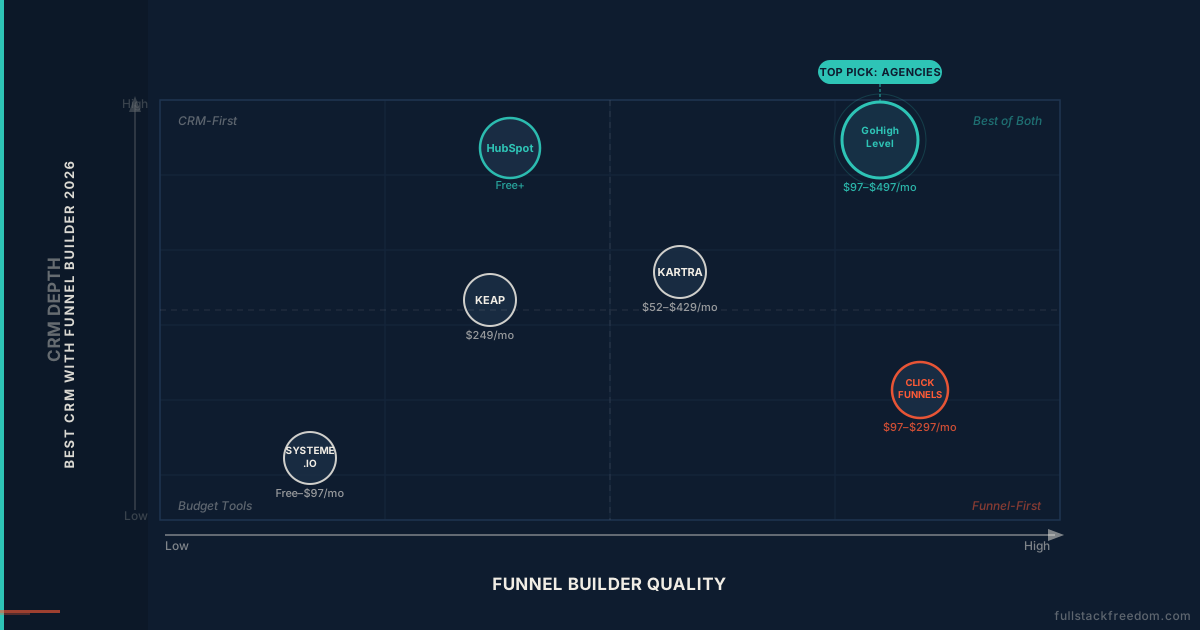
Funnel builder. GHL’s funnel builder is native, flexible, and doesn’t require a third-party tool like ClickFunnels. For agencies building landing pages and funnels for clients, this alone justifies the platform. I covered this in the Best CRM with Built-In Funnel Builder breakdown.
SMS, voice, and calling. GHL has two-way SMS, voicemail drops, a built-in phone system, and conversation AI built into the platform. HubSpot requires integrations and add-ons to match this capability, and they’re not cheap.
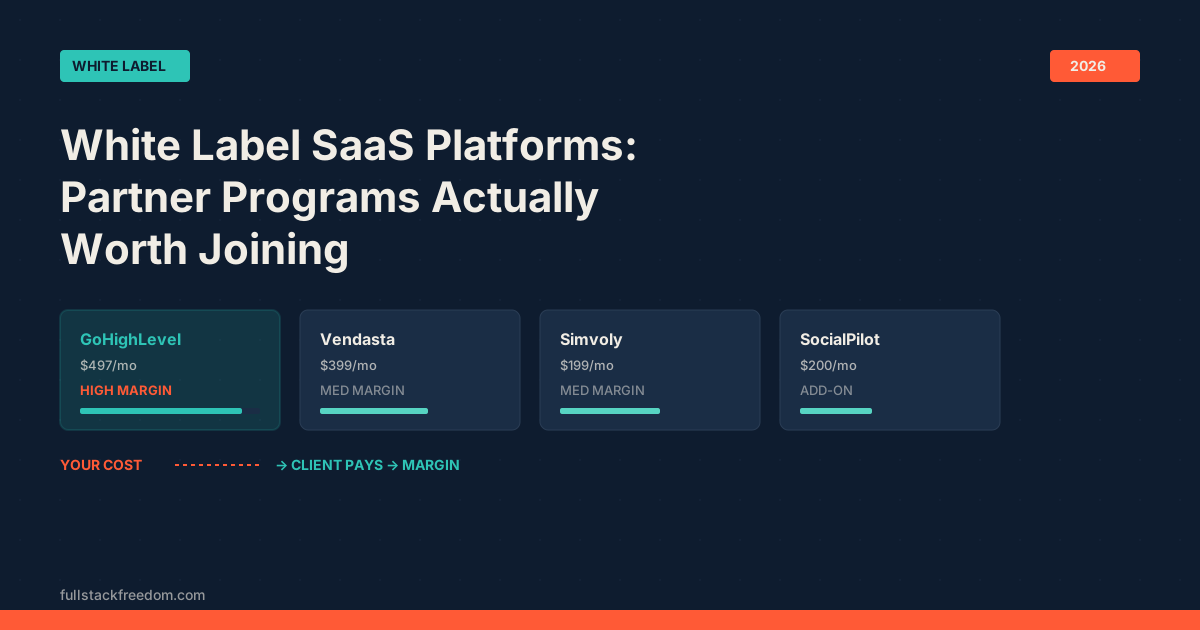
White-label and subaccounts. This is the killer feature for agencies. You can run one GHL account, spin up unlimited client subaccounts, white-label the entire interface with your branding, and even resell it as your own SaaS product on the Pro tier. HubSpot has no equivalent. If this matters to you, check out the White Label SaaS Platforms roundup for more context.
Reputation management. Review requests, Google My Business integration, review monitoring, all native in GHL. This is a real differentiator for agencies serving local and service businesses.
Where HubSpot Wins
CRM depth and reporting. HubSpot’s CRM is genuinely excellent. Deal pipeline management, contact timelines, sales forecasting, revenue reporting. If your team runs a complex sales process, HubSpot’s native tooling beats GHL by a meaningful margin.
Integration ecosystem. HubSpot has 1,900+ native integrations. GHL has roughly 500. If your stack includes Salesforce, Slack, Shopify, or dozens of enterprise tools, HubSpot is less likely to require custom workarounds.
UI/UX and onboarding. HubSpot’s interface is polished and well-documented. Non-technical teams get up to speed faster. GHL has improved significantly, but it still has a steeper learning curve, especially for clients who will be logging into the platform themselves.
Enterprise compliance. If you’re in a regulated industry (healthcare, finance, legal), HubSpot has stronger compliance infrastructure: HIPAA BAAs, SOC 2, GDPR tooling. GHL is catching up but isn’t the default choice here yet.
Deliverability. HubSpot’s email deliverability infrastructure is battle-tested at scale. At 258,000+ paying customers and $3.07B in revenue, they’ve invested heavily in it.
Feature Comparison at a Glance
| Feature | GoHighLevel | HubSpot |
|---|---|---|
| Funnel Builder | Native, included | Limited (needs add-ons) |
| SMS/Voice | Native | Integration required |
| White-label | Yes | No |
| Subaccounts | Unlimited | No |
| SaaS resell | Yes (Pro) | No |
| CRM depth | Good | Excellent |
| Integrations | ~500 | 1,900+ |
| Reporting | Good | Excellent |
| UI/UX | Improving | Polished |
| AI features | Conversation AI, content | Content AI, predictive |
| Enterprise compliance | Limited | Strong |
GoHighLevel vs HubSpot: Who Each Platform Is Actually Built For
The feature grid is useful, but the real question is: who is each tool designed to serve?
Use GoHighLevel If…
You’re a marketing agency managing multiple client accounts. The subaccount model is built for exactly this: one dashboard, unlimited clients, white-label branding. The economics work in your favor at scale.
You want to resell the platform as your own SaaS product. GHL’s SaaS Pro tier lets you create your own branded CRM, set your own pricing, and keep the margin. There’s nothing like this in HubSpot’s model.
You’re running a local or service business where reputation management, SMS follow-up, and appointment booking matter more than enterprise CRM reporting.
You’re a lean operator who wants one tool to replace five: CRM, funnels, email, SMS, booking, reviews, and membership sites all in one platform.
If that sounds like your situation, read the full GoHighLevel Review (2026) for a deeper look at how it plays out in practice.
Use HubSpot If…
You’re a company managing your own marketing and sales pipeline, not a client service model. HubSpot’s CRM is built for internal sales teams with complex deal stages and revenue forecasting needs.
Your team is non-technical and needs something polished and well-documented out of the box. HubSpot’s onboarding (expensive as it is) does produce results for teams who need hand-holding.
You’re operating in a regulated industry where compliance infrastructure is non-negotiable.
You need deep integration with enterprise tools: Salesforce sync, complex Slack workflows, custom Shopify reporting. HubSpot’s 1,900+ integrations handle edge cases GHL simply doesn’t cover yet.
You’re at scale with your own marketing team of 5+ people and the $890/mo base is a small percentage of your overall marketing budget.
Verdict: Which One Actually Wins?
There’s no universal winner, but there is a clear winner for most people reading this post.
If you’re an agency or lean operator: GoHighLevel wins. The economics, the subaccount model, the funnel builder, SMS, white-label: it’s purpose-built for your workflow. At roughly half the total cost of HubSpot for comparable capability, it’s not close. GoHighLevel earns its place as a core stack tool for this type of operator.
If you’re running an internal sales and marketing team at a growth-stage company: HubSpot wins. The CRM depth, reporting, UI polish, and integration ecosystem justify the premium if your team is actually using those features.
If you’re somewhere in the middle (a small company that also does some client work), look hard at GHL first. Most teams overestimate how much HubSpot’s CRM depth they’ll use, and underestimate how useful the SMS and funnel tools would be.
One comparison worth knowing about: ActiveCampaign sits between these two and is worth considering if you want strong email automation without GHL’s complexity or HubSpot’s price.
Next Steps
If you’re leaning toward GoHighLevel, the 14-day trial is the right first move. Get your hands on it before committing. Use this link to start the trial and you’ll get access through the Full Stack Freedom affiliate, which supports this content.
If you’re still deciding, come ask in the Skool community. There are agency owners and operators in there who’ve used both platforms and can share real-world takes based on your specific situation. The prompts, templates, and workflow guides I reference in posts like this one live there too.