White label SaaS is one of the most underrated revenue moves for agencies right now. While most agency owners are grinding through service delivery, a smaller group is quietly building recurring software revenue on top of platforms they didn’t have to build. The margins are real, the retention is better, and the model scales in ways that pure services don’t.
Here’s what I’ve found after working through this with founders and testing it myself.
Why Agencies Should Care About This Model
Most agencies churn 40-50% of clients within 12 months. That’s a brutal number when you think about how much it costs to acquire each one. But clients who are embedded in software you provide (CRM, reporting, chatbots) don’t leave as easily. Switching means migrating data, retraining their team, and rebuilding their workflows. Stickiness goes way up.
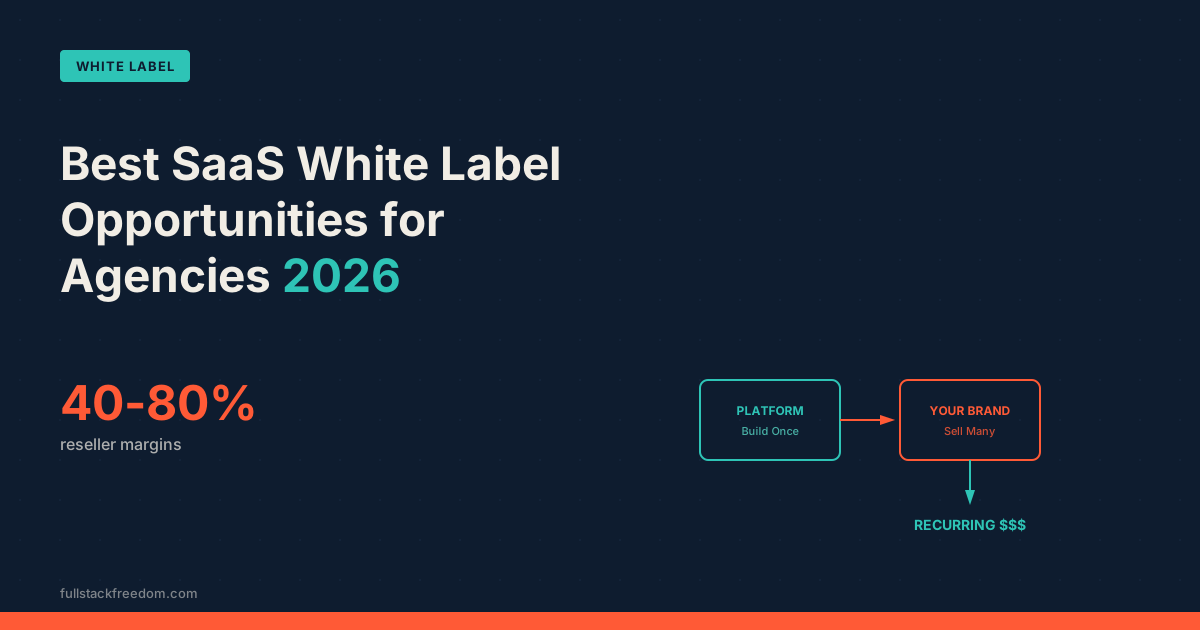
The global SaaS market hit $408 billion in 2025 and is forecast to reach $465 billion in 2026. The platforms serving that market are increasingly built to be resold. White label software to resell exists across nearly every category agencies touch, and the margins, depending on the niche and how much value you add, run 40-80%.
This isn’t theory. It’s a structural shift in how lean agencies build revenue that doesn’t vanish when a client does.
The Best White Label SaaS Categories in 2026
Before going deep on the platform I actually recommend, here’s a fast map of the market.
CRM + Marketing Automation
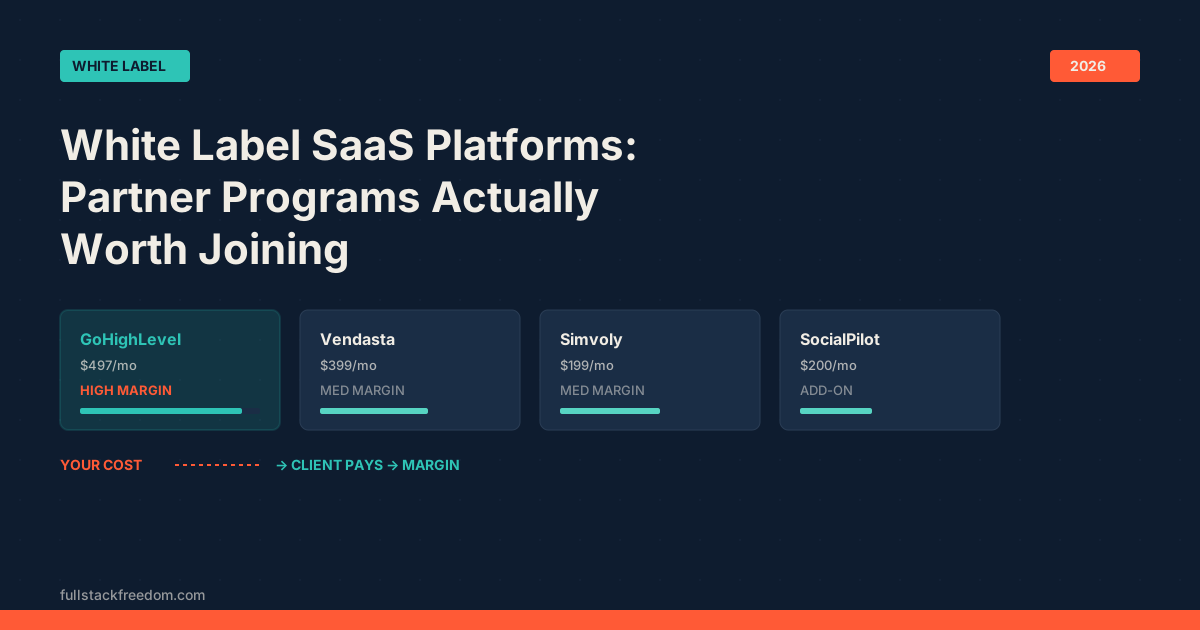
This is the highest-leverage category. If your clients need lead tracking, email sequences, appointment booking, SMS, or pipeline management (and most do), you can become their software vendor. GoHighLevel is the flagship platform here. More on this in a minute.
SEO Tools
SE Ranking has an Agency Pack that adds white label reporting and client portals for around $50/month on top of base pricing. If you’re doing SEO work, this gives clients a branded place to see rankings and traffic without knowing you’re running SE Ranking behind the scenes.
Reputation Management
This category is growing fast. Tools like Vendasta and NiceJob let you offer review generation and monitoring under your brand. Local businesses especially feel the pain of bad reviews and will pay monthly for active management.
Reporting Dashboards
AgencyAnalytics and DashThis both offer white label dashboards you can brand and deliver to clients. If you’re managing paid ads, SEO, or social, and delivering reports manually, this is low-hanging fruit. Clients get a live dashboard; you stop building decks.
AI Chatbots
This is the emerging one. Several platforms let you build and resell AI chatbots trained on client content. The market is early but moving fast. Margins can be strong because clients have no frame of reference for what it should cost.
GoHighLevel: The Deep Dive
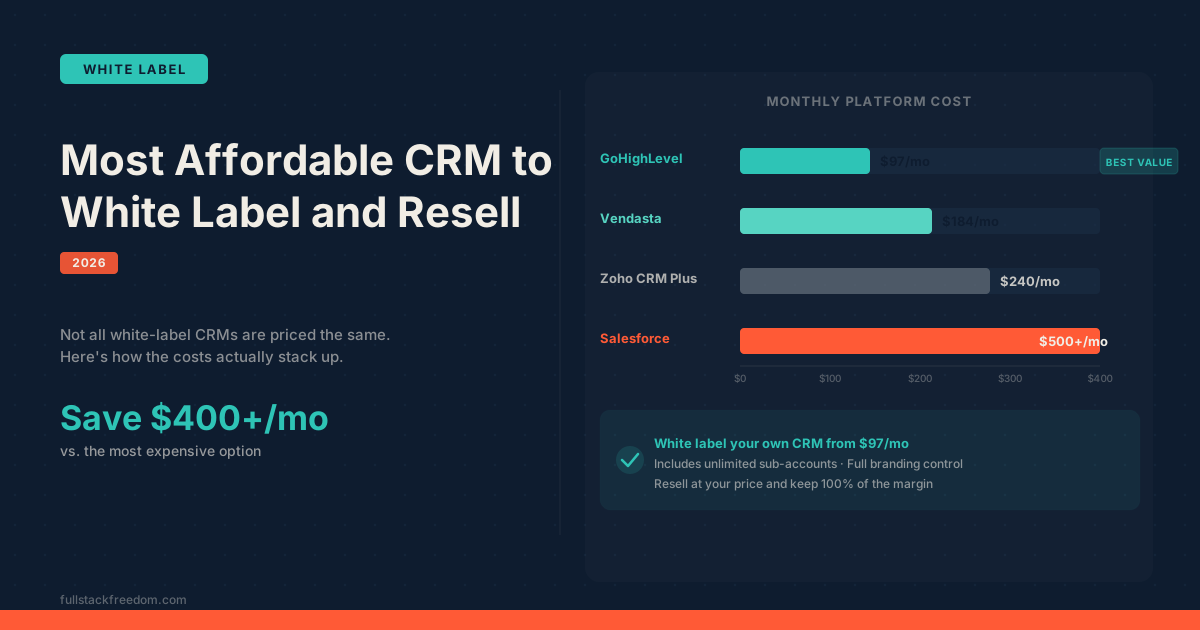
If I had to pick one platform to build a white label SaaS business on, it would be GoHighLevel. Not because it’s perfect (it’s not), but because the scope of what it covers and the economics of reselling it are hard to match.
What you get with the Agency Pro plan ($497/mo):
- White label desktop app with your branding
- Custom domain so clients see your brand, not GHL’s
- Branded client portals
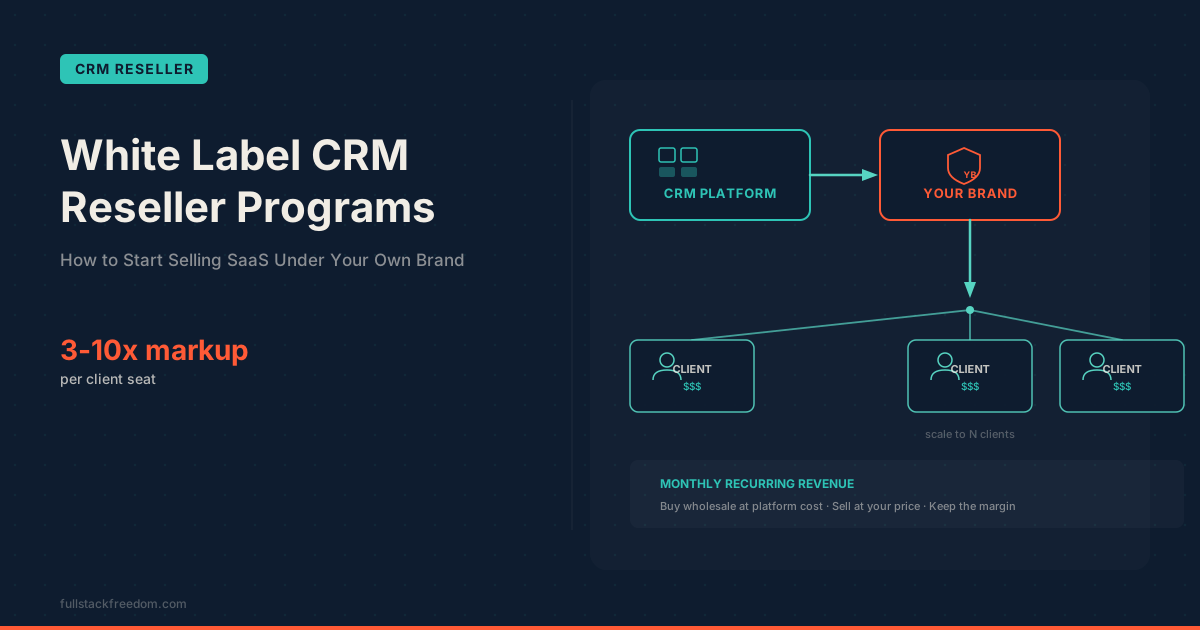
- Automated billing through Stripe: you set the price, GHL processes the sub-account, you collect the margin
- Every core marketing tool: CRM, email, SMS, funnels, calendars, pipelines, automations, review management, reporting
That’s a lot of surface area. For a client running a local service business or a small e-commerce brand, this can replace 5-7 other tools they’re paying for separately.
The Revenue Math
Here’s a simple model that makes the economics clear:
| Clients | Your Price | Monthly Revenue | GHL Cost | Margin |
|---|---|---|---|---|
| 10 | $297/mo | $2,970 | $497 | $2,473 |
| 25 | $297/mo | $7,425 | $497 | $6,928 |
| 50 | $297/mo | $14,850 | $497 | $14,353 |
The base cost is flat. The margin grows linearly. That’s the appeal of the model.
One thing to be clear about: usage fees stack on top. SMS, outbound calls, and email sending are billed based on volume, and GHL passes those through. You need to price for this. Either build it into your monthly rate with a usage cap, or bill it as a usage add-on. Don’t leave it as a surprise on your profit and loss statement.
What This Actually Takes
You’re now the software vendor. That’s the shift. When something doesn’t work, your client calls you first, not GHL. You need to be able to diagnose basic issues, set up onboarding flows, and decide where GHL support ends and you begin. That’s not a dealbreaker, but it’s a real operational consideration before you sell your first seat.
What to Look for When Choosing a Platform
Seventy percent of agencies report that partnership selection is the major stumbling block in white label programs. That tracks. Choosing wrong is expensive. You’ve sold clients on software you now need to migrate them off.
Here’s how I think through it:
- Does it cover workflows your clients use daily? A platform they log into once a week has weak retention. A CRM they live in has strong retention. Daily utility is the goal.
- What’s the true all-in cost? Base plan plus usage fees plus add-ons. Model this at 10, 25, and 50 clients before you commit.
- Can you actually support it? Or will you be routing every ticket to the vendor while your client waits? Know where your competence ceiling is before you sell.
- What happens to client data if you leave? This is the question nobody asks until they need to. Understand the data export story before you sign anything.
Honest Gotchas
A few things worth naming directly:
This is not passive income. I see this framing a lot and it bothers me. It’s recurring revenue (which is genuinely valuable), but it requires active support, onboarding, pricing management, and retention work. Better than project revenue, but not passive.
Don’t start with too many platforms. The trap is signing up for five white label tools because the options feel good. Focus beats breadth, especially early. Pick one platform, sell it well, get to 10-15 clients, then consider expanding.
Price for usage costs from day one. If you’re on GHL and you have clients with high SMS or email volume, build that into their pricing. Retroactively raising prices to cover usage is a support conversation you don’t want to have.
Client support is now your job. You are the first line. Be honest with yourself about your capacity, especially if you’re running services at the same time.
What This Means for You
The agencies that will look different in 2026 are the ones adding a software layer to their service business now. Not because it’s trendy, but because it changes the economics fundamentally. Recurring revenue with high switching costs is a different business than month-to-month retainers. The floor is higher. The math compounds differently.
If you’re an agency owner who’s been thinking about this and haven’t pulled the trigger, the bottleneck usually isn’t the platform. It’s figuring out how to position, price, and sell software to clients who already see you as a service provider. That’s the real work.
GoHighLevel is where I’d start for most agencies. The breadth of the platform means you can solve enough of a client’s marketing stack to justify real pricing, and the white label infrastructure is genuinely built for resellers.
If you want to go deeper on pricing models and positioning for white label SaaS, I break this kind of thing down regularly in the Full Stack Freedom newsletter. The Skool community also has templates for structuring your first white label offer if you want a starting point rather than a blank page.