Small businesses have more AI marketing tools available right now than at any point in history. That sounds like good news until you realize the actual problem: there are too many of them, most overlap, and figuring out which ones are worth paying for takes longer than the marketing work itself.
I’ve spent the last several years running marketing across my own businesses, managing ad spend, and mentoring 200+ founders through programs like Techstars. These days, AI tools are embedded in nearly every part of my stack. Not because of hype, but because they genuinely compress the work. The trick is knowing which tools to use where, and which ones to skip entirely.
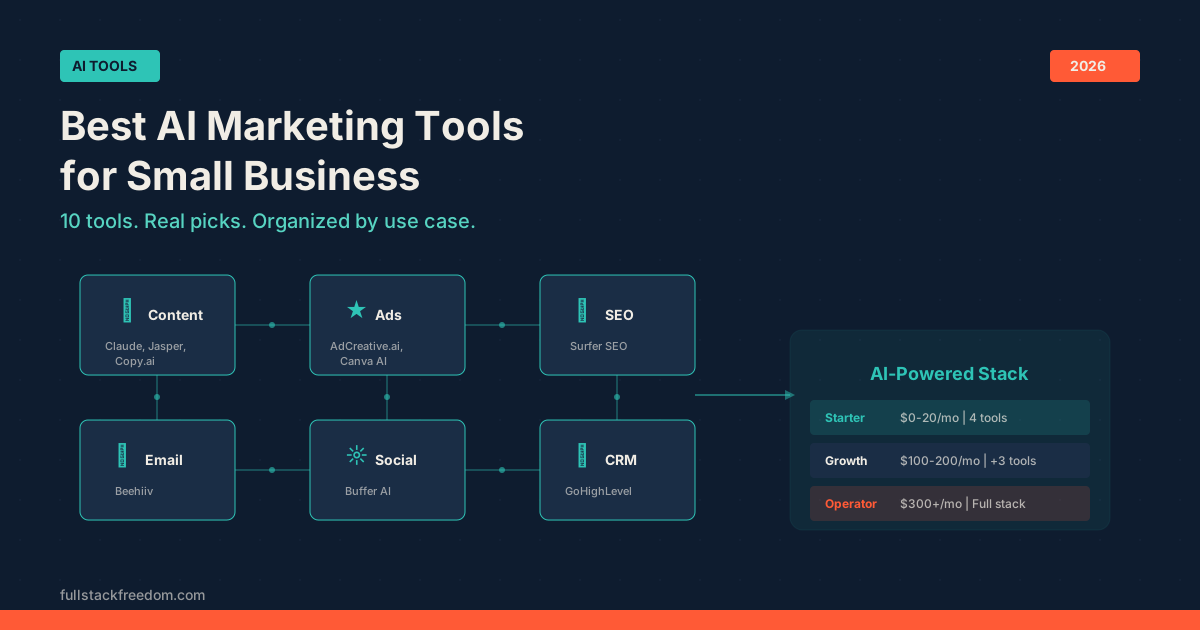
This post breaks down the best AI marketing tools by use case (content, ads, SEO, email, social, and CRM) so you can build a stack that actually fits how you work.
Quick Comparison: AI Marketing Tools by Category
Before we go deep, here’s the overview. Every tool below gets a full breakdown in the sections that follow.
| Tool | Best For | Pricing |
|---|---|---|
| Claude | Strategy, writing, analysis | Free / $20/mo Pro |
| GoHighLevel | CRM + marketing automation | $97/mo+ |
| Jasper | Brand-consistent content at scale | $39/mo+ |
| Surfer SEO | On-page SEO optimization | $89/mo+ |
| AdCreative.ai | Performance ad creative | $21/mo+ |
| Canva AI | Design + visual content | Free / $13/mo Pro |
| Buffer AI | Social media scheduling | Free / $6/mo+ |
| Copy.ai | Sales + marketing workflows | Free / $36/mo+ |
| Beehiiv | Newsletter + email growth | Free / $39/mo+ |
| Descript | Video + podcast editing | Free / $24/mo+ |
Content Creation and Strategy
1. Claude — Best for Strategy, Writing, and Deep Work
Claude isn’t just a chatbot. It’s the closest thing I’ve found to having a senior marketing strategist available around the clock. Where most AI writing tools focus on generating copy, Claude handles the thinking part: positioning, messaging frameworks, audience research, competitive analysis, and content planning.
I use it daily to draft long-form content, build marketing briefs, analyze transcripts, and stress-test ideas before they go live. The extended context window means you can feed it an entire content library and get back coherent strategy, not just surface-level summaries.
Where it fits: Content strategy, blog writing, ad copy review, market research, building internal playbooks. If you do one thing after reading this post, start using Claude for your content workflow.
Pricing: Free tier available. Pro plan at $20/month.
2. Jasper — Best for Brand-Consistent Content at Scale
Jasper was one of the first AI writing tools, and it’s matured significantly. The real value is its brand voice training: you feed it your style guide, past content, and tone preferences, and it generates drafts that actually sound like you. Not generic. Not robotic.
For teams producing a high volume of blog posts, emails, and social copy, Jasper saves hours. It’s less useful for strategic thinking (that’s where Claude excels), but for raw content production with consistency, it earns its seat.
Where it fits: Blog post drafts, email campaigns, social copy, ad variations at scale.
Pricing: Starts at $39/month for the Creator plan. Business plans are custom-priced.
3. Copy.ai — Best for Sales and Marketing Workflows
Copy.ai has pivoted from a pure copywriting tool into a workflow automation platform for go-to-market teams. The standout feature is their workflow builder: you can chain together research, writing, and outreach steps that run automatically.
Think lead enrichment into personalized email sequences, or competitor monitoring that generates weekly briefs. It’s more structured than using a general-purpose AI, which makes it good for repeatable sales and marketing processes.
Where it fits: Outbound sequences, lead enrichment, competitive research, repetitive marketing tasks.
Pricing: Free tier with limited workflows. Pro at $36/month.
Advertising and Creative
4. AdCreative.ai — Best for Performance Ad Creative
AdCreative.ai solves a specific and expensive problem: generating ad creatives that convert. You input your brand assets and target audience, and it produces dozens of ad variations scored by predicted performance.
When you’re spending on Meta, Google, or LinkedIn ads, creative fatigue kills performance. This tool lets you test more variations without hiring a designer for every iteration. The scoring model isn’t magic, but it does a solid job of filtering out the obvious losers before you spend money testing them.
Where it fits: Paid social creative, display ads, A/B test variations, creative refresh cycles.
Pricing: Starts at $21/month for 10 downloads. Scales with usage.
5. Canva AI (Magic Studio) — Best for Fast Visual Content
Canva barely needs an introduction, but the Magic Studio AI features deserve a fresh look. Text-to-image generation, background removal, Magic Resize for multi-platform assets, and AI-powered design suggestions are all built in now.
For small businesses without a designer on staff, Canva AI closes the gap between “looks DIY” and “looks professional.” It won’t replace a brand designer for foundational work, but for the 90% of day-to-day visual assets you need (social posts, presentations, thumbnails, email headers), it handles it.
Where it fits: Social graphics, presentation decks, video thumbnails, marketing collateral. If presentations are a regular part of your marketing workflow, see the best AI presentation makers for a deeper comparison of dedicated slide tools.
Pricing: Free tier is generous. Pro at $13/month unlocks the full AI suite.
SEO and Search
6. Surfer SEO — Best for On-Page Optimization
Surfer SEO takes the guesswork out of on-page SEO. You enter a target keyword, and it analyzes the top-ranking pages to give you a content brief: word count targets, heading structures, related terms to include, and real-time scoring as you write.
The content editor integrates with Google Docs and pairs well with AI writers. You use Claude or Jasper to generate the draft, then run it through Surfer to make sure it’s optimized. That two-step combo (AI-written, SEO-tuned) is how most competitive content is being produced right now.
Where it fits: Blog content optimization, content briefs, keyword clustering, SERP analysis.
Pricing: Starts at $89/month. Worth it if organic search is a real channel for you.
Email and Newsletters
7. Beehiiv — Best for Newsletter Growth
Beehiiv is built specifically for newsletter operators and it shows. The AI features include subject line generation, content suggestions, and send-time optimization, but the real power is the growth toolkit. Referral programs, recommendation networks, and monetization features are all native.
I use Beehiiv for the Full Stack Freedom newsletter. The combination of clean editing, built-in analytics, and AI-assisted writing makes it the best option for creators and small businesses who want email to be a growth channel, not just a broadcast tool.
Where it fits: Newsletters, email growth, audience monetization, subscriber acquisition.
Pricing: Free tier for up to 2,500 subscribers. Scale plan at $39/month.
Social Media
8. Buffer AI — Best for Consistent Social Posting
Buffer has added an AI assistant that generates post ideas, rewrites content for different platforms, and suggests optimal posting times. It’s not trying to be everything. It focuses on making consistent social media publishing easy.
For founders who know they should be posting but can’t dedicate hours to it, Buffer AI removes the blank-page problem. Feed it a blog post or topic, and it drafts platform-specific versions. Schedule them across channels. Done. The simplicity is the point.
Where it fits: Social scheduling, content repurposing, multi-platform publishing.
Pricing: Free for up to 3 channels. Paid plans start at $6/month per channel.
CRM and Marketing Automation
9. GoHighLevel — Best All-in-One Marketing Platform
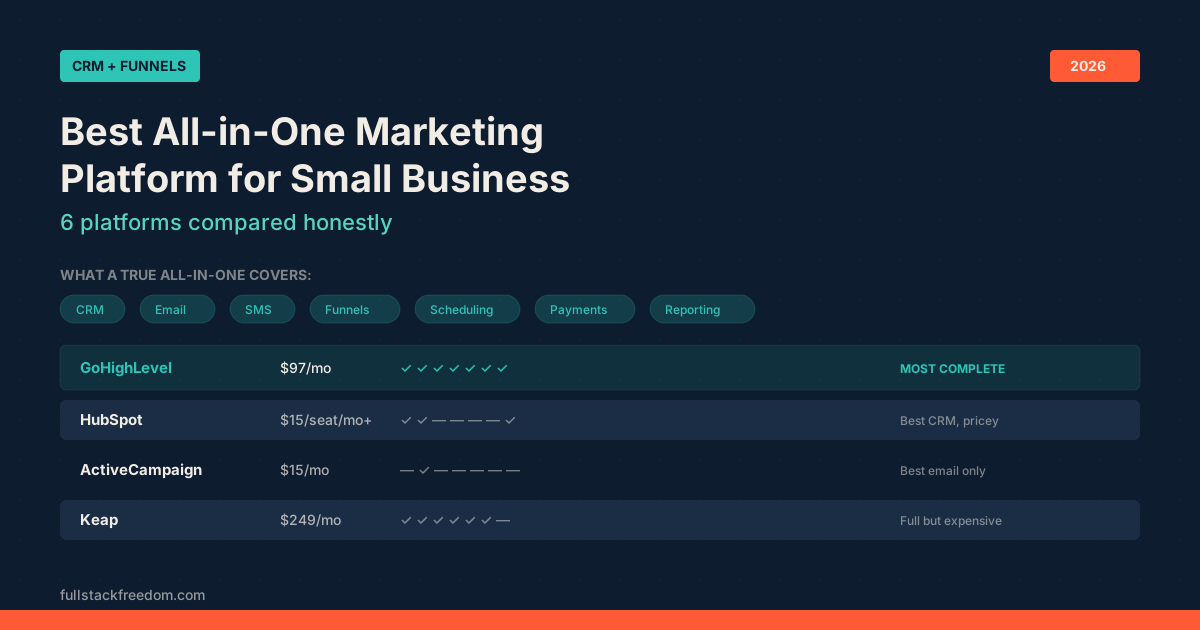
GoHighLevel is less of a single AI tool and more of a complete marketing operating system with AI built into every layer. CRM, email, SMS, funnels, landing pages, calendars, pipeline management, reputation management, and now AI-powered conversation bots and content generation, all under one roof.
The value proposition for small businesses is consolidation. Instead of paying for five to eight separate tools that don’t talk to each other, GHL replaces the whole stack. The AI features have gotten genuinely useful: automated lead follow-up, AI appointment booking, and content suggestions within the platform.
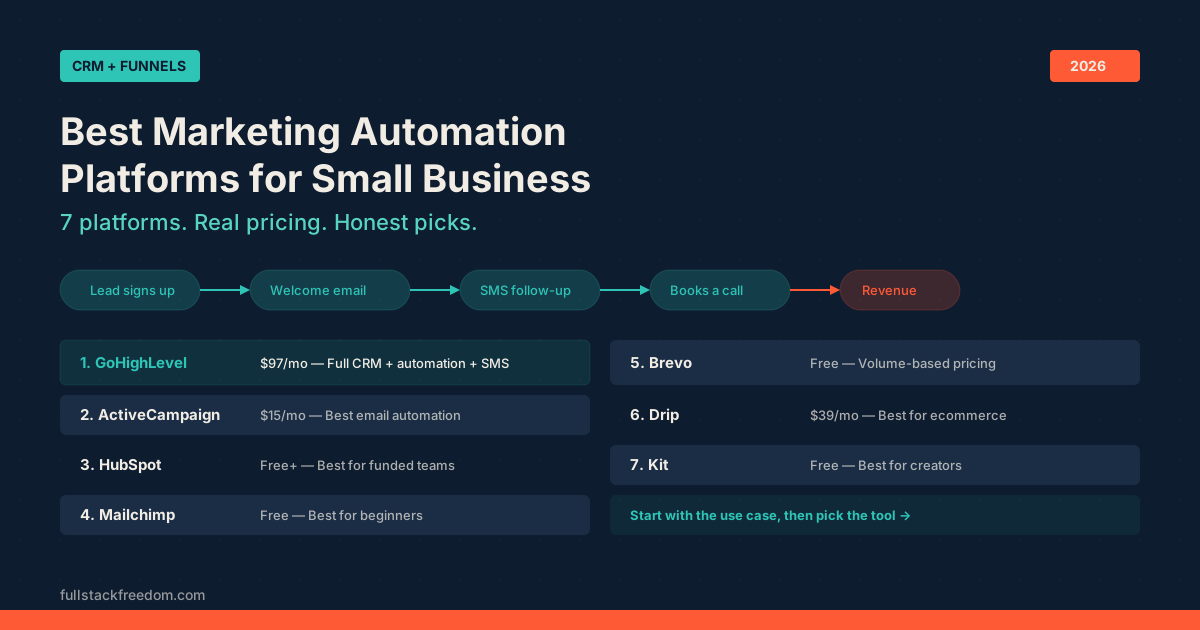
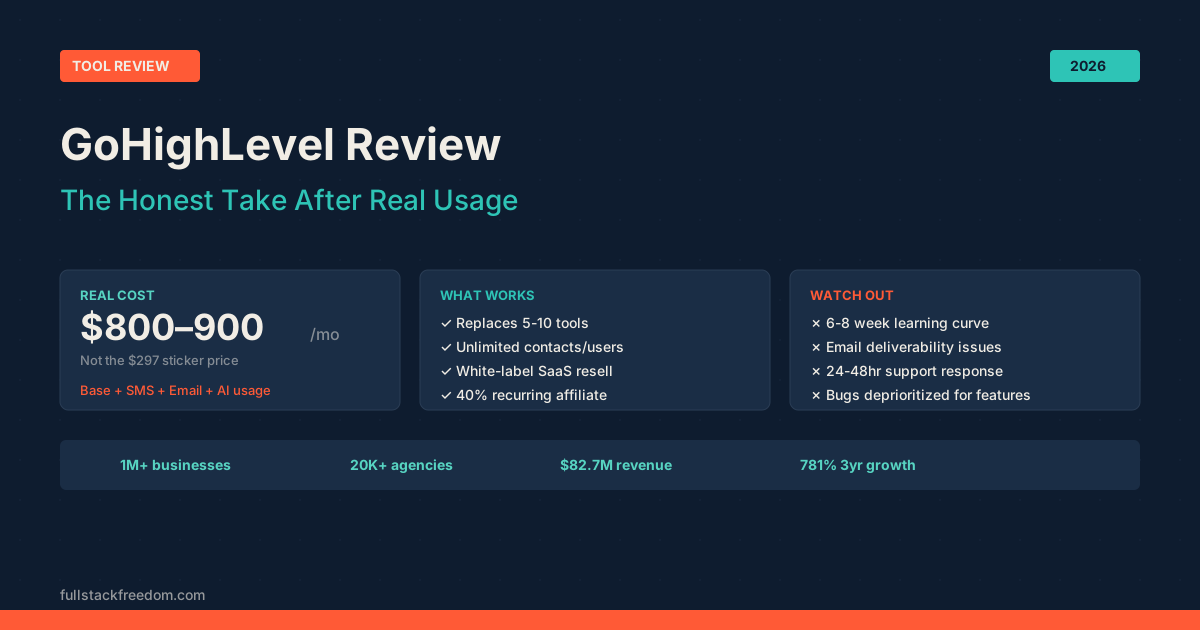
For a deeper look, check out the full GoHighLevel Review. If you’re also evaluating broader automation options, see our Best Marketing Automation Platforms comparison.
Where it fits: Full marketing stack, lead management, automated follow-up, client CRM.
Pricing: Starts at $97/month. The real cost lands between $200-900/month depending on usage and plan tier, but you’re replacing multiple subscriptions.
Video and Audio
10. Descript — Best for Video and Podcast Marketing
Descript turns video and podcast editing into something closer to editing a Google Doc. The AI transcription is accurate, and you can edit video by editing text. Delete a sentence from the transcript and the video clip disappears with it.
For small businesses producing video content or podcasts, this collapses a workflow that used to require a dedicated editor. AI features include filler word removal, eye contact correction, and studio-quality audio enhancement. Marketing teams using video for thought leadership or tutorials will save significant production time.
Where it fits: Video editing, podcast production, repurposing long-form content into clips, transcript-based editing.
Pricing: Free tier available. Pro at $24/month.
How to Pick the Right AI Marketing Stack
Ten tools is a lot. You don’t need all of them. Here’s a framework for choosing based on where you actually are.
The Starter Stack (Under $50/month)
If you’re early-stage or bootstrapping, start here:
- Claude (Free or $20/mo): content, strategy, and thinking partner
- Canva AI (Free): all visual design
- Buffer AI (Free): social scheduling
- Beehiiv (Free): email and newsletter
Total cost: $0-20/month. This covers content creation, design, social, and email. That’s a functional marketing engine for the price of a lunch.
The Growth Stack ($100-200/month)
Once you have traction and need to scale:
- Everything from the Starter Stack, plus:
- Surfer SEO ($89/mo): if organic search matters to your business
- AdCreative.ai ($21/mo): if you’re running paid ads
- Jasper ($39/mo): if content volume is a bottleneck
The Operator Stack ($300+/month)
For businesses ready to consolidate and automate:
- GoHighLevel ($97/mo+): replaces CRM, email, SMS, funnels, scheduling, and more
- Claude Pro ($20/mo): strategy and content backbone
- Descript ($24/mo): if video is part of your marketing
- Add specialized tools (Surfer, AdCreative) as needed
The key principle: start with the use case, not the tool. Figure out which marketing activity is the bottleneck (content production, lead follow-up, social consistency, ad creative) and pick the tool that solves that specific problem. Add more only when the current stack creates a new bottleneck.
For a broader look at consolidating your marketing stack, see our breakdown of the best all-in-one marketing platforms for small business.
What This Means for You
The real shift happening right now isn’t about any single tool. It’s that AI has collapsed the cost of marketing execution. Tasks that used to require a team of five (writing, design, SEO, email, social) can now be handled by one or two people with the right stack.
That doesn’t mean the tools do everything for you. You still need the taste, the strategy, and the judgment to know what’s worth doing. AI handles the production. You handle the direction.
If you’re a founder or operator building something lean, that’s genuinely powerful. The playing field between a funded startup with a marketing team and a solo founder with good tools has never been more level.
Two things to keep in mind as you build your stack:
- Don’t over-tool. Three tools used well beats ten tools half-configured. Pick based on your actual bottleneck.
- Integrate before you add. Make sure your current tools are talking to each other before you stack another subscription on top.
And if you’re building with AI tools and want to connect with other founders doing the same, that’s exactly what we’re doing inside the Full Stack Freedom community: sharing stacks, templates, and real workflows that are working right now.
Bottom Line
The best AI marketing tools for small business aren’t the most expensive or the most feature-packed. They’re the ones that match how you actually work and solve problems you actually have. Start lean, get one tool working well, then layer on from there.
If I had to pick three to start with tomorrow: Claude for thinking and writing, Canva AI for design, and GoHighLevel once you’re ready to consolidate your full marketing stack. Everything else is situational, and that’s fine. Better to run a tight stack than a bloated one.
For more on building websites with AI or finding the right marketing automation platform, keep exploring the blog. And if you want the prompts and templates behind how I use these tools, they’re all inside the Skool community.