Most chiropractic practice management software is built to handle billing and SOAP notes. Almost none of it is built to help you grow. That gap is where a lot of practices quietly bleed revenue. They’ve got the clinical side locked down, but their new patient pipeline is a mess of missed follow-ups, no automation, and a front desk that’s already stretched thin.
Chiropractic practice management software covers a broad spectrum. On one end you’ve got EHR-heavy tools built for compliance, documentation, and insurance billing. On the other end, you’ve got CRM and marketing platforms built for lead capture, nurture sequences, and patient reactivation. Most practices need both; they just don’t realize it yet.
This post breaks down the best options in each category, and shows you how to stack them so your clinical software handles what it’s designed for, and your marketing layer handles the rest.
What Chiropractic Software Actually Needs to Do
Before comparing tools, it’s worth separating the two jobs that software needs to do in a chiropractic practice.
Job 1: Clinical and administrative operations. This is your EHR: SOAP notes, scheduling, billing, insurance claims, patient records. This is where specialized chiropractor software shines and where general-purpose CRMs can’t keep up.
Job 2: Marketing, lead management, and patient retention. This is where most chiropractic software falls flat. Capturing new patient leads from your website, sending automated appointment reminders, reactivating patients who haven’t been in for 90 days, running referral campaigns. That’s a different skill set, and most EHRs weren’t built for it.
The mistake I see most often: practices pick one tool and try to make it do both jobs. It usually fails at one of them. The smarter play is to pick the right tool for each job, then connect them.
Best EHR-First Chiropractic Practice Management Tools
These are the platforms built specifically for chiropractic clinical workflows. If you’re billing insurance, managing SOAP notes, or dealing with any kind of compliance documentation, one of these should be your foundation.
ChiroTouch
ChiroTouch is the most well-known name in chiropractic EHR software. It handles SOAP documentation, scheduling, billing, and insurance claims, and it’s built specifically for chiropractic workflows, not adapted from a generic medical EHR.
The upside: It’s deep on the clinical side. SOAP note templates are built for chiropractors, not physicians. Insurance billing workflows are familiar to any front desk that’s been in the industry more than a year. The mobile app is solid for providers who document on a tablet.
The downside is that the marketing and patient communication features are pretty thin. You can send appointment reminders, but you’re not building automated lead nurture sequences in ChiroTouch. For that, you need a second tool in your stack.
Jane App
Jane App is a strong option for smaller practices or multi-disciplinary clinics that include chiropractic alongside other services. It’s modern, clean, and genuinely easy to use. The onboarding experience is noticeably better than most EHRs.
Where it stands out: Online booking is excellent, and the patient intake forms are fully digital and customizable. If you’re running a cash-pay or hybrid practice, Jane handles that really well without the insurance-billing complexity you’d pay for in heavier EHR platforms.
It’s lighter on chiropractic-specific clinical tools than ChiroTouch, but for practices that want something fast and modern without a steep learning curve, it’s worth a serious look.
Kareo (Now Tebra)
Tebra (formerly Kareo for independent practices) is another solid clinical option, especially if you’re doing a mix of cash and insurance billing. The billing and revenue cycle management features are mature, and it integrates with a decent number of third-party tools.
It’s worth considering if you’re running a mid-size practice with multiple providers and need robust reporting and billing oversight. It’s not chiropractic-first the way ChiroTouch is, but it’s flexible enough to work.
Why Most Chiropractor Software Fails at Growth
Here’s the thing nobody in the EHR industry talks about: most chiropractic practice management software is designed to manage what you already have, not to help you get more patients.
Think about your actual growth levers. New patient inquiry comes in from your website. Does your software capture that automatically? Does it start a nurture sequence? Does it text them back in under two minutes? Almost none of the EHR platforms do this well. Most of them have a “leads” tab that nobody uses.
Patient reactivation is another huge one. If someone hasn’t been in for 60 days, a good marketing system fires off a personalized reactivation sequence. Your EHR knows they haven’t been in, but it probably won’t do anything about it automatically. That’s real money sitting on the table.
This is exactly why the two-tool stack approach to business management works so well for practices: let the specialized tool do what it’s built for, and layer a proper marketing and CRM system on top.
Where GoHighLevel Fits In (and Where It Doesn’t)
I want to be upfront here: GoHighLevel is not a chiropractic EHR. It will not handle your SOAP notes, your insurance billing, or your clinical documentation. If someone tells you to replace ChiroTouch with GHL, walk away from that conversation.
What GoHighLevel is genuinely excellent at is everything EHRs are bad at. New patient lead capture and follow-up. Patient reactivation campaigns. Automated review requests after appointments. Referral tracking and follow-through. SMS and email sequences that run without anyone at your front desk lifting a finger.
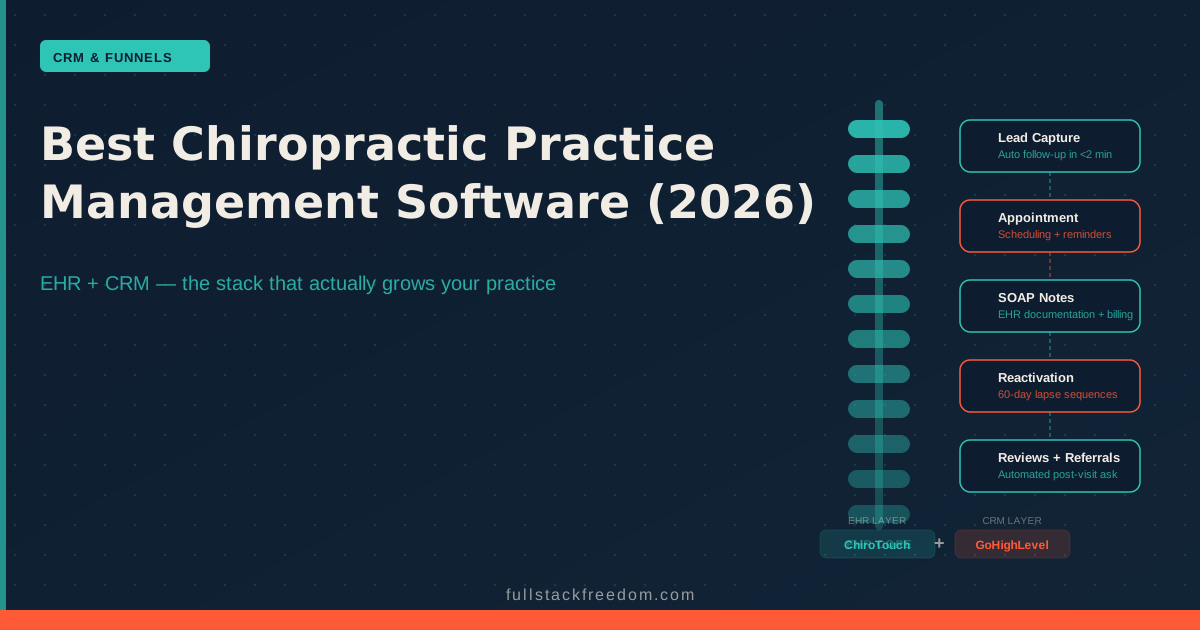
For a chiropractic practice that’s serious about growth, GHL functions as the marketing and CRM layer that sits alongside your EHR. You’re not replacing one with the other. You’re running them in parallel, with different jobs.
Here’s what that looks like in practice:
- A new patient submits a contact form on your website → GHL captures the lead, sends an immediate text, starts a nurture sequence, and notifies your front desk
- Patient completes their fifth visit → GHL automatically sends a review request and a referral prompt
- Patient goes 60 days without an appointment → GHL fires a personalized reactivation email and SMS sequence
None of that happens automatically in most EHRs. In GHL, it’s all built with drag-and-drop workflows once, and then it just runs.
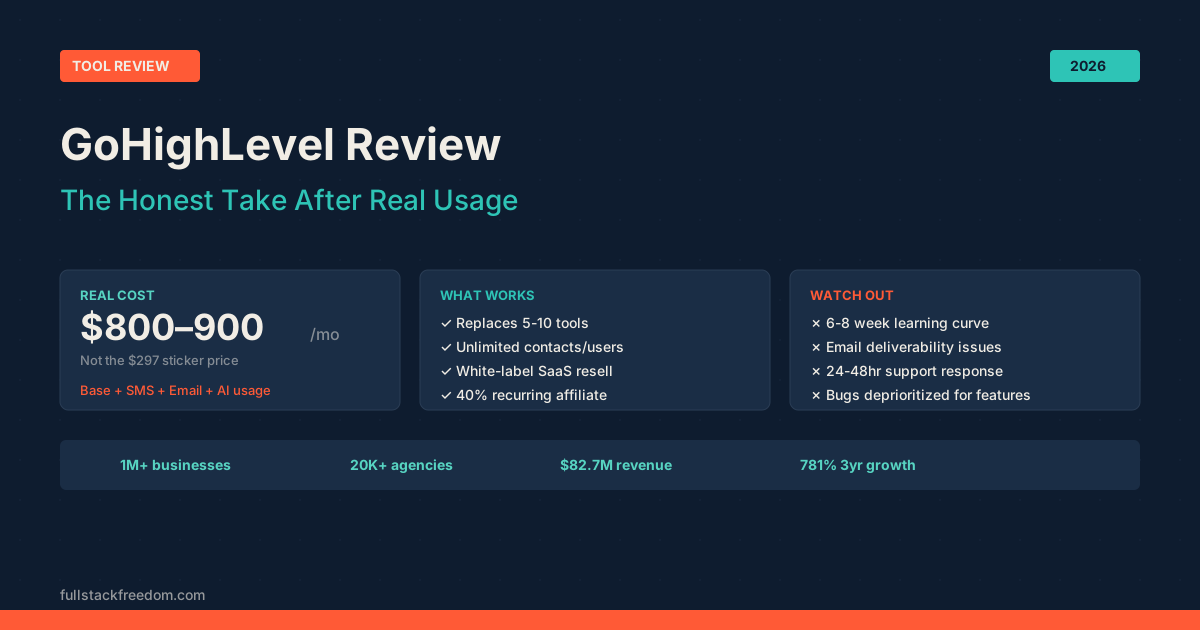
If you want a deeper look at what the platform can do, I’ve written a full GoHighLevel review that covers the features, pricing, and where it fits (and doesn’t fit) across different business types.
Building a Chiropractic CRM Stack That Actually Works
The practices that grow consistently tend to have the same pattern: a solid EHR for the clinical side, and a real marketing platform for the growth side. They’re not trying to make one tool do everything.
The stack I’d recommend for most growing chiropractic practices:
- ChiroTouch or Jane App for clinical: SOAP notes, scheduling, billing
- GoHighLevel for marketing: lead capture, nurture, reactivation, reviews
If you’re just getting started or running a cash-pay practice with simpler needs, Jane + GHL is a clean and modern combination. If you’re billing insurance with a larger patient volume, ChiroTouch + GHL gives you depth on both sides.
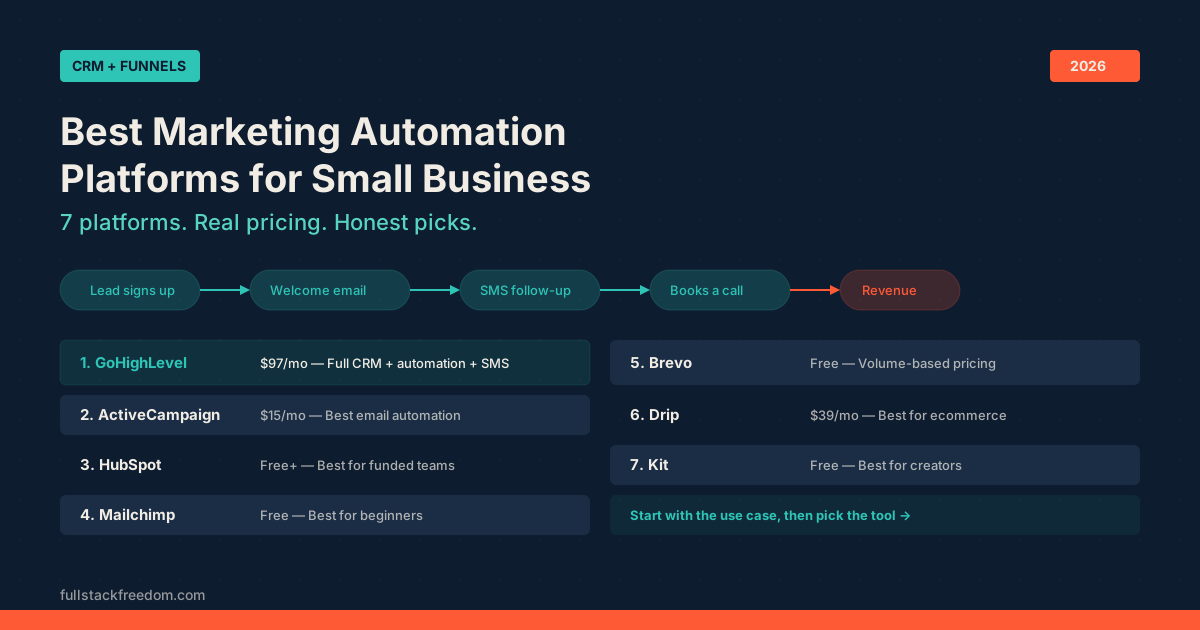
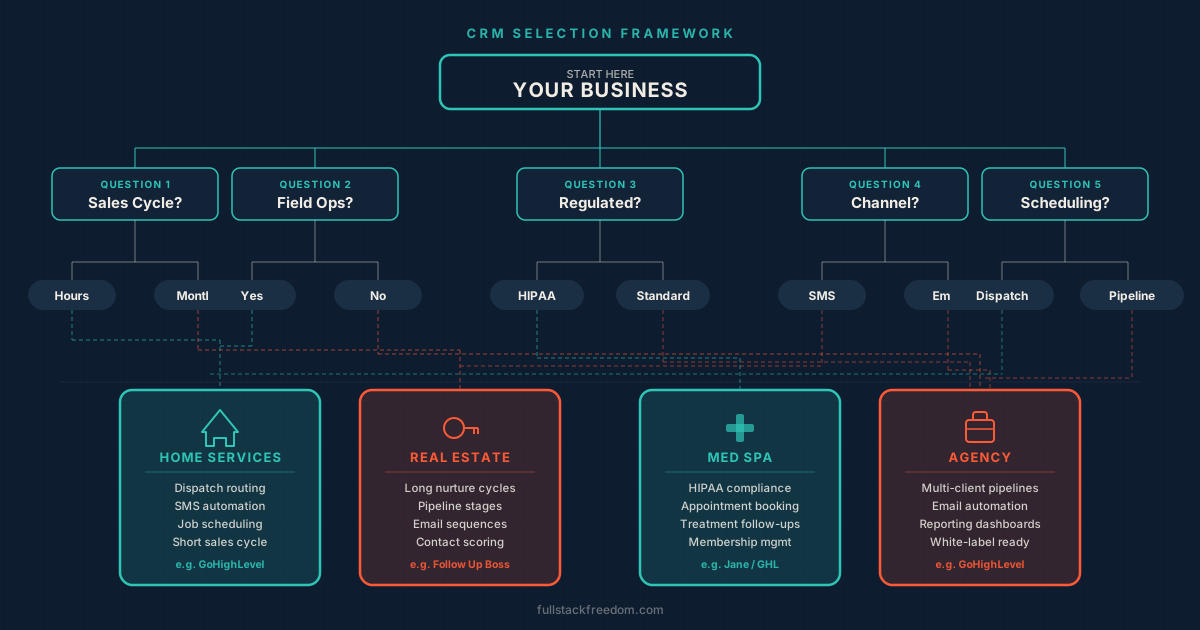
For a broader look at how to think about CRM selection across different practice types and industries, the CRM for Your Industry Guide is a good place to start. And if you’re evaluating how the marketing automation side of this works, Best Marketing Automation Platforms covers that in more depth.
What This Means for Your Practice
If you’re currently running on just an EHR and your patient pipeline feels unpredictable, you’re not alone. Most practices in this situation are relying on referrals and organic word of mouth, both good but neither reliable nor scalable.
Adding a proper CRM and marketing automation layer changes the math. Instead of hoping patients rebook, you have sequences running 24/7. Instead of hoping they leave a review, you’re asking at exactly the right moment, automatically. Instead of your front desk chasing down lapsed patients, GHL is already on it.
The EHR handles the clinical side. The CRM handles the growth side. Together, they’re a much more complete picture of how a modern practice operates.
Next Steps
If you’re comparing tools and want to get hands-on with the marketing side, GoHighLevel has a free trial worth exploring, especially if you’re not currently doing any automated follow-up or patient reactivation.
For the EHR side, ChiroTouch and Jane both offer demos, and I’d recommend scheduling one for whichever aligns with your billing model before committing.
And if you want to keep tabs on what’s actually working across tools like these, the newsletter is where I share that. Practical, no fluff. The Skool community is where templates, prompts, and actual GHL workflow setups live, if you want something you can deploy immediately.