Most agency owners I talk to have the same problem. They’re busy. Revenue looks decent on the surface. But every month feels like starting over. Chasing new clients, re-closing old ones, hoping the pipeline holds.
Recurring revenue for agencies isn’t just a nice-to-have. It’s the difference between a business and a job. And yet most of the advice out there picks a lane (“just do retainers!” or “productize everything!”) without acknowledging that the right model depends entirely on where you are right now.
This isn’t a flat list of options. It’s a progression framework: what to layer in, when, and why, based on what actually works at different stages.
Why Most Agency Revenue Is More Fragile Than It Looks
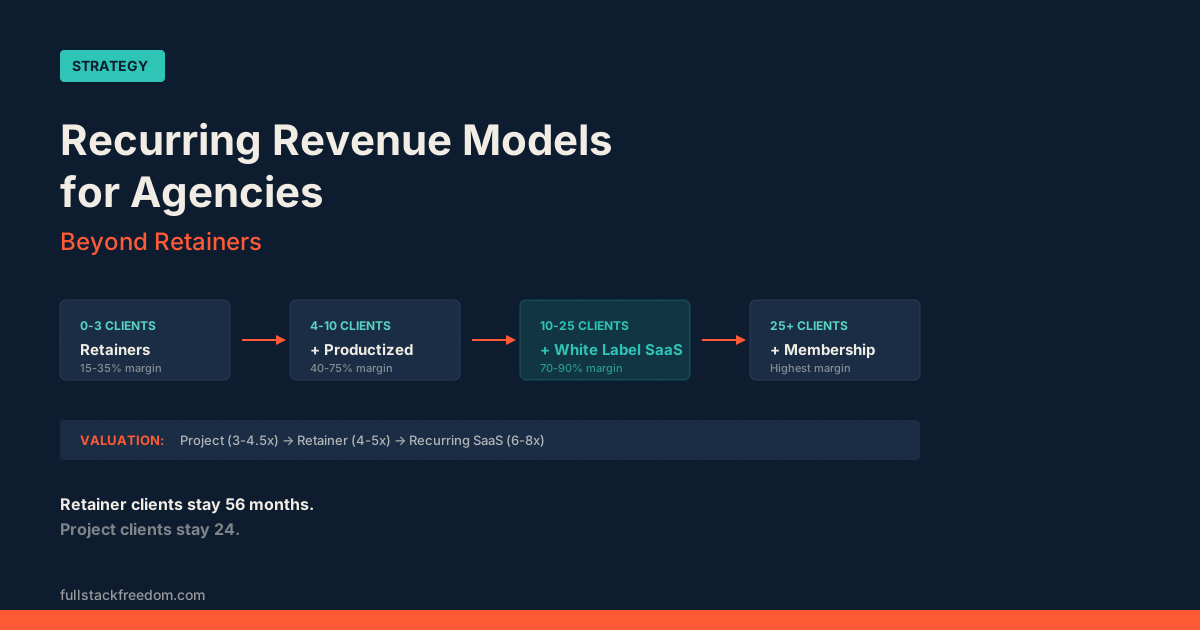
Project revenue feels fine until it doesn’t. One client pauses, one deal falls through, and suddenly you’re scrambling. The data backs this up: agencies running retainer-based models retain clients an average of 56 months versus just 24 months for project-based shops. That’s more than twice the client lifetime.
Recurring revenue also changes what your agency is worth. When you go to sell or raise, recurring revenue agencies command 4–5x EBITDA multiples compared to 3–4.5x for project-based businesses. The math is simple: predictable cash is worth more than lumpy cash.
The goal isn’t to pick one model. It’s to stack the right models in the right order.
The 6 Recurring Revenue Models Worth Understanding
1. Traditional Retainers
The classic. A client pays a fixed monthly fee for ongoing access to your team and expertise.
Range: $1,000–$7,500/month Net margin: 15–35% Best for: Strategy, account management, fractional CMO, PR, content
Retainers are the foundation most agencies build on first, and for good reason. They create predictable cash flow and encourage longer client relationships. The catch is scope creep. Without clear deliverables and boundaries, you end up doing project-level work at retainer rates.
The fix: scope retainers by outcome, not hours. Define what success looks like each month and tie the retainer to that.
2. White Label SaaS Reselling
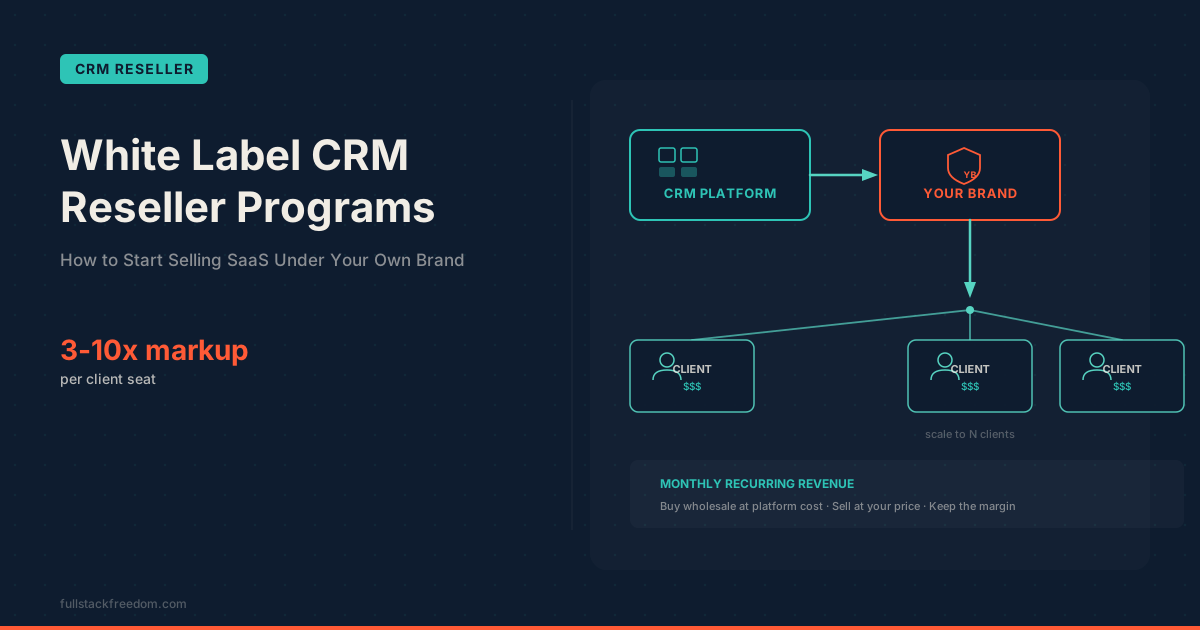
This is where the math gets interesting. You license a software platform, white-label it under your brand, and resell access to clients at a markup.
Range: $97–$997/month per client Margin: 70–90% Best for: Agencies with a defined niche and clients who need software tools
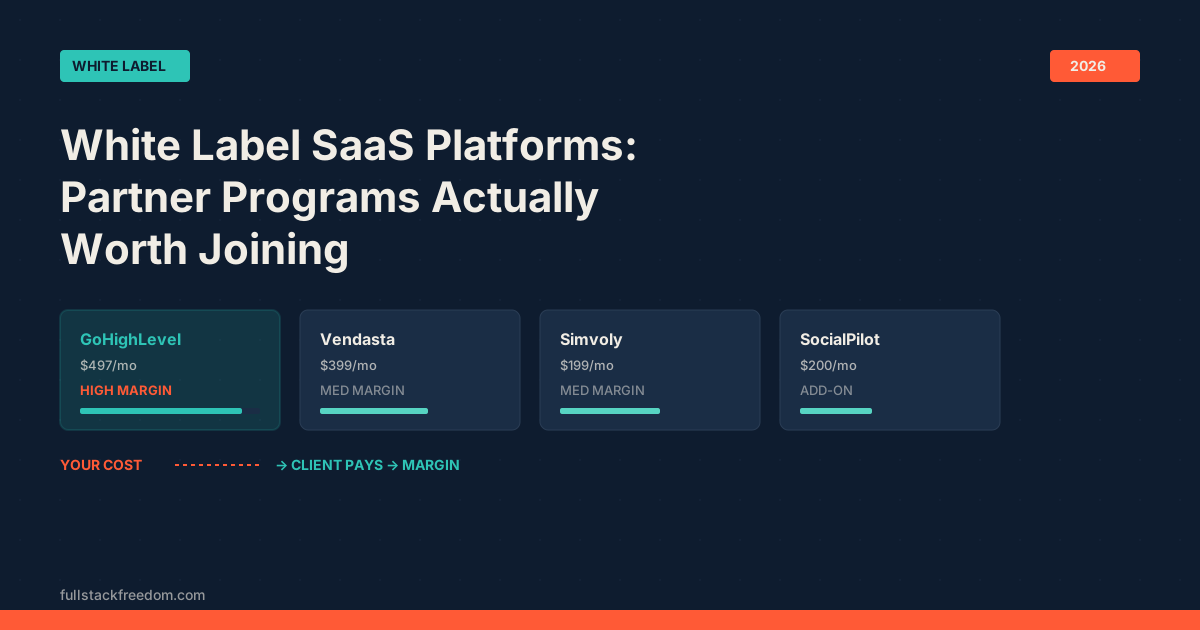
The poster child example: if you build a client base of 100 accounts paying $297/month, that’s $29,700 MRR. Your platform cost might be $497/month. The rest is margin.
GoHighLevel is the most common tool agencies use for this — it bundles CRM, email, SMS, funnels, and more into one platform you can resell under your own brand. If you want a deeper look at how these programs actually work, I covered it in White Label SaaS Platforms: Partner Programs Actually Worth Joining.
The risk here is platform dependency. If the underlying platform changes pricing or terms, your margins shift. Build this as a layer, not your entire business.
3. Productized Services
You take something you do repeatedly — audits, onboarding builds, landing pages, SEO packages — and turn it into a fixed-scope, fixed-price offering delivered on a subscription or monthly cadence.
Range: $500–$6,000/month Gross margin: 40–75% Best for: Agencies with repeatable deliverables and a clear process
DesignJoy is the most cited example — Brett Williams built a productized design subscription that crossed $1.2M ARR as a solo operator. No team. No proposals. Just a polished system with a waitlist.
The tradeoff: productized services can commoditize fast. If competitors copy your offering and undercut your price, differentiation gets harder. The agencies that win long-term here are the ones with strong distribution and brand, not just a clean product.
4. Managed Services (SEO, Ads, Social)
You run the ongoing execution for a client’s marketing channels — ads, SEO, social, email — in exchange for a monthly fee.
Range: $1,000–$7,500/month Net margin: 15–30% Best for: Agencies with specialized channel expertise
Managed services are predictable and sticky. Clients are reluctant to switch providers mid-campaign because of the ramp-up cost. The friction that makes them hard to sell is the same friction that makes them hard to cancel.
The headache: attribution disputes. Every agency that runs ads or SEO has dealt with the client who says “I’m not sure it’s working.” Build reporting dashboards into your offering from day one. Make the value visible.
5. Subscription Content and Membership
You package your expertise — templates, playbooks, courses, community — into a subscription product that scales beyond client hours.
Range: $29–$2,000/month Margin: Very high once built Best for: Agencies with an existing audience or established thought leadership
This is the highest-margin model on the list. Once the content infrastructure is in place, revenue scales without adding headcount. But it’s the hardest to bootstrap from zero. You need an audience before you need a product.
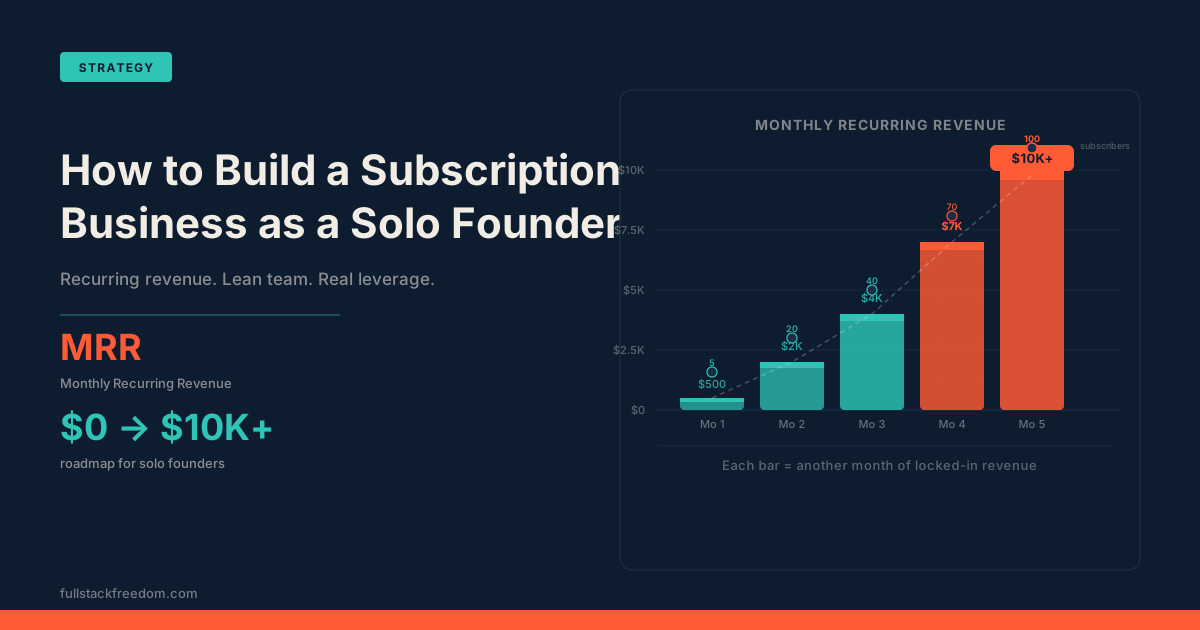
If you’re interested in building this layer, I wrote about the mechanics in How to Build a Subscription Business as a Solo Founder. Start small — a private community or a document library — before building a full course platform.
6. Performance and Revenue Share
Instead of a flat monthly fee, you take a percentage of the revenue or results you generate for the client.
Range: 10–30% of revenue Upside: Uncapped Best for: Agencies with strong conviction in their results and clients who can actually scale
This model aligns incentives in a way retainers never can. When you only win when the client wins, the relationship changes. You’re a partner, not a vendor.
The hard part: cash flow lag. You do the work in month one. Revenue attribution takes time. Payment follows results, not effort. This works best as a bonus layer on top of a base retainer — not as your only revenue stream.
The Progression Framework: What to Layer and When
Here’s how I’d think about building this stack if I were starting over or rebuilding:
| Stage | Primary Model | Layer In | Hold Off |
|---|---|---|---|
| 0–3 clients | Retainers | — | Everything else |
| 4–10 clients | Retainers | Productized Services | SaaS, Membership |
| 10–25 clients | Retainers + Productized | White Label SaaS | Membership |
| 25+ clients | All four above | Membership or Rev Share | — |
The principle: don’t introduce complexity before you have the capacity to support it. Every model requires a slightly different muscle — sales, delivery, support, reporting. Build the foundation first.
Start with retainers because they’re highest trust and easiest to close. Once you have repeatable work, productize it. Once you have enough clients, introduce a software layer. Once you have an audience, build the membership.
Never try to build all six at once. That’s how agencies end up with six mediocre revenue streams instead of two excellent ones.
The One Question That Changes Everything
Before you add a new revenue model, ask: does this make my existing clients more successful, or does it just add more things to manage?
The best recurring revenue stacks are coherent. Every layer reinforces the others. A client on a retainer also uses your white-label CRM. A managed services client subscribes to your content library. The flywheel spins because everything connects.
If you’re mapping out how to build this inside your own agency and want to talk through the models, I share templates, frameworks, and tools inside the Skool community — including the systems I’ve used across 200+ founder relationships. Come join and dig in.
The revenue model you choose isn’t a permanent decision. It’s a starting point. Pick the right one for where you are, build it well, and layer from there. As you scale, AI automation tools can help you deliver more while keeping the team lean.