I’ve been building businesses with generative AI use cases at the center of the workflow for over a year now. Not reading about them. Actually shipping products, running marketing, writing content, and automating ops with these tools daily. This site you’re reading? Built by AI agents. The content pipeline behind it? Same thing.
So instead of giving you a theoretical list of what generative AI could do, here are the use cases that are actually moving the needle for founders and small teams right now.
What Counts as a “Generative AI Use Case” in 2026
Quick distinction worth making: generative AI doesn’t just mean chatbots. It’s any AI that creates new output (text, code, images, video, data, designs) rather than just classifying or sorting existing data.
The shift in 2026 is that generative AI has gone from “cool demo” to “core infrastructure.” McKinsey estimates that two-thirds of organizations are now regularly using gen AI, up from one-third just two years ago. And the use cases have matured past “write me a blog post” into full workflow automation.
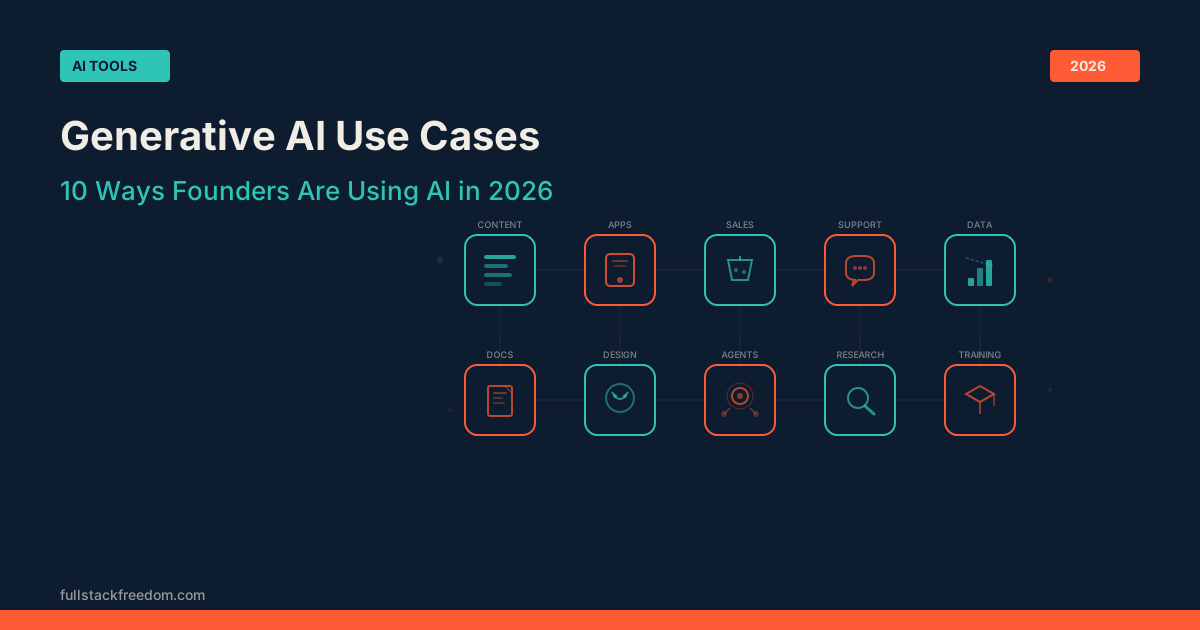
Here’s where it’s actually working.
1. Content Creation and Marketing
This is the most obvious one, but the way teams use it has evolved significantly. It’s not about having AI write a generic article anymore. It’s about building content systems that produce at scale with consistent quality.
I use Claude to power the entire content pipeline for Full Stack Freedom, from SEO research to first drafts to metadata generation. The blog post you’re reading went through that pipeline. Claude handles the heavy lifting, and I shape the voice and direction.
What makes this work in 2026 is AI agents that can handle multi-step workflows. You give them a topic, they research keywords, draft content, generate metadata, and format everything, without you babysitting each step.
Where founders see the biggest wins: Email sequences, social media content, blog posts, ad copy, and video scripts. One person can now produce what used to require a content team of three or four.
2. Building Apps and Digital Products
This one changed my business. Tools like Lovable let you describe what you want in plain English and get a working application back. Not a mockup. A real, deployable product.
I’ve used Lovable to spin up internal tools, client dashboards, and landing pages. Things that would have taken weeks of dev time or thousands in freelancer costs. The quality has gotten good enough that you can ship these directly to customers.
Combined with AI coding agents like Claude Code, you can build, iterate, and deploy full-stack applications without a traditional development team. That’s not hype. It’s what I do every week on my YouTube channel.
Where founders see the biggest wins: MVPs, internal tools, client portals, and landing pages. Anything that used to require hiring a developer for a week can often ship in a day.
3. Sales Outreach and Personalization
Generic cold outreach is dead. Generative AI makes it possible to personalize at a scale that was never economically viable before.
The pattern that works: pull prospect data from your CRM, feed it into an AI that drafts personalized messages based on the prospect’s industry, role, and recent activity, then review and send. What used to take a sales rep 20 minutes per email now takes 20 seconds of review time.
Tools like GoHighLevel are building AI directly into their CRM workflows, so you can trigger personalized follow-ups automatically based on lead behavior. If you’re running an agency or service business, this is table stakes in 2026.
Where founders see the biggest wins: Cold outreach, follow-up sequences, proposal drafts, and meeting prep summaries.
4. Customer Support Automation
Support is where generative AI might be delivering the clearest ROI right now. Gartner predicts that AI will handle a significant share of customer service interactions by the end of 2026, and the quality has gotten genuinely good.
The old chatbots were frustrating keyword-matchers. Modern AI support agents understand context, pull from your knowledge base, and handle multi-turn conversations that feel natural. They escalate to humans when they should and resolve issues when they can.
For small teams, this is massive. You can offer 24/7 support without hiring a night shift. Your FAQ doesn’t need to anticipate every question because the AI can synthesize answers from your docs in real time.
Where founders see the biggest wins: First-response automation, FAQ handling, ticket triage, and after-hours coverage.
5. Data Analysis and Reporting
Here’s one that doesn’t get enough attention. Generative AI is remarkably good at turning messy data into clear insights and explaining those insights in plain language.
Upload a spreadsheet, ask a question, get an answer with a chart. That’s the workflow now. No SQL, no Python scripts, no waiting for an analyst. Tools like Claude can process CSVs, identify trends, run comparisons, and generate executive summaries in seconds.
I use this constantly for analyzing content performance, tracking revenue metrics, and evaluating marketing campaigns. What used to be a “pull the data, build a pivot table, write up findings” process is now a single conversation.
Where founders see the biggest wins: Revenue reporting, marketing attribution, customer behavior analysis, and competitive research.
6. Document and Contract Management
Legal docs, SOWs, NDAs, partnership agreements: every business drowns in documents. Generative AI can draft, review, summarize, and compare these documents in minutes instead of hours.
I’m not suggesting you skip legal counsel for important contracts. But for first drafts, internal policies, standard agreements, and reviewing third-party contracts for red flags? AI handles it well enough that you can come to your lawyer with specific questions instead of paying them to start from scratch.
Where founders see the biggest wins: First-draft contracts, policy documents, proposal generation, and document summarization for due diligence.
7. Creative Design and Visual Assets
Generative AI for visuals has moved way past “make me a weird picture.” In 2026, founders are using it for production-ready marketing assets: social media graphics, presentation decks, product mockups, and brand collateral.
Tools like Gamma handle presentation design. Image generation handles social content and ad creative variations. Video tools create product demos and explainer content. The output quality is high enough that most audiences can’t tell the difference.
For a lean team, this eliminates the bottleneck of waiting on a designer for every asset. You can test ten ad creative variations before lunch instead of waiting a week for two options.
Where founders see the biggest wins: Social media graphics, pitch decks, ad creative testing, and product imagery.
8. Workflow Automation and AI Agents
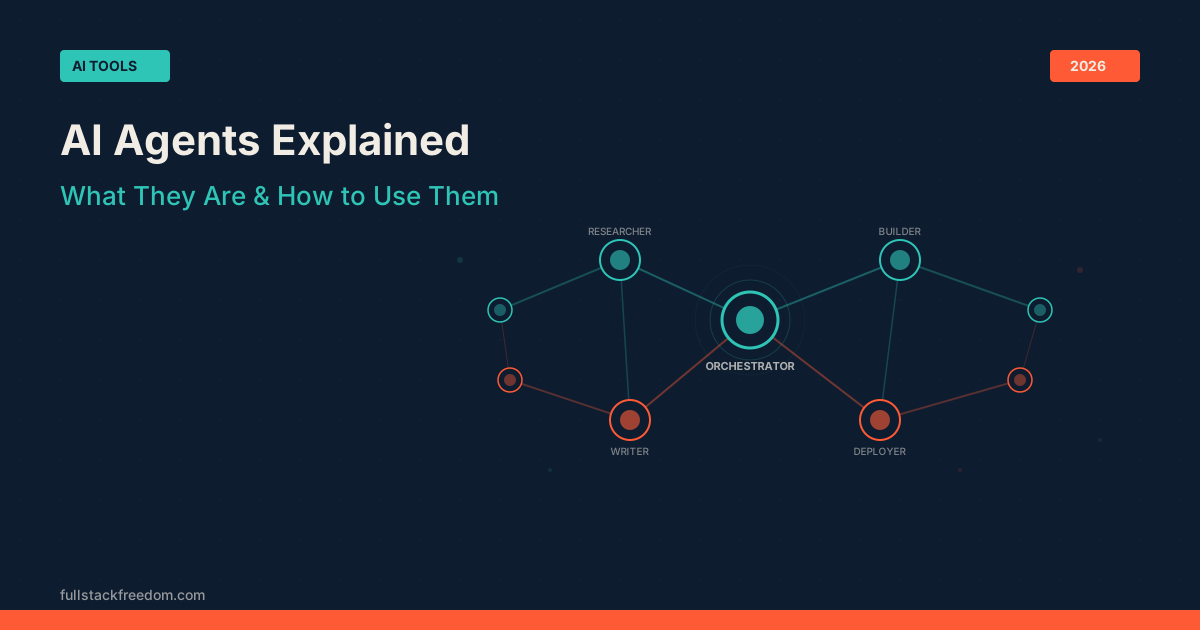
This is where generative AI use cases are heading fastest. It’s not just about generating content. It’s about AI agents that execute entire workflows autonomously.
An AI agent can monitor your inbox, draft responses, update your CRM, schedule follow-ups, and flag items that need your attention. Another can process customer feedback, categorize it, identify trends, and generate a weekly report. These aren’t theoretical. They’re running in production at companies right now. I built exactly this kind of system: an AI Chief of Staff with Claude Code that manages tasks, priorities, and daily operations.
If you want a deeper breakdown of how agents work and which ones are worth using, I wrote a full guide on AI agents explained. The short version: agents are the bridge between “AI as a tool” and “AI as a teammate.”
Where founders see the biggest wins: Multi-step workflow automation, inbox management, CRM updates, and cross-tool orchestration.
9. Product Research and Market Analysis
Before you build something, you need to know if anyone wants it. Generative AI collapses the research timeline dramatically. You can analyze competitor positioning, synthesize customer feedback, map market gaps, and generate product briefs in a single session.
I use this before starting any new project. Feed Claude a batch of competitor websites, customer reviews, and market data. Ask it to identify underserved needs, pricing opportunities, and positioning angles. What used to be a two-week research sprint becomes an afternoon.
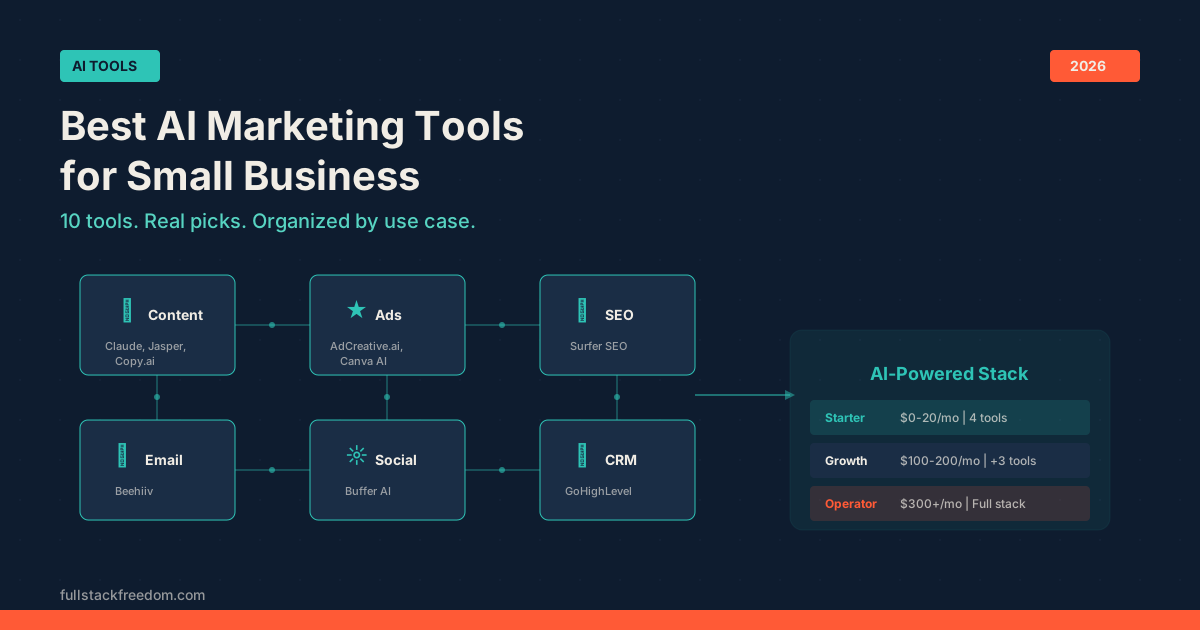
Combined with AI-powered marketing tools, you can go from market analysis to campaign launch in days instead of months.
Where founders see the biggest wins: Competitive analysis, customer research synthesis, product requirement docs, and go-to-market strategy.
10. Training, Onboarding, and Knowledge Management
Every growing team hits the “it’s all in my head” problem. Generative AI solves this by turning scattered knowledge into structured, searchable, always-updated documentation.
You can feed it your existing SOPs, Slack threads, meeting recordings, and support tickets, and it generates organized knowledge bases, training materials, and onboarding guides. When something changes, you update the source material and regenerate.
For small businesses adopting AI, this is one of the highest-leverage use cases. It captures institutional knowledge that would otherwise walk out the door when someone leaves.
Where founders see the biggest wins: Employee onboarding, SOPs, internal knowledge bases, and training curriculum.
How to Pick Your First Generative AI Use Case
If you’re not already using generative AI in your business, don’t try to implement all ten at once. Start with the use case that addresses your biggest bottleneck.
Here’s the decision framework I use:
- What takes the most time? Start there. Content creation and data analysis are usually the quick wins.
- What’s the most repetitive? Customer support, outreach, and reporting are prime automation targets.
- What requires skills you don’t have? App development and design are where AI closes the gap fastest.
The tools I reach for first: Claude for anything involving text, analysis, or code. Lovable for building apps and tools. GoHighLevel for CRM and marketing automation.
You don’t need all of them on day one. Pick one use case, get it working, then expand.
What’s Next
Generative AI use cases for business are expanding faster than most people realize. The gap between companies using these tools and those that aren’t is widening every month. The good news is that getting started has never been easier or cheaper.
If you want to see these use cases in action, with walkthroughs and templates you can copy, join the Skool community. That’s where I share the prompts, workflows, and tools behind everything I build.