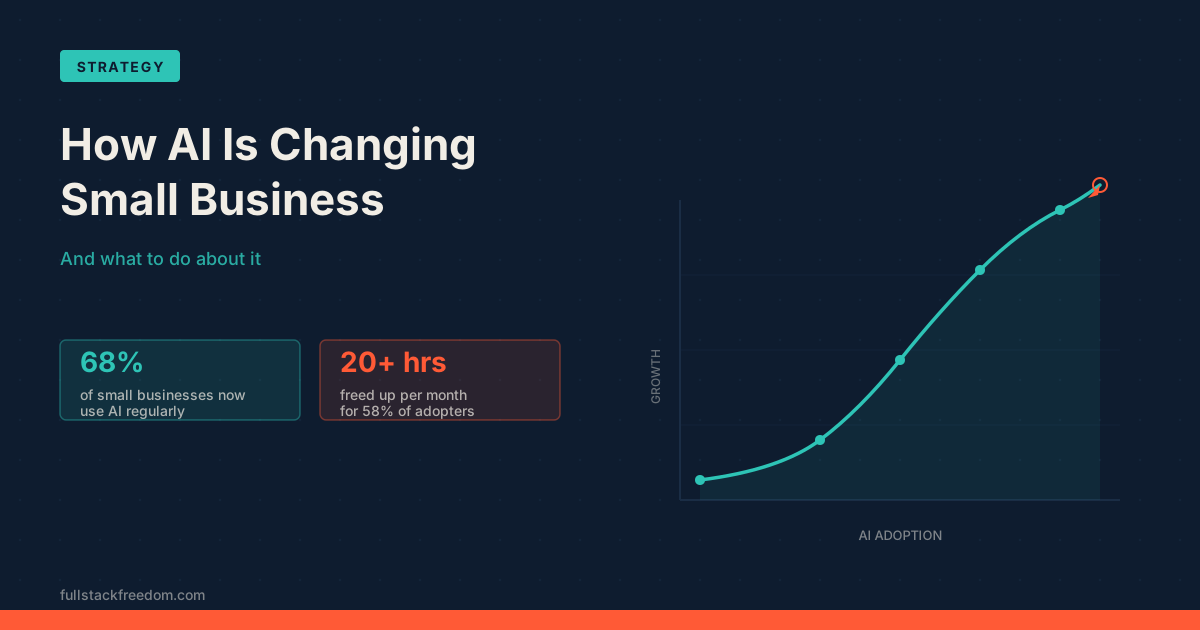
AI for small business used to be a nice-to-have. Something you’d “look into eventually.” That window is closing fast. A recent U.S. Chamber of Commerce survey found that 68% of small businesses now use AI regularly, up from 48% just a year and a half ago. The shift isn’t coming. It’s already here.
But here’s what most of the coverage misses: adoption isn’t the hard part anymore. The hard part is knowing what to do with it. Most small business owners I talk to have tried ChatGPT, maybe played with an image generator, and then gone back to doing things the way they always have. The gap isn’t between “using AI” and “not using AI.” It’s between using it casually and using it as actual infrastructure for your business.
I’ve spent the last several years mentoring over 200 founders through Techstars and other accelerator programs, and I’m building my own business on AI tools every day. So this isn’t a theoretical roundup. It’s a field report from someone in the trenches.
Where AI for Small Business Actually Matters
Most articles on this topic give you a list of 30 tools and call it a day. That’s not helpful. What matters is understanding the categories of work where AI creates real leverage for a small team.
Marketing and Content
This is where the majority of small businesses start, and for good reason. The ROI is immediate and visible.
- Writing: Blog posts, emails, social media captions, ad copy. An AI writing assistant doesn’t replace your voice, but it eliminates the blank-page problem and cuts production time dramatically.
- SEO and research: Keyword research, competitor analysis, content briefs. Tasks that used to take hours now take minutes.
- Repurposing: One video becomes a blog post, a newsletter, five social clips, and a thread. AI handles the reformatting so you can focus on the original content.
If you want to see which specific tools handle each of these formats, the best AI content creation tools breakdown covers writing, video, voice, and presentations side by side.
A Salesforce Small Business Trends report found that roughly 9 in 10 SMB teams are now using AI, with the majority starting in marketing and content. That tracks with what I see across the founders I work with. Content is the lowest-risk, highest-payoff starting point.
Customer Experience
Small businesses have always competed on relationships. AI doesn’t replace that. It scales it.
- 24/7 response capability without hiring night-shift staff
- Personalized follow-ups based on customer behavior, not generic drip sequences
- Faster resolution times for support requests, returns, and common questions
According to the U.S. SBA, AI-powered chatbots and customer service tools are among the top use cases for small businesses right now. The businesses getting it right aren’t replacing human interaction. They’re using AI to handle the routine stuff so their team can focus on the conversations that actually matter.
Operations and Back Office
This is the unglamorous category that often delivers the biggest impact. Data entry, invoicing, scheduling, inventory management, reporting. All of it can be partially or fully automated with the right tools.
The ITIF (Information Technology and Innovation Foundation) points out that SMEs are roughly 47% as productive as larger companies. AI is one of the clearest paths to closing that gap without adding headcount.
If you’re still manually updating spreadsheets, chasing invoices, or copy-pasting data between apps, you’re leaving hours on the table every week. A good business management platform paired with AI automation can reclaim 10-20 hours a month for a solo operator.
The Real Numbers Behind AI Small Business Tools
Let’s cut through the hype with actual data. Here’s what the research says about what happens when small businesses adopt AI:
| Metric | Finding | Source |
|---|---|---|
| Monthly savings | 66% of SMBs save $500–$2,000/month | QuickBooks/Intuit survey |
| Time freed up | 58% free 20+ hours per month | QuickBooks/Intuit survey |
| Customer experience | 53% report noticeable CX improvements | USM Systems |
| Adoption rate | 68% of US small businesses use AI regularly | U.S. Chamber of Commerce |
| Future plans | 96% plan to adopt emerging tech including AI | U.S. Chamber of Commerce |
Those numbers are compelling, but they also mask a critical problem. While 68% say they’re using AI, 77% have no formal policy around it. Most are winging it. That’s where things get messy.
What Most Small Businesses Get Wrong
After working with hundreds of founders, the mistakes follow a pattern.
1. Tool Hopping
A new AI tool launches every week. Most founders sign up, play with it for three days, and move on. The result is a dozen half-configured accounts and no real workflow improvement.
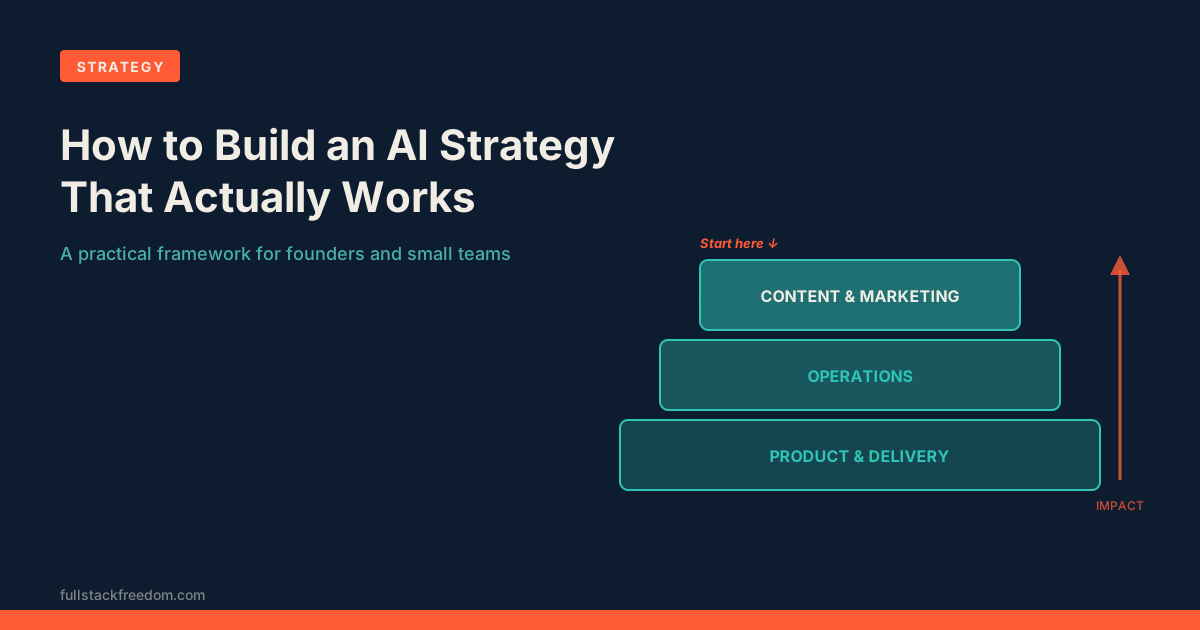
Pick a small stack and go deep for 90 days. You’ll get more value from mastering two tools than dabbling with twenty. I wrote about building a focused approach in our AI strategy guide. The same principles apply here.
2. Starting With the Technology Instead of the Problem
“We need to use AI” is not a strategy. “We spend 12 hours a week on follow-up emails and our close rate is dropping” is a problem worth solving. Start with the bottleneck, then find the tool. The founders who get results flip the typical approach: problem first, tool second.
3. No Measurement
“It feels faster” doesn’t count. If you can’t quantify the time saved, the quality change, or the cost difference, you don’t actually know whether AI is working for your business. Track three things:
- Hours saved per week
- Output quality vs. the manual version
- Tool cost vs. labor cost it replaced
4. Ignoring the Learning Curve
AI tools have a real learning curve. Not in the “this is hard to use” sense (most are surprisingly intuitive). The curve is in learning how to give good instructions. Prompt quality determines output quality. The founder who spends an afternoon learning how to write clear, context-rich prompts will outperform the one who types “write me an email” and complains about the result.
AI Agents: The Next Wave for Small Business
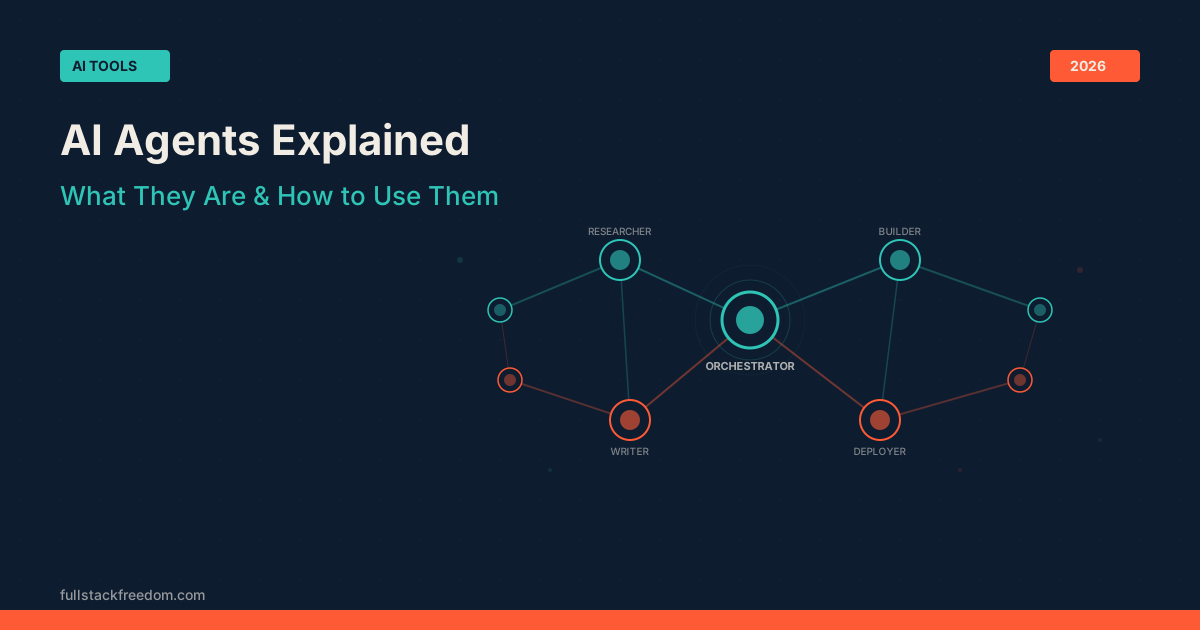
If you’ve been hearing the term “AI agents” and wondering whether it applies to you: it does. AI agents go beyond the typical chatbot interaction. Instead of giving AI a single task and getting a single output, an agent takes a goal, breaks it into steps, uses tools to execute those steps, and iterates until the job is done.
For small businesses, this means:
- An agent can handle a multi-step workflow. Not just “write an email,” but “check the CRM for leads who haven’t been contacted in 7 days, draft a personalized follow-up for each one based on their last interaction, and schedule the sends.”
- Agents reduce the need for complex automation setups. Instead of building a 15-step Zapier chain, you describe what you want done and the agent figures out how to do it.
- They work 24/7 without the overhead of additional employees.
The AI agent market is growing from $5.25 billion in 2024 to a projected $52 billion by 2030, according to StartUs Insights. This isn’t a niche trend. It’s the direction the entire industry is moving.
What This Means for You
If you’re running a small business or startup, here’s the honest take: AI isn’t going to replace your business. But a competitor who uses AI well might outpace you.
The advantage isn’t about having the fanciest tools. It’s about:
- Speed. Producing in hours what used to take days.
- Consistency. Maintaining quality across marketing, support, and operations without burning out.
- Leverage. Operating like a team of ten when you’re a team of two.
The founders I work with who see real results share three traits. They picked a real problem to solve. They chose a small number of tools and went deep. And they measured the results instead of assuming things were working.
You don’t need a massive budget or a technical background. You need clarity about your bottlenecks and the willingness to experiment.
How to Start This Week
Don’t overthink it. Here’s a practical sequence:
- Map your time. For one week, track where your hours actually go. Identify the repetitive, low-judgment tasks eating your day.
- Pick one workflow. Not five. One. Content creation, lead follow-up, customer support, scheduling. Whatever drains the most time.
- Choose one tool. Try Claude for writing and analysis, or a CRM with built-in automation for sales workflows. Start free.
- Spend 30 minutes learning prompts. Good input equals good output. Learn to give clear context, specific instructions, and examples of what you want.
- Measure after 30 days. Compare time spent, output quality, and cost before and after.
That’s the whole playbook. One workflow at a time. Stack wins. Expand from there.
Where to Go From Here
The small businesses that thrive over the next few years won’t be the ones with the biggest budgets or the most employees. They’ll be the ones that figured out how to use AI as a multiplier for their marketing, their operations, and their customer experience.
If you want to see the exact workflows, prompts, and tool setups I use to run my business on AI (including templates you can copy and deploy), come join the Skool community. It’s free, and it’s where I share everything I’m building and learning in real time.
The tools exist. The data backs it up. The only variable left is whether you start.