The ai trends 2026 conversation has shifted from “should I be using AI?” to “which AI moves actually matter for my business?” That’s a meaningful change. A year ago, most founders were still testing the waters. Now Salesforce reports that 90% of small businesses are using AI in some capacity. The gap isn’t adoption anymore. It’s knowing which bets to make.
Here’s what I’m watching closely this year, and what it means if you’re running a lean operation.
AI Agents Are Going Mainstream
We’ve moved past the chatbot phase. The interesting stuff now is autonomous multi-step task handling: tools that don’t just answer questions but actually do things across multiple steps without you holding their hand through each one.
Claude Code writes, edits, runs, and debugs code in a loop. Devin handles full engineering tasks. Lovable turns a prompt into a deployed web app. These aren’t demos anymore. I’ve shipped real projects with these tools that would have taken a team a few weeks to build.
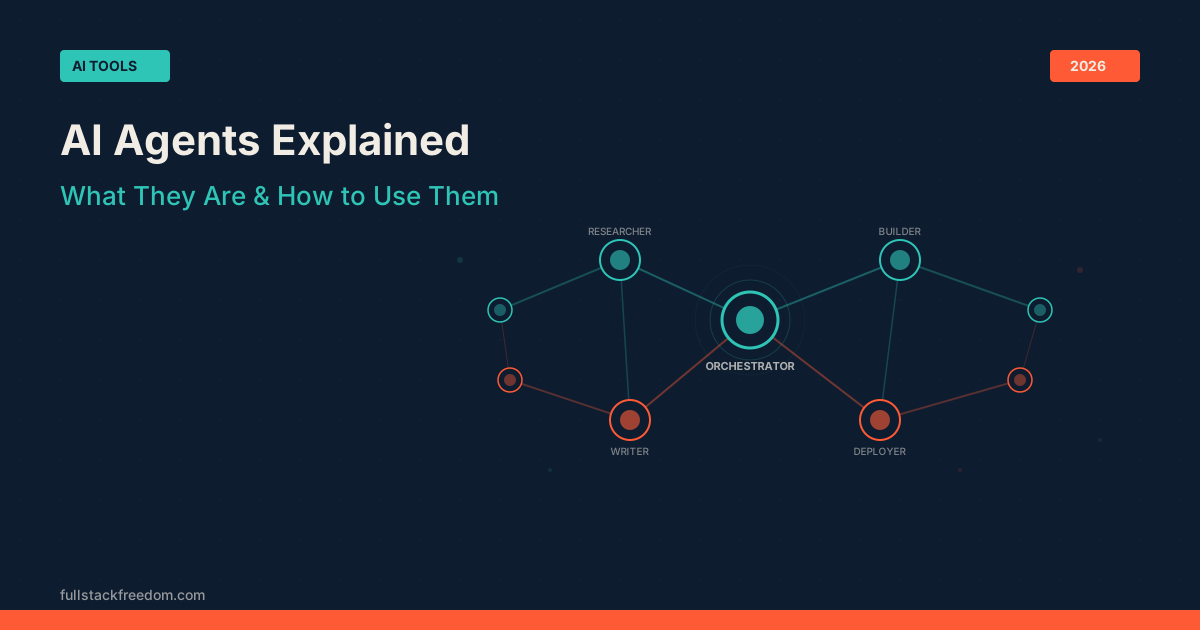
For founders, this is the most important shift in the list. You can now delegate entire workflows, not just tasks. If you want a deeper breakdown of what agents actually are and how they work, I covered that in AI agents explained.
The #QuitGPT Movement and Tool Switching
Earlier this year, the #QuitGPT hashtag picked up real momentum after news of ChatGPT’s Pentagon data deal. Over 2.5 million people pledged to cancel their subscriptions. Some of that is politics, some of it is privacy concern, and some of it is people finally realizing there are strong alternatives.
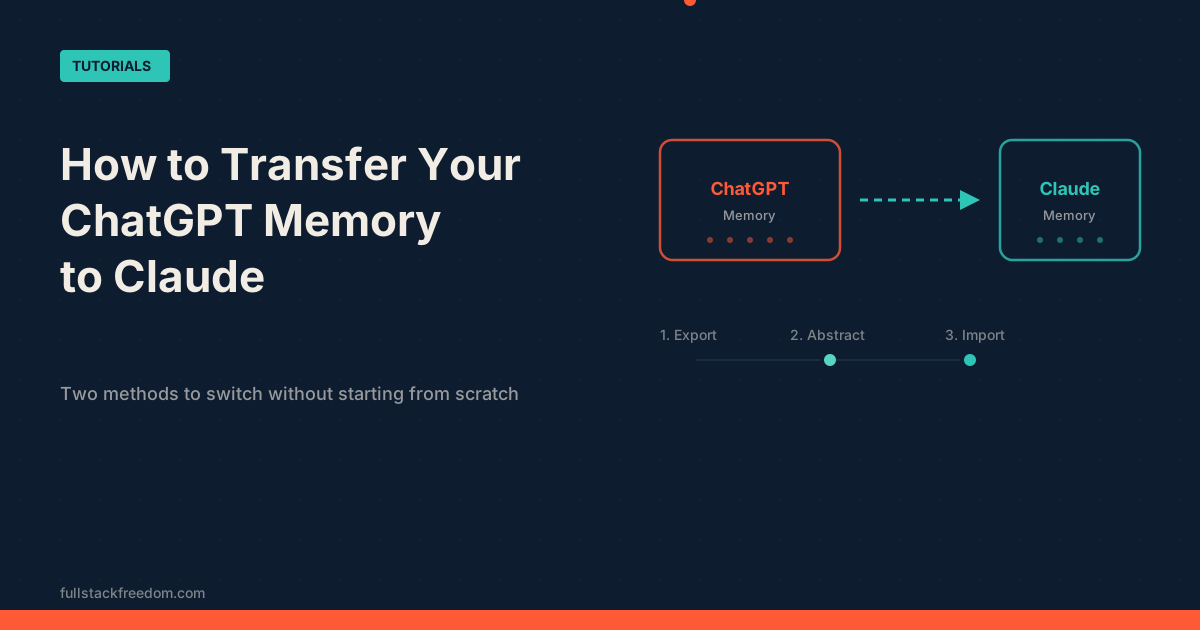
What’s actually interesting here is context portability. If you’ve spent months building up ChatGPT memory and custom instructions, switching tools feels painful. Claude’s memory import feature addresses this directly. I wrote a step-by-step guide on how to move your ChatGPT memory to Claude if you’re in that camp.
The broader trend is that AI tool loyalty is weakening. Businesses are starting to evaluate AI tools the same way they evaluate any SaaS: what do I actually get for this monthly cost?
AI Video Has Hit Production Quality
Twelve months ago, AI video was impressive-for-a-demo. Now it’s production-usable. HeyGen’s Avatar IV is generating 60 to 180 second clips with natural movement and lip sync that holds up. Sora 2 from OpenAI is producing cinematic footage that would have required a crew.
Solo creators are producing studio-quality content without renting equipment, hiring editors, or booking studios. I use HeyGen regularly for talking-head content and the time savings are real.
For agency owners, this opens up content packages that weren’t feasible before. For founders, it means your personal brand doesn’t have to wait until you can afford a production setup.
Open Source AI Is Closing the Gap
The closed-source frontier models (GPT-4o, Claude 3.5, Gemini) used to have a clear performance lead. That gap is shrinking fast. Meta’s Llama models, Mistral, and DeepSeek have all released models in the past year that are competitive on most practical tasks.
This matters for a few reasons. Self-hosted options are now viable for privacy-conscious businesses or anyone who wants to avoid per-token costs at scale. You can run capable models locally or on your own infrastructure, which changes the cost math entirely for high-volume use cases.
It also creates competitive pressure that keeps API pricing from going in one direction forever. More options means more leverage for buyers.
Vertical AI Tools Are Replacing Generic Ones
A year ago, most people were using a general-purpose AI assistant for everything. That’s starting to change. Purpose-built AI for specific industries is maturing: legal contract review tools, medical documentation assistants, real estate comps analysis, construction estimate generators.
These vertical tools win because they know the domain. A general AI can help a lawyer draft a contract. A tool trained specifically on legal workflows, jurisdiction-specific language, and firm-specific templates can do it better and faster with less prompt engineering.
If you’re in a niche industry or serving one, this is worth paying attention to. Generic will get you 80% of the way there. The last 20% increasingly lives in specialized tools built for your specific context.
AI Coding Tools Are Replacing Junior Dev Roles
This one is uncomfortable for some people to say out loud, but it’s happening. Claude Code, Cursor, and GitHub Copilot have crossed a capability threshold where a solo founder with moderate technical literacy can build full products without hiring a developer.
I’ve watched people in our community ship full SaaS MVPs in a weekend using these tools. Not prototypes. Deployed, functional products.
This doesn’t mean developers are irrelevant. Senior engineers working with AI tools are more productive than ever. But the entry-level development work that used to justify a hire or a contractor relationship? That’s compressing fast. For lean operators, this is net positive. You can build more with less.
AI Regulation Is Starting to Bite
The EU AI Act is now in enforcement mode. The US is catching up with state-level legislation popping up across California, Texas, and Colorado. This is no longer just a compliance conversation for enterprise legal teams.
Small businesses need to know two things. First, if you’re deploying AI in a customer-facing product, especially in regulated industries like healthcare, finance, or HR, you need to understand what requirements apply to your use case. Second, “we didn’t know” isn’t a defense once enforcement starts.
The practical steps for most small operators are straightforward: document what AI tools you’re using, where they touch customer data, and what your data retention practices look like. That’s enough to be ahead of 90% of businesses your size.
The “AI Tax” Is Normalizing
Every SaaS product you’re already paying for is now adding an AI tier. Notion AI, HubSpot AI, Canva AI, Zapier AI. It’s usually $10 to $20 per month per tool, sometimes more. On their own, each add-on sounds reasonable. Added together across your stack, you could easily be paying $150 to $300/month in AI feature upgrades on top of your base subscriptions.
This is the future of ai in business conversation nobody is having loudly enough. AI isn’t just a tool you buy once. It’s becoming an ongoing line item in your operating costs, and the price will keep moving.
The move is to audit your stack. Which AI add-ons are you actually using? Which ones are turned on but doing nothing? Cut the noise. Invest in the AI capabilities that actually show up in your outputs.
What This Means for You
If you’re running a lean business, this is genuinely a good moment to be operating. The tools available to a solo founder or a small team in 2026 are better than what an enterprise had access to three years ago. That gap doesn’t stay open forever. The businesses that figure out how to build tight AI-augmented workflows now will be harder to compete with in two years.
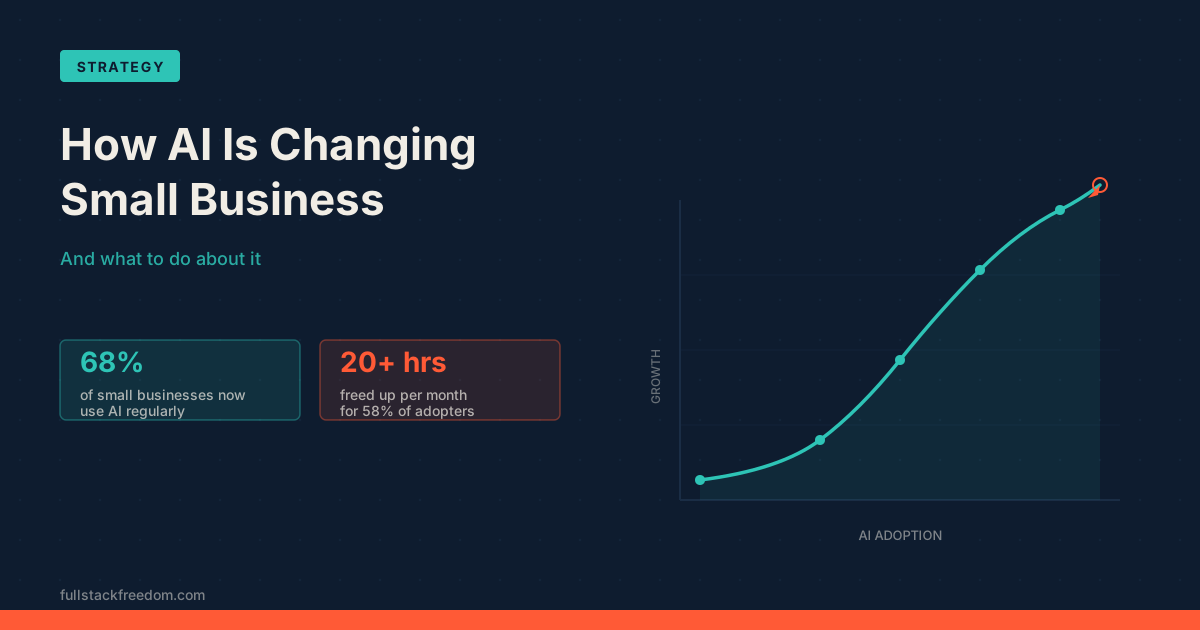
The flip side is that “just using AI” isn’t a competitive advantage anymore. Everyone is using it. The advantage comes from how you integrate it, what you build with it, and how fast you iterate. I wrote more about this in how AI is changing small business if you want to dig into the strategic side.
Next Steps
Start with a simple audit: list every AI tool you’re paying for or using regularly, and rate each one on actual time or money saved. That usually surfaces two or three tools doing heavy lifting and a handful that sound cool but rarely get opened.
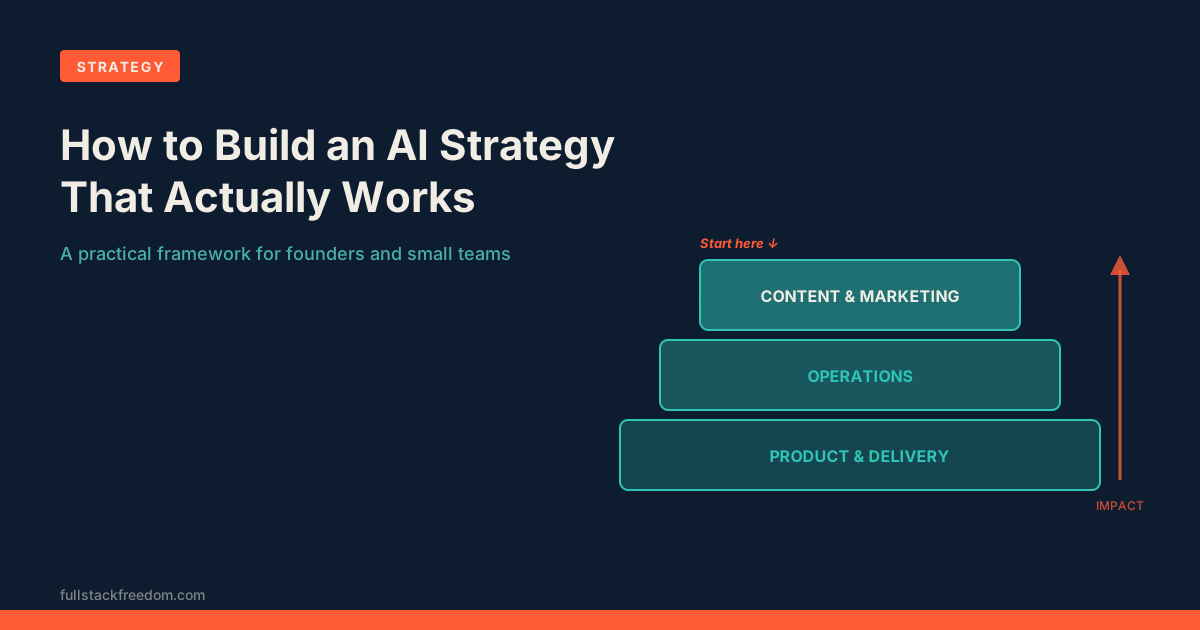
If you want a framework for thinking through your full AI strategy, building an AI strategy for your business walks through how to approach that systematically.
The prompts, templates, and tool lists I reference are all in the Skool community. Worth joining if you want the actual files, not just the ideas. And if you want to start using Skool for your own community or courses, here’s the link to sign up.